
When it comes to industrial lifting equipment, the performance of boom lift tyres plays a crucial role in overall safety, productivity, and operational costs. While boom lifts are designed to reach high elevations, the tyres are the interface between the machine and the ground, supporting weight, maintaining traction, and absorbing shocks. Selecting the right tyres ensures smooth operations, reduces maintenance costs, and enhances safety in demanding industrial environments.
For B2B operators managing fleets or large construction projects, understanding tyre types and their applications can make a significant difference in efficiency and return on investment.
Understanding the Role of Boom Lift Tyres
Tyres are not just wheels—they directly affect the boom lift’s stability, load handling, and maneuverability.
● Tyres must support the total machine weight, including operators and lifted loads
● Correct tyre selection prevents tipping hazards during elevation
● Tyres influence ride comfort and shock absorption, especially on uneven surfaces
● Proper tyres reduce wear and tear on mechanical components
Neglecting tyre quality or suitability can result in downtime, higher repair costs, and even safety incidents.
Common Types of Boom Lift Tyres
Boom lift tyres can be classified based on their construction and intended operational environment:
● Pneumatic Tyres – Air-filled tyres that provide cushioning for rough terrain, ideal for outdoor construction sites.
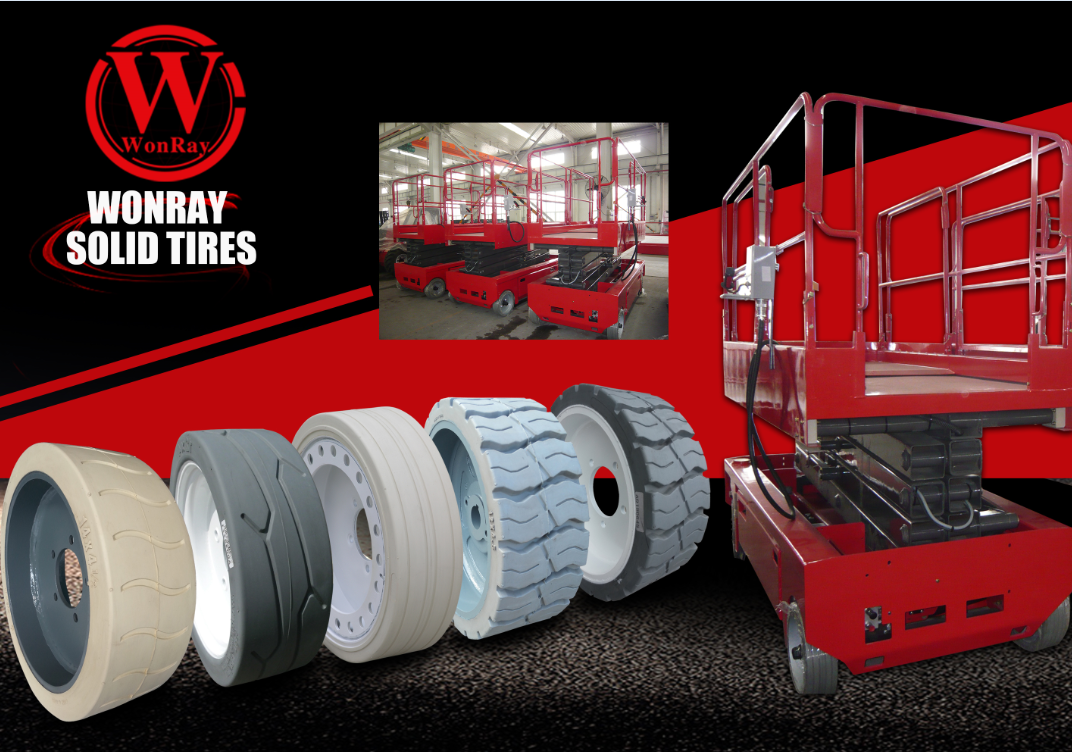
● Solid Rubber Tyres – Maintenance-free and puncture-proof, suitable for smooth or indoor surfaces with high load demands.
● Non-Marking Tyres – Prevent scuffing on sensitive flooring in warehouses or manufacturing facilities, while still offering durability.
● Polyurethane Tyres – Lightweight, resilient, and resistant to chemicals, often used in industrial plants or docks.
Each type has unique advantages, and choosing the wrong tyre for the terrain or application can compromise safety and efficiency.
Key Considerations for Tyre Selection
Selecting the right boom lift tyres requires careful evaluation of operational requirements:
● Load Capacity – Match tyre rating with machine weight and expected lifted loads
● Surface Conditions – Smooth concrete, rough outdoor terrain, or semi-rough industrial floors
● Operational Frequency – High-usage environments demand more durable tyres
● Environmental Factors – Temperature extremes, chemical exposure, indoor cleanliness
● Maintenance Requirements – Pneumatic tyres need more attention than solid or polyurethane tyres
A comprehensive assessment ensures that the selected tyres maximize safety, reduce downtime, and deliver consistent performance.
Benefits of Investing in Quality Boom Lift Tyres
Investing in high-quality tyres provides tangible operational benefits for B2B industrial operators:
● Enhanced Safety – Stable lift operations and reduced tipping risks
● Reduced Maintenance Costs – Puncture-resistant or solid tyres lower repair frequency
● Increased Productivity – Fewer interruptions for tyre replacement or maintenance
● Extended Equipment Lifespan – Tyres that match operational demands minimize wear on lifts
High-quality tyres are an investment that pays off by keeping boom lifts operational and safe over the long term.
Conclusion
Boom lift tyres are critical to industrial efficiency and safety. Whether it’s navigating rough outdoor terrain, protecting sensitive indoor floors, or carrying heavy loads, the right tyres directly impact productivity, operational costs, and employee safety. For B2B operators, selecting the proper tyre type—be it pneumatic, solid, non-marking, or polyurethane—ensures smooth, safe, and cost-effective boom lift operations across diverse industrial environments.
Choosing quality boom lift tyres is not just a purchase—it’s a strategic decision that protects your workforce, reduces downtime, and enhances operational efficiency.
FAQ
Q1: Can the same boom lift tyres be used for indoor and outdoor operations?
● It depends. Pneumatic tyres are ideal for outdoor rough terrain, while solid or non-marking tyres are better suited for indoor floors.
Q2: How do solid tyres reduce maintenance compared to pneumatic tyres?
● Solid tyres are puncture-proof and do not require air pressure checks, lowering downtime and repair costs.
Q3: Why is tyre selection critical for safety in boom lifts?
● Incorrect tyre choice can affect stability, traction, and load handling, increasing the risk of tipping or accidents.
Q4: Are polyurethane tyres suitable for industrial chemical environments?
● Yes, polyurethane tyres are resistant to many chemicals and abrasion, making them ideal for factories, docks, and warehouses.
Q5: How often should boom lift tyres be inspected?
● Even solid or non-marking tyres require periodic inspections to check for wear, deformation, or damage, typically every 3–6 months depending on usage.
Post time: 02-03-2026