
Boom lift wheels play a critical role in ensuring the stability, safety, and performance of aerial work platforms. Whether used on construction sites, warehouses, or maintenance projects, the right wheel configuration directly affects how efficiently a boom lift operates under different conditions. Selecting suitable wheels is not just about compatibility—it is a strategic decision that influences uptime, safety, and long-term operating costs.
Why boom lift wheels matter more than you think
Unlike standard industrial vehicles, boom lifts operate at height, which means even small variations in stability can have significant safety implications. The wheels serve as the foundation of the machine, supporting weight distribution, absorbing shocks, and maintaining traction across various surfaces.
Inconsistent or unsuitable wheels can lead to vibration, uneven wear, and reduced operator confidence. Over time, these issues may translate into slower operations, increased maintenance, and higher risk of accidents.
Key performance requirements for boom lift wheels
To meet the demands of aerial work environments, boom lift wheels must deliver a combination of durability, traction, and structural integrity. These characteristics ensure reliable operation in both indoor and outdoor applications.
● Strong load-bearing capacity
Boom lifts often carry both equipment and personnel at elevated heights. Wheels must support this weight without deformation or performance loss.
● High resistance to punctures and damage
Job sites frequently contain sharp debris, uneven terrain, and harsh materials. Durable wheels reduce the risk of unexpected failures.
● Stable traction across surfaces
From smooth concrete floors to rough construction grounds, consistent grip is essential for safe maneuvering.
● Low vibration for operator comfort
Excessive vibration can impact precision and safety. Quality wheels help maintain smoother operation.
● Long wear life under continuous use
Frequent replacements increase downtime and cost. High-quality wheels are designed for extended service life.
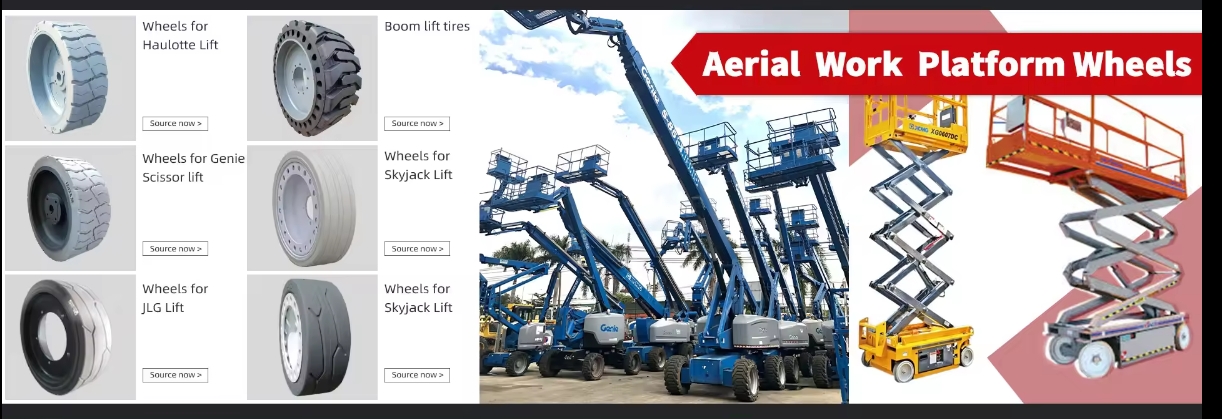
Types of wheels used on boom lifts
Different working environments require different wheel types. Understanding the available options helps in selecting the best fit for your application.
Solid rubber wheels
Solid rubber wheels are widely used in boom lifts due to their durability and puncture-proof nature. They are ideal for environments where sharp objects or debris are present.
● No risk of air leakage or blowouts
● Minimal maintenance requirements
● Consistent performance under heavy loads
These wheels are especially suitable for construction sites and industrial zones where reliability is critical.
Foam-filled tires
Foam-filled tires offer a balance between comfort and durability. They are pneumatic tires filled with polyurethane foam, eliminating air pressure issues while maintaining some level of shock absorption.
● Improved ride comfort compared to solid wheels
● Reduced risk of sudden failure
● Suitable for mixed indoor and outdoor use
Non-marking wheels
For indoor environments such as warehouses, shopping centers, or airports, non-marking wheels are essential to protect flooring.
● Prevent black marks or surface damage
● Maintain clean and professional environments
● Available in both solid and foam-filled options
How the right wheels improve operational efficiency
Choosing appropriate boom lift wheels can significantly enhance productivity and reduce operational disruptions.
● Reduced downtime
Durable wheels minimize the risk of unexpected breakdowns, allowing continuous operation.
● Better maneuverability
Proper traction and design enable smoother movement, especially in tight or complex spaces.
● Enhanced safety performance
Stable wheels reduce the likelihood of tipping or slipping, which is crucial when working at height.
● Lower maintenance costs
Long-lasting wheels reduce replacement frequency and service requirements.
● Increased equipment lifespan
Consistent support and reduced vibration help protect other machine components from premature wear.
Factors to evaluate before selecting boom lift wheels
A one-size-fits-all approach does not work when it comes to boom lift wheels. Careful evaluation of operational conditions ensures optimal performance.
● Surface conditions
Consider whether the equipment will be used on smooth floors, gravel, mud, or uneven terrain.
● Load requirements
Match wheel specifications with the maximum operating weight of the boom lift, including tools and personnel.
● Environmental exposure
Temperature extremes, chemicals, and moisture can all affect wheel performance and lifespan.
● Frequency of use
High-duty cycles require more durable materials and construction.
● Indoor vs outdoor application
Non-marking and smooth wheels are better for indoor use, while rugged designs are needed for outdoor environments.
Common challenges and how to avoid them
Improper wheel selection can lead to several operational issues that impact efficiency and safety.
● Premature wear
Often caused by using the wrong compound for the working environment.
● Reduced traction
Inappropriate tread design may lead to slipping, especially on wet or uneven surfaces.
● Increased vibration
Low-quality wheels or incorrect sizing can affect stability and operator comfort.
● Unexpected failures
Choosing wheels without adequate load capacity can result in structural damage.
Addressing these challenges starts with understanding application requirements and working with experienced suppliers who can recommend suitable solutions.
Future trends in boom lift wheel technology
As the demand for efficiency and sustainability grows, wheel technology continues to evolve.
Manufacturers are developing advanced rubber compounds that offer lower rolling resistance, improving energy efficiency for electric boom lifts. Additionally, innovations in composite materials are enhancing durability while reducing overall weight.
Smart monitoring systems are also emerging, allowing operators to track wear levels and predict maintenance needs, further reducing downtime and improving fleet management.
Conclusion
Boom lift wheels are a fundamental component that directly influences the safety, efficiency, and reliability of aerial work platforms. By selecting the right type of wheels based on application requirements, businesses can reduce downtime, improve operational performance, and ensure safer working conditions.
Investing in high-quality wheels is not just about equipment maintenance—it is a strategic move that supports long-term productivity and cost control in demanding work environments.
FAQ
1. What type of wheels are best for boom lifts used on construction sites?
Solid rubber wheels are typically the best choice due to their durability and resistance to punctures.
2. Are foam-filled tires better than solid wheels?
Foam-filled tires provide better shock absorption, but solid wheels offer maximum durability. The choice depends on your working conditions.
3. Do boom lift wheels require regular maintenance?
While they require less maintenance than pneumatic tires, regular inspection for wear and damage is still recommended.
4. How can I extend the lifespan of boom lift wheels?
Proper load management, correct wheel selection, and regular inspections can significantly extend their service life.
Post time: 28-04-2026