
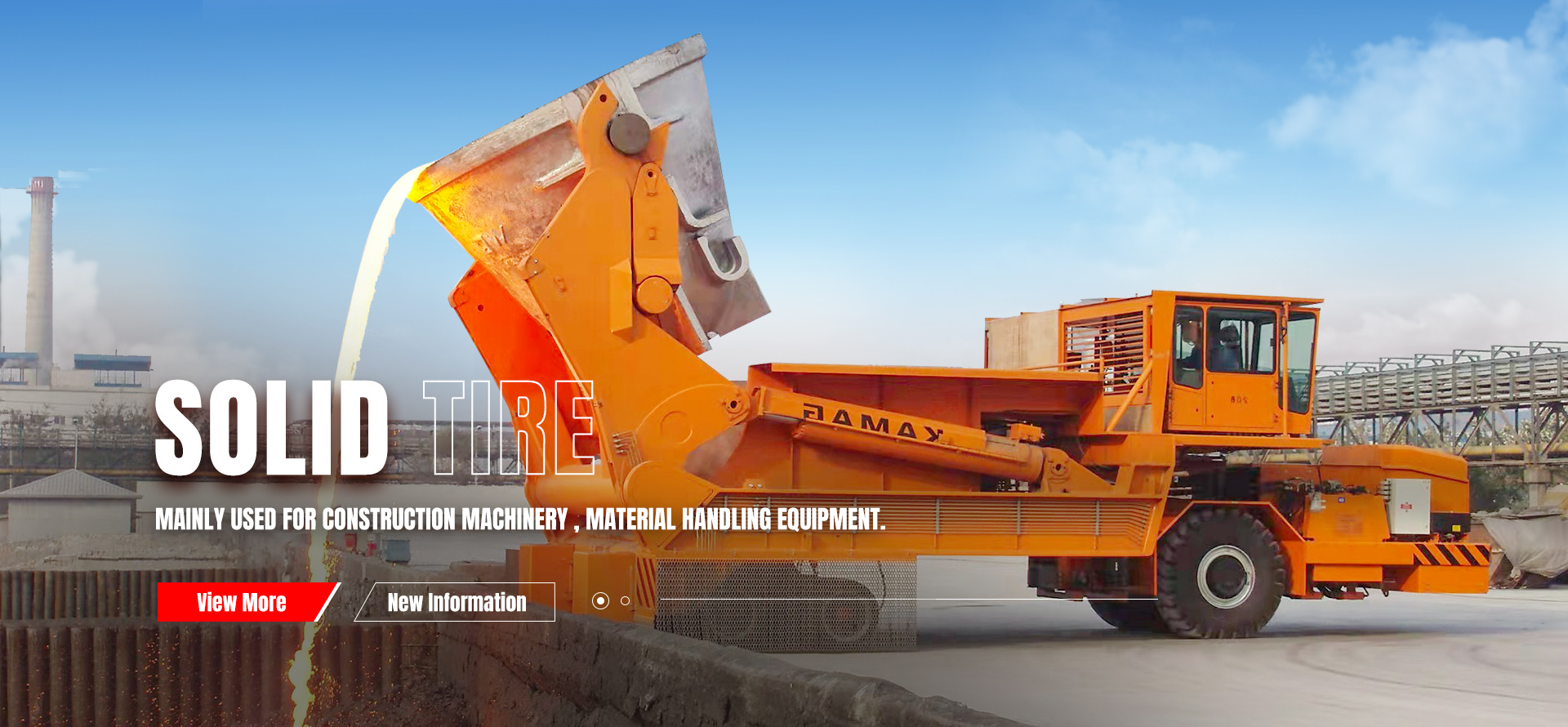
In steel plants and heavy metallurgy environments, ladle carriers are among the most demanding types of industrial transport equipment. These machines are responsible for moving molten metal safely across production areas, often under extreme temperatures, heavy loads, and continuous operating cycles. Under such conditions, tire performance is not just a matter of durability—it directly impacts safety, efficiency, and operational continuity.
Solid rubber tires for ladle carriers have become the preferred solution for these applications due to their ability to withstand harsh environments while maintaining consistent performance.
Understanding the operational challenges of ladle carriers
Ladle carriers operate in environments that combine heat, weight, and constant movement, which places extraordinary stress on every component of the machine, especially the tires. Unlike standard industrial vehicles, ladle carriers must perform reliably while transporting molten steel, where any instability or failure can lead to severe safety risks.
● Extreme high-temperature exposure
Ladle carriers often operate near furnaces and casting zones, where ambient temperatures can significantly affect material performance, requiring tires that resist heat degradation and maintain structural integrity.
● Heavy load-bearing requirements
These vehicles carry ladles filled with molten metal, resulting in extremely high weight loads that require tires with exceptional load capacity and resistance to deformation.
● Continuous duty cycles
Steel plant operations typically run around the clock, meaning tires must withstand long hours of operation without performance decline.
● Harsh ground conditions
Industrial floors may include slag, metal debris, and uneven surfaces that can damage conventional tires quickly.
Why solid rubber tires are ideal for ladle carriers
Solid rubber tires are specifically engineered to meet the demands of heavy industrial environments, offering a combination of strength, resilience, and reliability that pneumatic tires cannot match.
● Superior heat resistance
High-quality solid rubber compounds are designed to tolerate elevated temperatures without softening or cracking, ensuring stable performance even in proximity to molten metal operations.
● No risk of punctures or blowouts
Because solid tires contain no air, they eliminate the risk of sudden failure caused by sharp debris, which is common in steel plant environments.
● Exceptional load stability
Solid rubber tires maintain their shape under extreme loads, providing a stable base for transporting molten materials safely.
● High wear resistance
Engineered to handle abrasive surfaces, these tires offer extended service life, even under continuous heavy-duty use.
Performance advantages in steel plant logistics
The use of solid rubber tires for ladle carriers contributes directly to improved efficiency and safety in steel production facilities.
● Enhanced operational stability
Stable tires reduce vibration and movement during transport, minimizing the risk of load imbalance when carrying molten metal.
● Reduced downtime
The durability of solid tires significantly lowers the frequency of replacements and repairs, allowing uninterrupted operation.
● Consistent traction
Reliable grip ensures controlled movement, even on surfaces contaminated with dust, slag, or moisture.
● Improved safety margins
Eliminating the risk of tire failure enhances overall plant safety, protecting both personnel and equipment.
Key design features of high-quality solid rubber tires
Not all solid rubber tires are created equal, especially when it comes to ladle carrier applications. High-performance tires incorporate specialized design elements to meet industrial demands.
● Multi-layer construction
Advanced designs often include multiple rubber layers that provide both strength and limited shock absorption, improving durability without compromising stability.
● Heat-resistant compounds
Special formulations are used to resist thermal degradation and maintain elasticity under high temperatures.
● Reinforced internal structure
Strong internal cores help maintain shape under extreme loads, preventing deformation during operation.
● Optimized tread patterns
Depending on application, tread designs may enhance traction while minimizing wear.
Factors to consider when selecting solid rubber tires for ladle carriers
Choosing the right tire specification is essential for achieving optimal performance and longevity in steel plant operations.
● Load capacity requirements
Ensure that the tire can support both the vehicle weight and the maximum load of molten material.
● Operating temperature range
Select tires specifically designed for high-temperature environments to avoid premature failure.
● Floor conditions
Consider the type of surface, including exposure to slag, metal fragments, and uneven ground.
● Usage intensity
High-frequency operations require tires with enhanced durability and wear resistance.
● Compatibility with equipment
Proper sizing and fitting are critical to maintaining stability and safety.
Maintenance considerations for extended tire life
Although solid rubber tires require less maintenance than pneumatic options, proper care is still necessary to maximize their lifespan.
● Regular inspection
Check for signs of wear, cracks, or damage that could affect performance.
● Surface cleaning
Remove debris such as metal fragments or slag that could accelerate wear.
● Load management
Avoid overloading, which can cause excessive stress and reduce tire life.
● Scheduled replacement planning
Monitor wear patterns to plan timely replacements and prevent unexpected downtime.
The long-term value of solid rubber tires in metallurgy operations
Investing in high-quality solid rubber tires for ladle carriers delivers significant long-term benefits that extend beyond initial performance improvements.
● Lower total cost of ownership
Reduced maintenance, fewer replacements, and minimized downtime contribute to overall cost savings.
● Improved production efficiency
Reliable equipment supports continuous operations, which is critical in steel manufacturing processes.
● Enhanced workplace safety
Stable and durable tires reduce the likelihood of accidents associated with equipment failure.
● Better resource utilization
Long-lasting tires reduce material waste and support more sustainable operations.
Conclusion
Solid rubber tires for ladle carriers are an essential component in ensuring safe, efficient, and reliable operations in steel plants and heavy industrial environments. Their ability to withstand extreme heat, heavy loads, and continuous use makes them a superior choice compared to traditional tire options.
By selecting the right tire specifications and implementing proper maintenance practices, businesses can significantly enhance equipment performance, reduce operational risks, and achieve long-term cost efficiency. In high-temperature metallurgy operations, where reliability is non-negotiable, solid rubber tires provide the foundation for consistent and secure material handling.
FAQ
1. Why are solid rubber tires preferred for ladle carriers?
Because they offer heat resistance, puncture-proof performance, and stability under extreme loads, making them ideal for steel plant environments.
2. Can solid rubber tires withstand high temperatures?
Yes, specially formulated compounds are designed to perform reliably in high-temperature conditions.
3. How long do solid rubber tires last in steel plants?
Their lifespan depends on usage and conditions, but they generally last significantly longer than pneumatic tires in similar environments.
4. Do solid rubber tires require maintenance?
They require minimal maintenance, mainly regular inspection and cleaning to ensure optimal performance.
Post time: 29-04-2026