
Press-on solid tires are widely used in modern warehouse forklifts, electric pallet trucks, and industrial handling equipment where stability, durability, and compact design are essential for daily operations. Unlike pneumatic tires or standard solid tires, press-on tires are designed to be directly bonded onto a steel wheel core, creating a compact and highly stable structure that performs exceptionally well in indoor logistics environments.
In facilities such as distribution centers, manufacturing plants, cold storage warehouses, and automated storage systems, equipment uptime and maneuverability are critical. Press-on solid tires help ensure smooth operation under continuous workloads while minimizing maintenance interruptions and floor damage, making them a preferred solution for modern material handling systems.
What Are Press-On Solid Tires and How Do They Work?
Press-on solid tires are a type of solid rubber tire that is permanently pressed and bonded onto a metal wheel hub using hydraulic pressing equipment. This design eliminates the need for separate tire mounting and creates a single integrated wheel-tire assembly.
The rubber layer is manufactured with high-density compounds that provide wear resistance, load support, and controlled flexibility, while the steel core ensures structural rigidity and secure attachment to the forklift axle system. Once installed, the tire remains fixed on the wheel, which prevents slippage and improves operational stability.
Because there is no air inside and no separate tire bead structure, press-on solid tires are highly resistant to punctures, deformation, and sudden failure, making them ideal for continuous indoor operations.
● Integrated wheel design improves structural stability
● High-density rubber provides strong wear resistance
● Eliminates risk of air leakage or punctures
● Ensures consistent contact with indoor flooring surfaces
● Reduces vibration during low-speed material handling
● Extends service life in continuous warehouse operations
Why Are Press-On Tires Ideal for Indoor Forklift Applications?
Indoor material handling environments require equipment that can operate smoothly in narrow aisles, controlled floor conditions, and high-frequency operational cycles. Press-on solid tires are specifically designed to meet these requirements by offering a compact profile and stable performance under repetitive load conditions.
Unlike larger industrial tires used in construction or port environments, press-on tires are optimized for smooth surfaces such as epoxy flooring and polished concrete commonly found in warehouses and production facilities.
Their stable contact surface improves forklift control accuracy, which is essential when handling pallets, fragile goods, or high-density storage systems.
● Optimized for smooth indoor warehouse floors
● Enhances maneuverability in narrow aisle operations
● Supports high-frequency pallet handling cycles
● Improves directional stability during low-speed movement
● Reduces floor wear and surface damage
● Suitable for electric forklifts and warehouse trucks
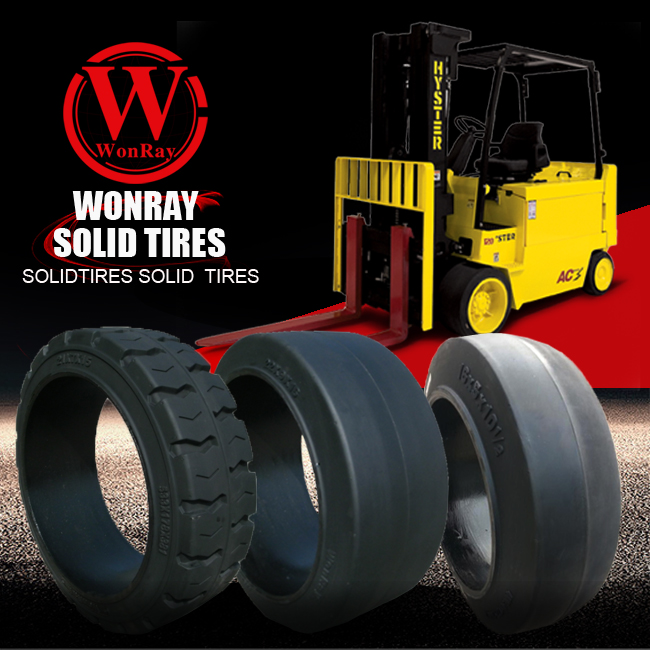
Structural Advantages of Press-On Solid Tire Design
The key engineering feature of press-on solid tires is the fusion of rubber tread and steel hub into a single unit. This design removes multiple mechanical connection points found in traditional wheel assemblies, reducing the risk of component separation or instability during long-term use.
The rubber layer is typically engineered with wear-resistant compounds that balance hardness and elasticity, allowing the tire to support heavy loads while maintaining smooth rolling performance. The steel core provides rigidity and ensures that the tire remains securely fixed during repeated loading and braking cycles.
This combination results in a highly stable wheel system suitable for continuous industrial use.
● Permanent bonding between rubber and steel core
● High load-bearing capacity for warehouse forklifts
● Reduced risk of mechanical loosening or failure
● Uniform load distribution across contact surface
● Improved stability during frequent stop-and-go operation
● Designed for long service life in controlled environments
Application Areas in Modern Logistics Systems
Press-on solid tires are widely used in industries where indoor material handling efficiency is a critical part of daily operations. Their compact design and durability make them especially suitable for electric forklifts and warehouse vehicles operating in structured logistics environments.
In distribution centers, they support fast pallet movement between storage racks and loading docks. In manufacturing plants, they enable continuous transport of raw materials and finished goods along production lines. In cold storage facilities, they maintain reliable performance under low-temperature conditions where material flexibility is essential.
They are also commonly used in e-commerce fulfillment centers, retail distribution hubs, and automated warehousing systems.
● Warehousing and distribution centers
● Manufacturing and assembly plants
● Cold storage and temperature-controlled facilities
● E-commerce logistics fulfillment hubs
● Retail supply chain warehouses
● Automated storage and retrieval systems
Performance Benefits in Continuous Operation
One of the key advantages of press-on solid tires is their ability to maintain consistent performance in high-frequency indoor operations. Since warehouse forklifts often operate continuously throughout the day, tire stability and durability play a major role in maintaining productivity.
The solid rubber structure eliminates downtime caused by punctures or air pressure issues, while the bonded design ensures that the tire remains securely attached even under repetitive acceleration and braking cycles. This results in predictable performance and reduced maintenance interruptions.
Additionally, modern press-on tire designs incorporate improved rubber compounds that reduce vibration and improve operator comfort during long shifts.
● Ensures uninterrupted warehouse operation cycles
● Eliminates downtime from tire-related failures
● Provides stable performance under repetitive loads
● Improves forklift handling precision in tight spaces
● Reduces maintenance frequency and operational costs
● Enhances operator comfort in continuous use environments
Key Factors Affecting Tire Lifespan
Although press-on solid tires are designed for durability, their lifespan depends on several operational and environmental factors. Proper usage and maintenance practices can significantly extend their service life and improve overall efficiency.
Floor condition plays an important role, as smoother surfaces reduce abrasion and extend tire longevity. Load distribution also affects wear patterns, especially in forklifts that frequently carry uneven or maximum-capacity loads. Driving behavior, such as sharp turning or aggressive braking, can increase surface wear over time.
Temperature conditions and equipment maintenance also contribute to long-term performance stability.
● Floor smoothness and surface quality
● Load intensity and usage frequency
● Driving habits and operational techniques
● Temperature and indoor environment conditions
● Forklift maintenance and alignment condition
FAQ:
1. What are press-on solid tires used for?
They are mainly used in indoor forklifts and material handling equipment where stable performance, compact design, and durability are required.
2. How are press-on tires installed?
They are installed using hydraulic pressing equipment that permanently bonds the rubber tire onto a steel wheel core.
3. Are press-on tires suitable for heavy loads?
Yes, they are designed for warehouse and industrial forklift applications that involve frequent heavy pallet handling.
4. Do press-on tires require frequent maintenance?
No, they require minimal maintenance since they do not rely on air pressure and have no separate mounting components that need adjustment.
Press-on solid tires continue to play an essential role in modern warehouse and logistics systems where efficiency, stability, and continuous operation are critical. As automated warehousing and high-density storage systems expand, their importance in ensuring reliable indoor material handling will continue to grow.
Post time: 29-05-2026