
Anti-wear forklift solid tires are widely used in warehouses, factories, ports, and logistics centers because they solve one of the most common problems in material handling equipment: frequent tire damage and unexpected downtime. In high-intensity working environments, forklifts are expected to operate continuously under heavy loads, and any tire failure can directly disrupt productivity and increase operational costs.
Unlike traditional pneumatic tires, anti-wear solid tires are designed with a fully rubberized structure that eliminates air pressure dependency. This structural difference makes them far more resistant to punctures, cuts, and surface wear, which is why they are increasingly preferred in demanding industrial applications.
What Makes Anti-wear Forklift Solid Tires Different From Standard Tires?
The key difference lies in both structure and performance characteristics. Anti-wear forklift solid tires are manufactured using high-density rubber compounds and multi-layer bonding technology that integrates hardness, elasticity, and load-bearing capacity into a single compact structure.
Standard pneumatic tires rely on air pressure for cushioning, which makes them vulnerable to sharp objects and uneven surfaces. In contrast, solid tires maintain structural integrity even under extreme conditions, ensuring stable forklift operation without sudden deflation risks.
This design advantage makes them especially suitable for industries where safety, uptime, and predictable performance are critical.
Why Do Industrial Environments Prefer Solid Tires Over Pneumatic Tires?
In real-world operations, forklift tires are exposed to constant friction, heavy loads, and rough surfaces. Anti-wear solid tires offer a more reliable solution because they are engineered to withstand these challenges without frequent replacement or maintenance.
● They eliminate downtime caused by punctures or air leakage, ensuring continuous forklift operation
● They provide higher load-bearing stability for heavy cargo handling in steel, construction, and logistics industries
● They reduce maintenance workload since no air pressure monitoring or inflation is required
● They deliver consistent performance even in environments filled with debris, nails, or metal fragments
● They improve operational safety by minimizing sudden tire failure risks during heavy-duty use
● They extend service life significantly compared to conventional rubber or pneumatic tires
● They maintain stable traction on both indoor warehouse floors and outdoor rough surfaces
These advantages make them a practical choice for businesses aiming to improve efficiency while reducing long-term operating costs.
Where Are Anti-wear Forklift Solid Tires Most Commonly Used?
These tires are not limited to a single industry but are widely applied across multiple heavy-duty sectors where forklifts play a central role in daily operations.
In manufacturing plants, they support continuous movement of raw materials and finished goods across production lines. In logistics distribution centers, they ensure stable performance during high-frequency loading and unloading cycles. In ports and freight terminals, they handle heavy containers and operate under demanding ground conditions.
They are also commonly used in recycling facilities, construction material yards, and steel processing plants, where sharp debris and uneven surfaces would quickly damage conventional tires.
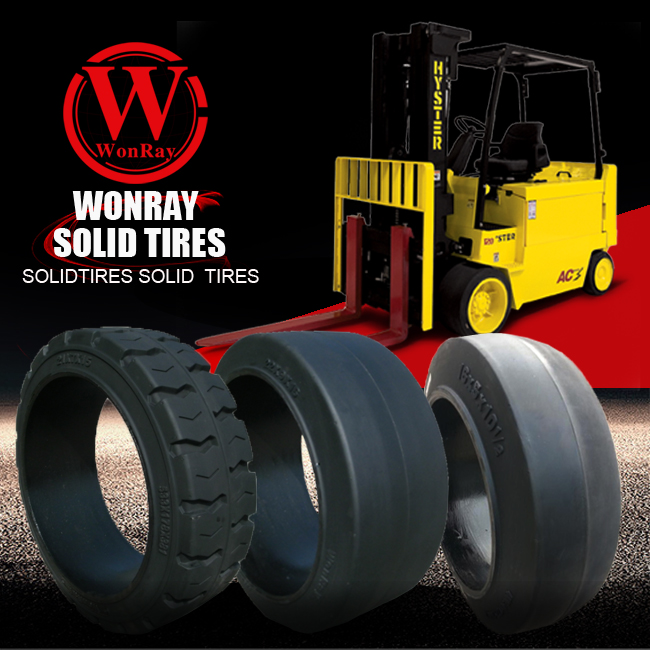
How Does Tire Structure Affect Wear Resistance and Performance?
The anti-wear capability of forklift solid tires is directly linked to their internal structure and material engineering. Most high-performance models use a three-layer design system that balances durability, shock absorption, and stability.
The outer tread layer is made from wear-resistant rubber compounds designed to reduce abrasion from constant ground contact. The middle layer acts as a cushioning zone that absorbs vibration and reduces impact stress. The inner base layer ensures secure wheel fitting and load stability during heavy-duty operation.
This layered structure ensures that the tire does not deform easily under pressure while still providing enough flexibility for smoother operation across different surfaces.
What Factors Influence the Lifespan of Forklift Solid Tires?
Although anti-wear forklift solid tires are designed for long service life, their actual durability still depends on working conditions and operational behavior.
● Surface quality plays a major role, as smoother flooring reduces friction and extends tire life
● Load distribution affects wear patterns, especially when forklifts consistently carry uneven weights
● Driving habits such as sudden braking and aggressive turning increase surface abrasion
● Temperature extremes can impact rubber performance and elasticity over time
● Regular wheel alignment checks help prevent uneven tire wear
● Proper forklift maintenance ensures stable pressure distribution and reduces vibration stress
By controlling these operational factors, businesses can significantly extend tire lifespan and improve overall equipment efficiency.
Are Anti-wear Forklift Solid Tires Worth the Higher Initial Cost?
At first glance, solid tires may appear more expensive than pneumatic alternatives, but their long-term value becomes clear when considering total operating costs. The elimination of puncture-related downtime, reduced maintenance requirements, and extended service life all contribute to lower overall expenditure.
In high-volume operations where forklifts run continuously, even small reductions in downtime can translate into significant productivity gains. This makes anti-wear solid tires a cost-effective long-term investment rather than a short-term expense.
Do Solid Tires Affect Forklift Comfort and Efficiency?
One common concern is whether solid tires reduce driving comfort due to their rigid structure. While early versions of solid tires were known for being stiff, modern anti-wear designs now incorporate improved cushioning layers that help absorb vibration and impact.
This results in a more stable driving experience without significantly compromising operator comfort. At the same time, the improved structural stability enhances lifting precision and directional control, which is especially important in narrow warehouse aisles and high-load operations.
FAQ:
1. Why are anti-wear forklift solid tires better than pneumatic tires?
They eliminate air pressure dependency, reduce puncture risk, and provide significantly higher durability in harsh industrial environments.
2. Can these tires be used in outdoor environments?
Yes, they are suitable for both indoor and outdoor use and perform particularly well on rough, uneven, or debris-covered surfaces.
3. How long do anti-wear forklift solid tires last in heavy-duty use?
Their lifespan varies based on workload and operating conditions, but they typically last much longer than standard pneumatic tires in industrial applications.
4. Do these tires require any maintenance?
They require minimal maintenance since there is no need for air pressure checks or inflation, although regular inspection for wear patterns is recommended.
Anti-wear forklift solid tires continue to gain popularity as industries prioritize reliability, safety, and long-term cost efficiency. With ongoing improvements in rubber technology and structural design, they are becoming an essential component in modern material handling systems where performance stability is critical.
Post time: 27-05-2026