
In many light industrial and compact equipment applications, 10 inch solid rubber tyres have become a widely adopted solution due to their durability, stability, and low maintenance requirements. These tyres are commonly used on small loaders, material handling equipment, forklifts, airport ground support machines, and various types of utility vehicles where reliability is more important than ride comfort.
Unlike pneumatic tyres, solid rubber tyres are designed without air chambers, which eliminates the risk of punctures and sudden deflation. This makes them especially valuable in environments where sharp debris, heavy loads, and continuous operation are common.
What Makes 10 Inch Solid Rubber Tyres Different from Standard Tyres?
The main difference between solid rubber tyres and traditional pneumatic tyres lies in their structure. A 10 inch solid tyre is manufactured from layered rubber compounds or fully molded elastomer materials, forming a completely solid core.
This structural design changes how the tyre behaves under load and stress. Instead of relying on air pressure to absorb impact, the rubber material itself absorbs and distributes force across the entire tyre body.
In practical terms, this means:
● No air pressure dependency, eliminating puncture and leakage risks
● Consistent shape retention under heavy load conditions
● Strong resistance to sharp objects and rough surfaces
● Stable performance even during long operational cycles
● Reduced maintenance requirements compared to pneumatic tyres
Because of these characteristics, 10 inch solid rubber tyres are widely used in environments where equipment must operate continuously without interruption.
Key Applications of 10 Inch Solid Rubber Tyres in Modern Industry
Although compact in size, 10 inch solid rubber tyres play an important role in many industrial systems. Their size makes them ideal for small to mid-sized equipment that still requires strong durability.
They are commonly used in the following areas:
● Warehouse equipment such as small forklifts and pallet trucks
● Airport ground support vehicles and baggage handling carts
● Light construction machinery and compact loaders
● Industrial trolleys used in factories and logistics centers
● Agricultural utility carts and transport equipment
These applications share a common requirement: stable performance under repetitive load cycles in environments where downtime must be minimized.
Performance Advantages in Real Working Conditions
In practical use, 10 inch solid rubber tyres are valued not only for their durability but also for their predictable performance under stress. Unlike pneumatic tyres that may deform or lose pressure, solid tyres maintain consistent geometry during operation.
This stability improves equipment handling, especially in tight indoor environments such as warehouses or production facilities where precision movement is required.
Another important factor is resistance to environmental damage. These tyres perform well in environments exposed to oil, moisture, metal fragments, and abrasive flooring surfaces.
Their performance advantages can be summarized as follows:
● High structural stability during repetitive loading and unloading cycles
● Strong resistance to wear in abrasive industrial environments
● Reliable operation in indoor and outdoor mixed-use conditions
● Reduced risk of sudden failure or operational downtime
● Consistent performance over long service periods
These benefits make them particularly attractive for businesses focused on operational efficiency and maintenance reduction.
Durability and Long-Term Cost Efficiency
One of the strongest reasons businesses choose 10 inch solid rubber tyres is long-term cost savings. While the initial purchase price may be higher than standard pneumatic tyres, the overall lifecycle cost is often significantly lower.
This cost advantage comes from multiple factors. First, there is no need for air pressure maintenance or frequent repair due to punctures. Second, solid tyres generally last longer in high-use environments, reducing replacement frequency.
Over time, this reduces both direct material costs and indirect operational costs such as labor, downtime, and equipment idle time.
From a lifecycle perspective:
● Longer service life compared to air-filled tyres in harsh conditions
● Lower maintenance requirements and fewer emergency repairs
● Reduced downtime improves overall equipment productivity
● Fewer replacements reduce long-term procurement expenses
For companies operating fleets of small industrial equipment, these savings can become significant.
Design and Material Engineering Behind Solid Rubber Tyres
The performance of 10 inch solid rubber tyres is heavily influenced by material composition and manufacturing technology. Most modern designs use multi-layer rubber structures, combining harder outer layers with slightly softer inner cores.
This design helps balance durability and shock absorption. The outer layer resists abrasion and cutting, while the inner structure absorbs impact energy.
Some advanced versions may also include reinforced compounds to improve heat resistance and load distribution, making them suitable for continuous operation environments.
In addition, the compact 10 inch size allows these tyres to be used in equipment where space and maneuverability are critical, without sacrificing strength.
Maintenance Characteristics and Operational Simplicity
One of the most practical advantages of solid rubber tyres is their extremely low maintenance requirement. Since there is no air chamber, operators do not need to check pressure levels or worry about slow leaks.
This simplifies daily operations and reduces the workload for maintenance teams.
Typical maintenance involves only basic inspection:
● Checking surface wear patterns for uneven abrasion
● Inspecting for cuts, cracks, or deep surface damage
● Monitoring alignment issues that may affect tyre wear
This simplicity is especially valuable in high-utilization environments where equipment must be ready for use at all times.
Where 10 Inch Solid Rubber Tyres Perform Best
These tyres are not designed for high-speed transportation or passenger comfort applications. Instead, they are optimized for controlled industrial environments where stability and durability are more important.
They perform best in:
Warehouse logistics systems where forklifts operate continuously
Manufacturing facilities with heavy material movement
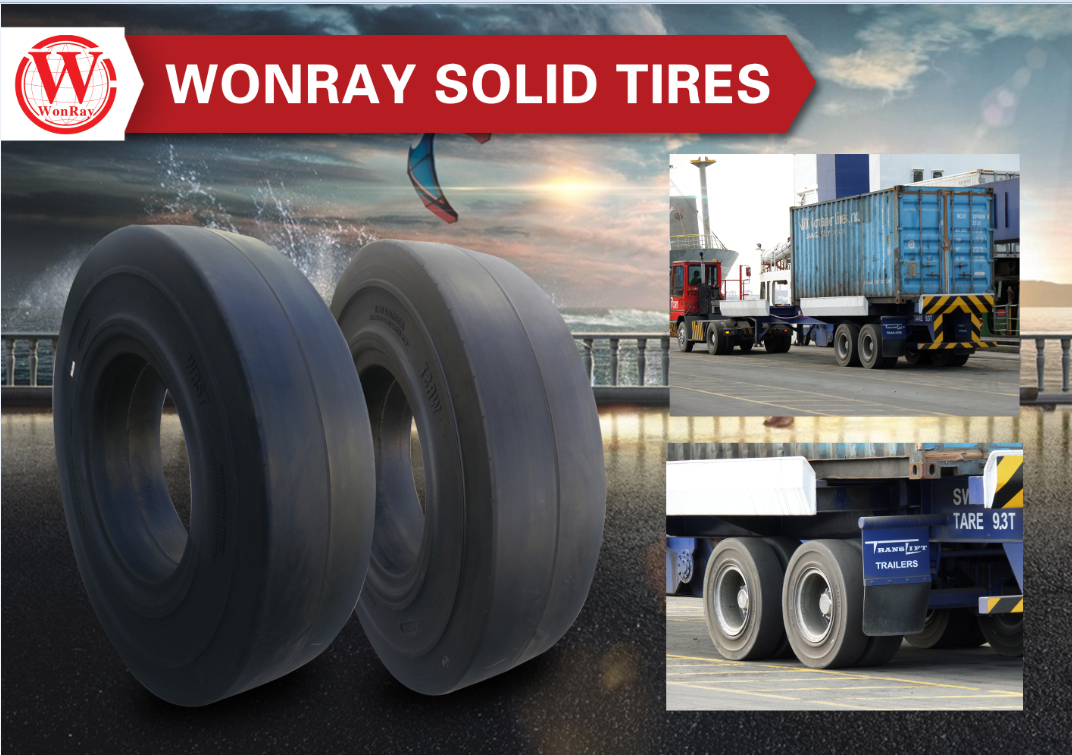
Airport and port ground handling operations
Compact machinery used in construction support tasks
In these environments, reliability and uptime are far more important than ride softness or speed performance.
FAQ:
1. Are 10 inch solid rubber tyres suitable for outdoor use?
Yes, they can be used outdoors, especially in industrial yards and construction support areas. However, they perform best on controlled surfaces where extreme shock absorption is not the primary requirement.
2. Do solid rubber tyres affect equipment performance?
They provide more stable but slightly firmer operation compared to pneumatic tyres. This improves precision and reliability but reduces cushioning on rough terrain.
3. How long do 10 inch solid rubber tyres typically last?
Service life depends on workload and environment, but in industrial applications they often last significantly longer than pneumatic tyres, especially in puncture-prone areas.
4. Can these tyres be repaired if damaged?
Minor surface wear can be monitored, but in most cases solid rubber tyres are not repaired like pneumatic tyres. Severe damage usually requires replacement.
Conclusion
10 inch solid rubber tyres are a practical solution for compact industrial equipment that requires reliability, durability, and low maintenance operation. Their solid structure eliminates the risk of punctures while delivering consistent performance in demanding environments.
As industries continue to prioritize efficiency and reduced downtime, these tyres are becoming an increasingly important component in warehouse systems, logistics operations, and light industrial machinery.
Post time: 05-06-2026