
In clean room industries, every component inside the production environment must support contamination control, operational stability, and regulatory compliance. While companies often focus on air filtration systems, wall materials, and automated production equipment, the tires used on forklifts, AGVs, pallet trucks, and industrial carts are equally important. Standard industrial tires can leave marks, release particles, and introduce contaminants into highly sensitive environments. This is why white rubber tires for clean rooms have become a preferred solution for modern contamination-controlled facilities.
Designed specifically for clean applications, white rubber tires combine non-marking performance, low particle generation, and reliable load-bearing capability, making them suitable for industries such as pharmaceuticals, semiconductors, electronics manufacturing, food processing, biotechnology, and medical device production.
What are white rubber tires for clean rooms?
White rubber tires are industrial tires manufactured using non-marking rubber compounds that do not contain traditional carbon black materials commonly used in standard industrial tires. Their primary purpose is to reduce contamination risks while maintaining stable transportation performance inside controlled environments.
Compared with ordinary industrial tires, clean room white rubber tires are engineered to provide:
● Cleaner operation on sensitive flooring
● Lower particle generation during movement
● Reduced floor marking and residue
● Stable indoor handling performance
● Compatibility with strict hygiene standards
These tires are commonly installed on material handling equipment operating in controlled indoor environments where cleanliness directly affects product quality.
Why clean room environments require specialized tires
Clean rooms are designed to control airborne particles, bacteria, dust, and contamination. In such environments, even small sources of pollution can create significant operational problems.
Standard industrial tires may cause:
● Black marks on epoxy floors
● Rubber debris accumulation
● Increased airborne particles
● Surface contamination
● Higher cleaning frequency
For industries operating under GMP, ISO clean room standards, or semiconductor production requirements, these issues can negatively affect compliance and production reliability.
White rubber tires help reduce these risks by supporting cleaner internal logistics systems.
Key product features of white rubber clean room tires
Modern white rubber tires are developed not only for cleanliness but also for industrial durability and operational efficiency.
Non-marking rubber compound
The white rubber material prevents dark tire marks from appearing on clean room floors.
This helps facilities:
● Maintain cleaner production areas
● Reduce cleaning downtime
● Protect expensive flooring systems
● Improve visual cleanliness standards
Low particle generation
Specialized rubber formulations reduce friction-related particle release during operation.
This feature is especially important in:
● Semiconductor fabrication plants
● Pharmaceutical clean rooms
● Precision electronics manufacturing
High load-bearing capability
Despite their clean room focus, these tires are still designed for industrial equipment carrying heavy loads.
They provide stable support for:
● Electric forklifts
● AGV systems
● Pallet handling equipment
● Industrial transport carts
Smooth and quiet operation
Many white rubber tire products are optimized to reduce vibration and operating noise inside enclosed environments.
This improves:
● Operator comfort
● Equipment maneuverability
● Overall indoor working conditions
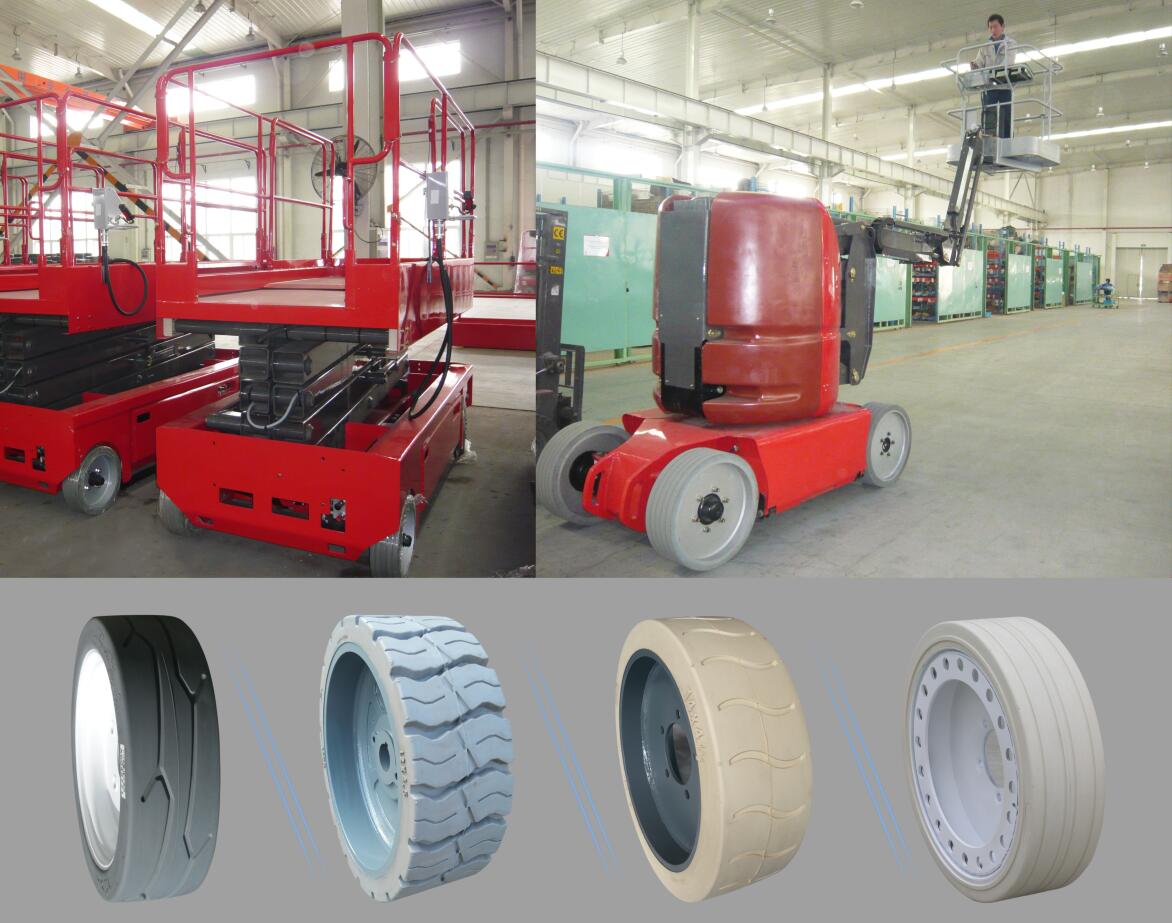
Common applications for white rubber clean room tires
White rubber tires are used in a wide variety of contamination-sensitive industries.
Pharmaceutical manufacturing
Clean transportation systems help maintain GMP-compliant production environments.
Semiconductor and electronics production
Low-particle tires reduce contamination risks around sensitive electronic components.
Food and beverage processing
Non-marking transport systems support hygienic production and packaging operations.
Biotechnology laboratories
Controlled movement of materials is essential in sensitive research environments.
Medical device manufacturing
Clean room tire systems help support strict medical production standards.
White rubber tires for AGV and automated systems
As more factories move toward automation, demand for white rubber AGV tires is growing rapidly.
Automated guided vehicles operate continuously inside clean production areas, making tire cleanliness especially important.
White rubber AGV tires help provide:
● Stable automated movement
● Reduced contamination risk
● Better floor protection
● Long-term operational consistency
Many automated production facilities now treat tire selection as part of their contamination-control planning.
Factors to consider when selecting clean room white rubber tires
Choosing the right tire requires evaluating both operational and environmental conditions.
Floor compatibility
Different clean room floors may require specific tire hardness and tread designs.
Load requirements
The tire must support equipment weight without excessive wear or deformation.
Clean room classification
Higher-level clean rooms may require ultra-low particle tire compounds.
Chemical resistance
Facilities using aggressive cleaning agents should prioritize tires resistant to chemical degradation.
Continuous operating cycles
Long-running equipment requires durable tires capable of handling extended use.
Advantages compared with traditional black industrial tires
Compared with conventional black rubber tires, white rubber clean room tires offer several important benefits.
| White Rubber Tires | Standard Black Tires |
|---|---|
| Non-marking | Leaves black marks |
| Lower particle generation | Higher contamination risk |
| Better clean room compatibility | Limited suitability |
| Improved floor protection | Can damage coated floors |
| Cleaner appearance | Visible residue accumulation |
These differences make white rubber tires a preferred option for controlled production environments.
Maintenance recommendations for clean room tire systems
Although white rubber tires require less contamination management, proper maintenance is still important.
Recommended practices include:
● Regular surface cleaning
● Checking for embedded debris
● Monitoring tread wear
● Avoiding overload conditions
● Inspecting for chemical damage
Proper maintenance helps extend tire lifespan and maintain clean room standards.
Why high-quality clean room tires improve long-term efficiency
Low-quality tire systems can increase cleaning costs, floor maintenance expenses, and contamination risks over time.
High-quality white rubber tires help facilities achieve:
● More stable production environments
● Reduced maintenance interruptions
● Lower long-term operational costs
● Better compliance with cleanliness standards
For many industries, reliable clean room logistics are just as important as advanced production equipment.
Conclusion
White rubber tires for clean rooms are an essential product for industries that require contamination-controlled material handling. Their non-marking design, low particle generation, and stable operational performance make them ideal for modern clean room logistics systems.
As industries continue raising standards for cleanliness, automation, and production precision, the importance of specialized clean room tire solutions will continue to grow. Choosing high-quality white rubber tires helps businesses improve operational reliability, maintain cleaner environments, and support long-term production efficiency.
FAQ
1. What equipment commonly uses white rubber clean room tires?
Electric forklifts, AGVs, pallet trucks, transport carts, and clean room handling equipment commonly use them.
2. Why are white rubber tires important in clean rooms?
Because they reduce floor marking, contamination risks, and airborne particle generation.
3. Can white rubber tires support heavy industrial loads?
Yes, many are specifically designed for industrial material handling applications.
4. Are white rubber tires suitable for automated systems?
Yes, they are widely used on AGVs and automated logistics equipment in clean manufacturing environments.
Post time: 07-05-2026