
Non marking forklift tires are widely used in modern industrial environments where clean flooring, strict hygiene standards, and professional facility appearance are essential. However, many buyers still struggle to understand when these tires are truly necessary and how they differ from standard industrial forklift tires in real working conditions.
In practical applications, the decision is not only about tire performance but also about operational environment, compliance requirements, maintenance cost, and long-term efficiency. Understanding these factors helps businesses choose the right tire type for stable and cost-effective forklift operations.
Clean Floor Requirements in Modern Industrial Facilities
One of the main reasons companies switch to non marking forklift tires is the increasing demand for clean and visually controlled industrial environments. Many modern warehouses and production facilities now use polished concrete, epoxy coatings, or resin flooring systems that are sensitive to rubber staining.
In these environments, traditional forklift tires can leave visible black marks during turning, braking, and frequent movement, which gradually reduces floor appearance quality and increases cleaning workload. Non marking tires solve this issue by using special rubber compounds that do not produce carbon-based residue on the surface.
This makes them particularly important in industries where cleanliness is directly linked to quality control and customer perception.
● Helps maintain clean and professional-looking warehouse floors
● Prevents long-term staining on epoxy and polished concrete surfaces
● Reduces the frequency of industrial floor cleaning and maintenance
● Supports compliance with internal hygiene and audit requirements
● Improves overall facility presentation for inspections and clients
Material Composition and Engineering Differences
Non marking forklift tires are not just a cosmetic upgrade but a result of significant material engineering changes. Instead of using traditional carbon black reinforcement, which strengthens rubber but causes black marks, manufacturers use silica-based compounds and advanced polymer blends.
This change allows the tire to maintain durability and load-bearing capacity while eliminating visible surface residue. At the same time, tread patterns are optimized to ensure stable traction and controlled friction under different working conditions.
The engineering focus is to balance three key performance factors: durability, cleanliness, and operational stability.
● Silica-based compounds replace carbon black to eliminate floor staining
● Multi-layer structure improves load distribution and stability
● Optimized tread design enhances grip without excessive surface wear
● Heat-resistant formulations improve long-term performance under continuous use
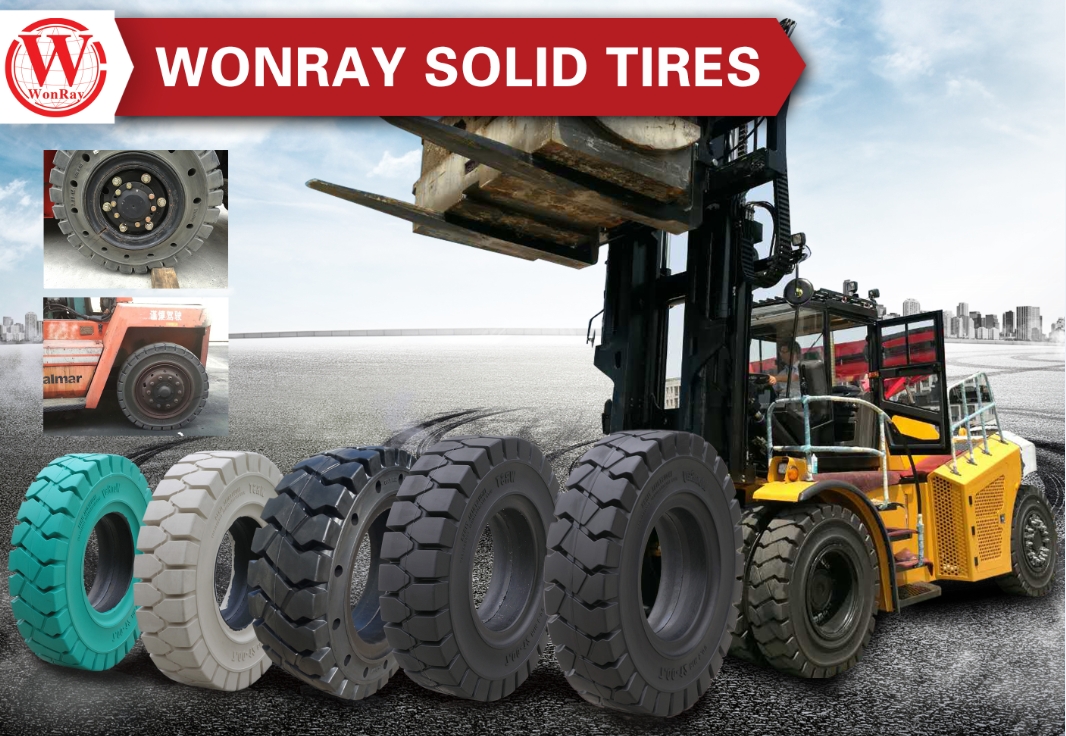
Industrial Applications Where Non Marking Tires Are Essential
Non marking forklift tires are not required in every industry, but they are essential in environments where floor protection and cleanliness standards are strict. These include sectors where contamination control, visual presentation, or sensitive production conditions are part of daily operations.
In food manufacturing plants, they help maintain hygiene compliance and prevent contamination risks caused by rubber residue. In pharmaceutical environments, they support controlled production zones where cleanliness is strictly monitored. In electronics factories, they help prevent dust and debris accumulation that could affect product quality.
They are also widely used in modern logistics centers, especially those with high-end infrastructure and automated storage systems.
● Food processing and packaging facilities
● Pharmaceutical production and clean-adjacent areas
● Electronics and precision manufacturing plants
● High-standard logistics and distribution centers
● Retail and commercial supply chain warehouses
Performance in Real Forklift Operations
In real-world usage, non marking forklift tires must perform under continuous load, frequent turning, and high friction conditions. Their performance depends on both material quality and operational behavior.
While they are designed to maintain durability, improper usage such as excessive braking, sharp turning, or uneven load distribution can still accelerate wear. However, when operated under controlled industrial conditions, they provide stable and reliable performance comparable to standard forklift tires.
The key advantage is that they maintain floor cleanliness without sacrificing essential forklift functionality.
● Stable performance under continuous forklift operation
● Reliable traction on smooth indoor surfaces
● Controlled wear rate under proper load management
● Suitable for repetitive warehouse logistics cycles
Operational Factors That Influence Tire Lifespan
Even though non marking forklift tires are engineered for durability, their lifespan is influenced by several environmental and operational factors. Understanding these helps businesses optimize usage and reduce replacement frequency.
Floor condition plays a significant role, as smoother surfaces reduce friction and extend tire life. Driving habits also directly affect wear, especially frequent sharp turns or sudden stops. Temperature variations can influence rubber flexibility, while poor wheel alignment can lead to uneven tread degradation.
Maintenance practices and forklift condition also contribute significantly to long-term tire performance.
● Floor smoothness and material type
● Load distribution and operating weight consistency
● Driver behavior and operating style
● Temperature and environmental conditions
● Forklift alignment and maintenance condition
Cost Efficiency and Long-Term Value
Although non marking forklift tires may have a higher initial cost compared to standard tires, their long-term value is often significantly higher in the right environments. The main reason is not only tire lifespan but also reduced floor maintenance costs and improved operational efficiency.
Facilities that use epoxy or polished floors often spend considerable resources on cleaning and surface restoration when standard tires are used. Non marking tires reduce or eliminate this issue, leading to lower long-term facility maintenance expenses.
In addition, they help maintain a professional warehouse appearance, which is increasingly important in global supply chain operations.
FAQ:
1. What makes a forklift tire non marking?
Non marking forklift tires use silica-based rubber compounds instead of carbon black, preventing visible black streaks on industrial flooring surfaces.
2. Are non marking forklift tires only for indoor use?
They are mainly designed for indoor clean-floor environments but can also be used outdoors when surface cleanliness is required.
3. Do non marking tires affect forklift performance?
No, they are engineered to maintain strong load capacity and traction while eliminating floor marking issues.
4. Are they suitable for heavy-duty forklifts?
They are suitable for most medium to heavy industrial applications, especially in warehouse and controlled manufacturing environments.
Non marking forklift tires have become an important solution for industries that prioritize cleanliness, efficiency, and operational consistency. As industrial standards continue to evolve, their role in modern logistics and manufacturing environments will continue to expand, especially in facilities where floor protection is a long-term operational priority.
Post time: 28-05-2026