
Port vehicle solid tires are becoming a core component in modern port and terminal operations where heavy cargo handling, continuous vehicle movement, and extreme working conditions are part of daily activity. In high-volume logistics hubs, equipment such as terminal tractors, container handlers, yard forklifts, and reach stackers must operate for long hours without interruption, often under full load and on abrasive surfaces.
In such environments, tire reliability is not just a maintenance concern but a direct factor that affects cargo flow, ship scheduling, and overall supply chain performance. This is why solid tire technology has become increasingly important in improving operational stability and reducing unexpected downtime in port logistics systems.
Increasing Pressure on Modern Port Logistics Systems
Global trade expansion has placed significant pressure on ports to improve throughput speed and operational efficiency. Containers must be moved rapidly between vessels, storage yards, and transport vehicles, often with minimal downtime between cycles. This continuous operation model creates extreme stress on all port equipment, especially tires that are constantly exposed to heavy loads and abrasive ground conditions.
Traditional pneumatic tires often struggle in these environments due to their reliance on air pressure, making them vulnerable to punctures, sidewall damage, and sudden deflation. Even a small tire failure can interrupt cargo flow and create delays across the entire logistics chain.
Port vehicle solid tires eliminate these risks by providing a fully solid rubber structure that maintains performance regardless of external damage or pressure loss.
● Supports high-frequency container handling operations
● Reduces delays caused by unexpected tire failures
● Improves efficiency in fast-turnaround port systems
● Enhances stability during continuous loading cycles
● Helps maintain predictable logistics scheduling
● Reduces operational interruptions in busy terminals
Engineering Design Focused on Terminal Performance
The design of port vehicle solid tires is centered on maximizing durability under continuous load stress while maintaining stable traction on rough industrial surfaces. Unlike air-filled tires, solid tires use a dense rubber structure that distributes weight evenly and resists deformation under pressure.
Advanced models incorporate multi-zone construction, where each layer serves a specific performance function. The outer layer resists abrasion from concrete docks and steel surfaces, the middle layer absorbs vibration caused by heavy container movement, and the core layer ensures structural integrity under extreme load conditions.
This integrated design allows the tire to maintain stability even during continuous operation cycles without the risk of sudden failure.
● High-strength rubber structure designed for extreme loads
● Multi-layer architecture improves shock absorption
● Even stress distribution reduces localized wear
● Stable performance under constant operational pressure
● Resistant to deformation during long working shifts
● Designed for high-frequency industrial use
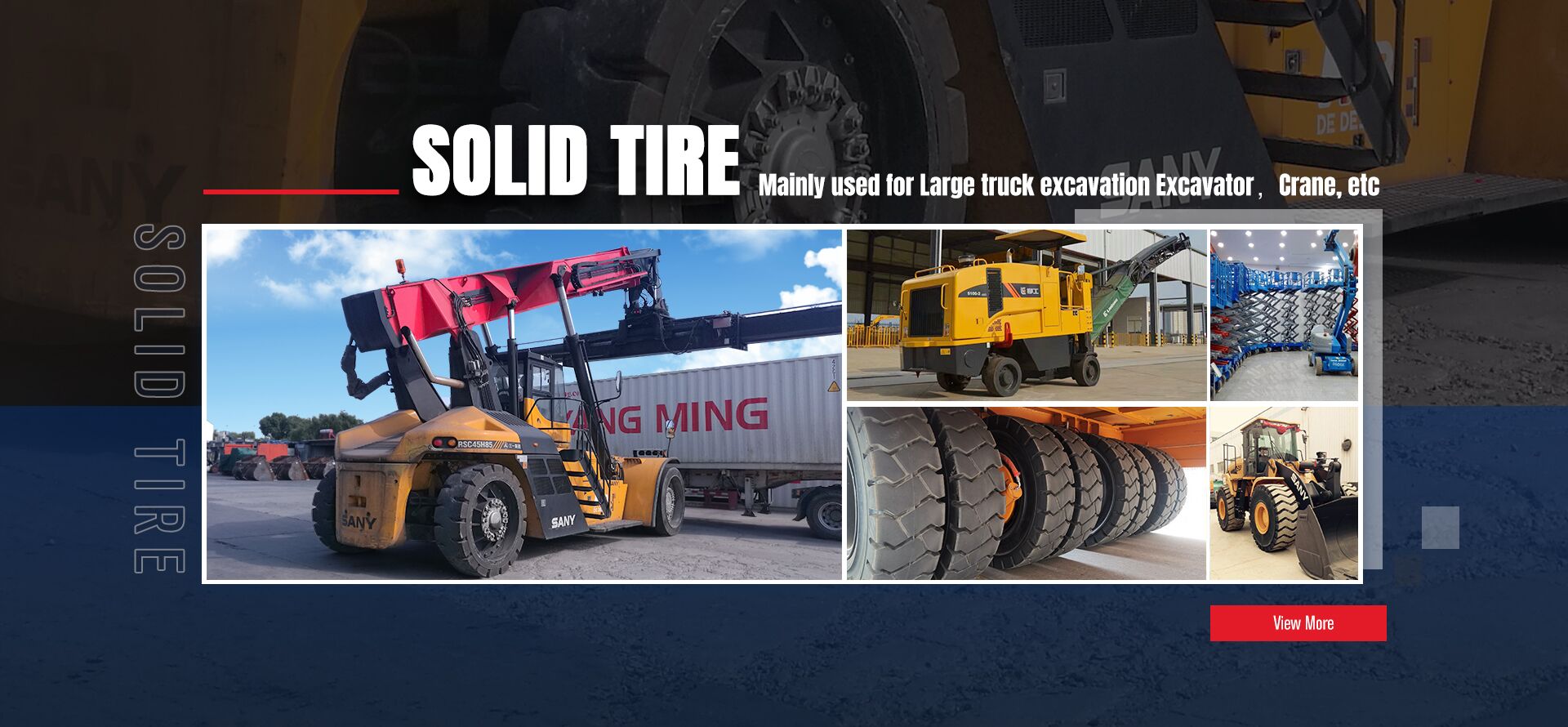
Role in Container Handling and Heavy Cargo Transport
Port vehicle solid tires are widely used across all major categories of port handling equipment. These machines operate in tightly coordinated systems where timing and reliability are critical for maintaining cargo flow between ships and inland transport systems.
Terminal tractors depend on solid tires for continuous towing of containers between docks and storage areas. Reach stackers require stable tire performance to safely lift and move heavy containers at varying heights. Yard forklifts rely on consistent traction and durability to manage repetitive loading operations throughout the day.
Without reliable tire performance, even the most advanced port equipment cannot maintain optimal productivity levels.
● Container transport tractors and terminal trucks
● Reach stackers for heavy lifting operations
● Yard forklifts for repetitive cargo handling
● Port cranes support vehicles and transfer units
● Intermodal logistics transport systems
● Bulk cargo loading and unloading equipment
Operational Stability and Safety Advantages
One of the most important benefits of solid tires in port environments is their contribution to operational safety and stability. Ports are often crowded and fast-moving environments where equipment operates in close proximity to workers, cargo, and other vehicles.
Solid tires provide consistent structural integrity even under heavy loads, reducing the risk of sudden tire failure during operation. Their rigid structure also improves lateral stability, which is essential for safe turning and maneuvering in confined terminal spaces.
Modern solid tire designs also include vibration-reduction technology that improves operator comfort and reduces fatigue during long shifts, indirectly contributing to safer working conditions.
● Enhances vehicle stability during heavy lifting
● Reduces risk of sudden operational failures
● Improves safety in high-traffic terminal zones
● Supports precise movement in tight working areas
● Reduces operator fatigue through vibration control
● Improves overall workplace safety standards
Environmental and Operational Durability
Port environments expose equipment to a combination of mechanical stress and environmental challenges, including saltwater exposure, humidity, temperature changes, and abrasive ground surfaces. These conditions can significantly reduce the lifespan of traditional tires if not properly designed for resistance.
Port vehicle solid tires use specialized rubber compounds engineered to resist environmental degradation while maintaining structural performance under heavy load conditions. The absence of air pressure also eliminates internal corrosion risks caused by moisture infiltration.
However, real-world durability still depends on operational behavior, maintenance quality, and workload intensity.
● Resistant to saltwater and coastal humidity conditions
● Maintains stability under abrasive surface contact
● Reduces environmental wear and aging effects
● Performs reliably under temperature fluctuations
● Designed for long-term industrial exposure
● Supports extended service life in terminal use
FAQ:
1. Why are solid tires preferred for port vehicles?
Solid tires provide continuous operation without air pressure dependency, eliminating puncture risk and ensuring reliable performance in heavy-duty port environments.
2. Can solid tires support heavy container handling equipment?
Yes, they are specifically designed for high-load applications such as terminal tractors, reach stackers, and container handling machinery.
3. Are solid tires suitable for long working shifts?
Yes, they are engineered for continuous operation and maintain stable performance even during extended industrial working cycles.
4. Do solid tires improve port efficiency?
Yes, by reducing downtime and maintenance interruptions, solid tires significantly improve operational efficiency and cargo handling continuity in port systems.
Port vehicle solid tires are increasingly becoming a standard component in modern terminal infrastructure. As global logistics demands continue to rise, their role in ensuring stable, efficient, and uninterrupted port operations will become even more critical in the years ahead.
Post time: 29-05-2026