
Scissor lifts are widely used in industries like construction, maintenance, and warehousing, offering significant versatility for working at heights. Whether it’s for installing lights, repairing equipment, or stocking shelves, scissor lifts provide easy access to elevated workspaces. However, one of the most important components of these machines that often goes unnoticed is the tyre.
The solid tyre for scissor lift platform is a key factor in ensuring safety, stability, and operational efficiency. In this article, we’ll dive into the advantages of using solid tyres, how they improve performance, and why they’re considered a superior choice for high-performance work environments.
Why Solid Tyres Are Essential for Scissor Lifts
Scissor lifts are frequently used in challenging environments where the terrain can be uneven, and the equipment needs to move smoothly and safely at height. The tyres on these platforms play a critical role in maintaining stability and performance.
Traditional pneumatic tyres are more susceptible to punctures, leaks, and require regular maintenance, which can lead to unnecessary downtime. Solid tyres, however, provide a solution to these challenges, offering a range of benefits.
Key Benefits of Solid Tyres for Scissor Lifts
1. Puncture-Proof Performance
One of the biggest advantages of solid tyres for scissor lifts is their puncture-proof design. Unlike pneumatic tyres, which are prone to damage from sharp objects like nails, glass, or metal fragments, solid tyres do not rely on air. This significantly reduces the risk of sudden tyre failure, making them ideal for environments where sharp debris is common, such as construction sites or warehouses.
2. Enhanced Stability and Safety
The solid construction of these tyres provides superior stability compared to pneumatic tyres. Scissor lifts often need to operate on uneven or rough terrain, and the ability of the tyres to maintain a consistent shape ensures the platform stays level. This stability is crucial when working at height, as it reduces the risk of tipping and helps operators maintain control of the lift.
3. Durability and Longevity
Solid tyres are built to withstand continuous use in demanding environments. Their durable construction can endure the rigours of high-impact work, including rough surfaces and heavy loads. The lifespan of solid tyres is typically much longer than that of pneumatic tyres, making them a cost-effective option in the long term. Reduced wear and tear translate to fewer replacements and lower maintenance costs.
4. Low Maintenance Costs
Solid tyres require minimal upkeep. Unlike pneumatic tyres, which need regular pressure checks, inflation adjustments, and puncture repairs, solid tyres are essentially maintenance-free. This not only saves time but also reduces labor costs associated with maintaining the equipment. Fewer repairs and replacements mean less downtime, ensuring that scissor lifts remain operational for longer periods.
5. Improved Load-Bearing Capacity
Scissor lifts are often used to carry heavy equipment or perform tasks that require a significant amount of lifting. Solid tyres provide a higher load-bearing capacity compared to pneumatic tyres, ensuring that the lift can handle heavier loads safely and efficiently. This is especially important in industrial applications, where the machinery is subjected to frequent heavy use.
6. Consistent Performance Under Varying Conditions
Solid tyres maintain consistent performance regardless of external conditions, such as temperature or humidity. Pneumatic tyres can be affected by air pressure changes due to temperature fluctuations, leading to inconsistent handling. In contrast, solid tyres offer a stable and predictable response in all conditions, improving the overall safety and performance of the scissor lift platform.
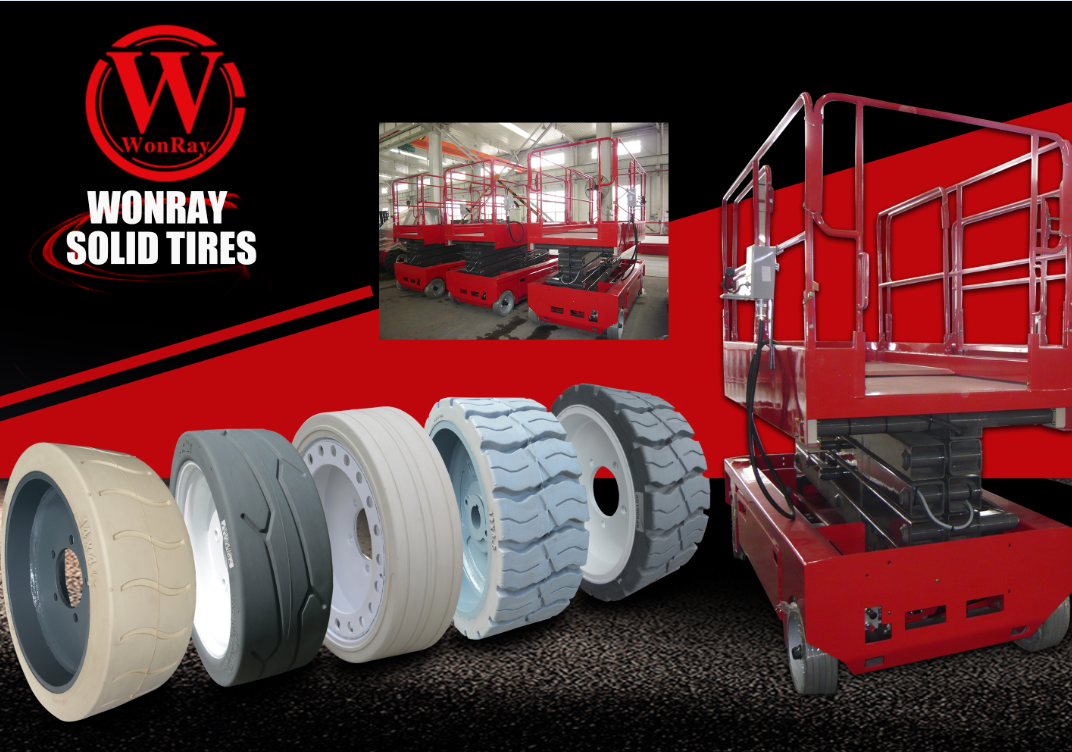
Applications of Solid Tyres for Scissor Lifts
Solid tyres are particularly beneficial for scissor lifts used in environments that demand high durability and safety. Some common applications include:
Construction Sites
Construction sites often feature rough, uneven surfaces that can quickly damage pneumatic tyres. Solid tyres can withstand the harsh conditions typically found on construction sites, including debris, rubble, and tough terrain.
Warehouses and Distribution Centers
Scissor lifts are frequently used in warehouses to stock shelves and perform maintenance work at height. Solid tyres provide excellent stability on smooth concrete floors, where precision and safety are essential for operators.
Indoor and Outdoor Maintenance
Whether the work is being performed indoors or outdoors, solid tyres ensure a consistent and reliable performance. They are particularly useful for lifts that are regularly used in both settings, offering the versatility to handle different surface types.
Facilities Management
Scissor lifts used in facilities management—such as for cleaning or installing lighting—require tyres that can handle indoor spaces with smooth surfaces, as well as outdoor environments with slightly rougher terrain. Solid tyres are the perfect choice for this dual environment.
How to Choose the Right Solid Tyres for Scissor Lifts
Selecting the right solid tyres for your scissor lift depends on several factors:
1. Load Capacity
The tyres must be able to support the weight of both the lift platform and the load it carries. Make sure to match the load-bearing capacity of the tyres to the specifications of the scissor lift.
2. Terrain Conditions
Consider the type of surface the lift will be operating on. If the lift will be used primarily on smooth surfaces, a simple solid tyre with a smooth tread design may suffice. For rough or uneven terrain, a deeper tread pattern will provide better traction and stability.
3. Durability Requirements
For heavy-duty applications, look for tyres made with high-quality rubber compounds that are resistant to wear, cuts, and abrasions. The more durable the tyre, the longer it will last under heavy use.
4. Manufacturer Reputation
Choose tyres from reputable manufacturers known for producing high-performance, durable products. This ensures that you are investing in a reliable and well-tested solution.
Conclusion
Solid tyres for scissor lifts are an essential upgrade for industries requiring safe, reliable, and efficient elevated work. Their puncture-resistant design, improved stability, durability, and low maintenance requirements make them an excellent choice for various high-risk and demanding applications.
For businesses focused on improving safety, uptime, and operational efficiency, investing in solid tyres for scissor lifts is a smart decision. By selecting the right tyres, operators can enhance their performance, reduce costs, and ensure long-term reliability in challenging work environments.
FAQ
Q1: Are solid tyres better than pneumatic tyres for scissor lifts?
A1: Yes, solid tyres are more durable, offer better stability, and eliminate the risk of punctures, making them a safer and more reliable choice for scissor lifts.
Q2: Can solid tyres be used for both indoor and outdoor operations?
A2: Yes, solid tyres are versatile and can be used in both indoor and outdoor environments, providing consistent performance on various surfaces.
Q3: How long do solid tyres typically last?
A3: Solid tyres have a longer lifespan than pneumatic tyres, especially in harsh working environments, as they are resistant to punctures and wear.
Q4: Do solid tyres require maintenance?
A4: Solid tyres require minimal maintenance compared to pneumatic tyres, as they do not need air pressure monitoring or repairs for punctures.
By choosing the right solid tyres, businesses can ensure safe, efficient, and cost-effective operations for their scissor lifts, ultimately improving productivity and reducing downtime.
Post time: 02-04-2026