
Skid steer loaders are widely used across construction sites, agriculture, demolition projects, recycling facilities, and industrial operations because of their compact size, maneuverability, and versatility. However, the demanding environments in which these machines operate place enormous pressure on their tire systems. Frequent punctures, uneven wear, and unexpected downtime can quickly increase operating costs and reduce productivity. This is why solid tires for skid steers are becoming an increasingly popular choice for businesses seeking improved durability, lower maintenance, and more reliable machine performance.
Unlike traditional pneumatic tires, solid tires are engineered to withstand harsh conditions while maintaining stability under heavy loads. For companies operating in rough terrain or debris-filled environments, solid tires provide a practical long-term solution that supports continuous operation and reduced downtime.
Why Tire Selection Matters for Skid Steer Operations
The performance of a skid steer loader depends heavily on the condition and reliability of its tires. Since skid steers are commonly used in environments with sharp debris, abrasive surfaces, and uneven terrain, tire failures can occur frequently when unsuitable tire types are used.
Choosing the right solid tires can significantly improve:
● Machine stability during lifting and transport
● Traction on challenging surfaces
● Resistance to punctures and cuts
● Overall equipment efficiency
● Long-term maintenance costs
In many industries, tire reliability directly affects jobsite productivity and project timelines.
What Makes Solid Tires Different from Pneumatic Tires
Traditional pneumatic tires rely on air pressure to support loads and absorb impact. While they provide cushioning, they are vulnerable to punctures and pressure-related issues.
Solid tires use high-density rubber compounds and reinforced structures that eliminate air-related failures. This design provides several operational advantages for skid steer applications.
Puncture-Proof Construction
Construction and demolition sites often contain nails, metal scraps, glass, and other sharp materials. Solid tires eliminate the risk of flats, allowing equipment to continue operating without interruption.
Improved Structural Stability
Because solid tires do not compress like pneumatic tires, they provide more consistent support during heavy lifting operations.
Lower Maintenance Requirements
Operators no longer need to check tire pressure or deal with puncture repairs, reducing maintenance workload and operating interruptions.
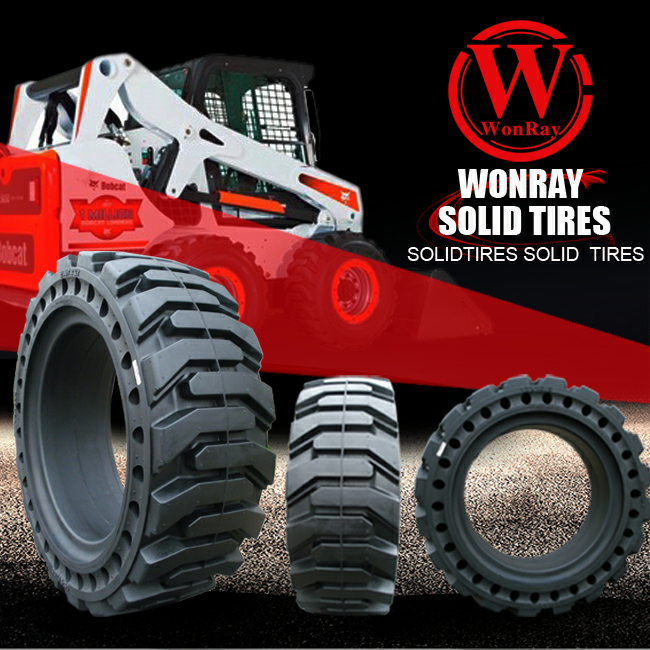
Key Benefits of Solid Tires for Skid Steers
Solid tires are designed to meet the demands of heavy-duty industrial applications where durability and reliability are essential.
Extended Tire Lifespan
High-quality solid tires are engineered for long-term wear resistance, even on abrasive surfaces such as concrete, gravel, and demolition debris.
This extended lifespan helps reduce:
● Tire replacement frequency
● Equipment downtime
● Long-term operating expenses
Better Performance in Harsh Environments
Skid steers often operate in conditions where standard tires wear out quickly.
Solid tires perform exceptionally well in:
● Recycling facilities
● Scrap yards
● Construction sites
● Mining operations
● Waste management facilities
Their robust design allows them to withstand continuous exposure to rough terrain and heavy loads.
Enhanced Load Capacity
Skid steer loaders frequently carry heavy materials such as concrete, steel, soil, or construction waste. Solid tires maintain structural integrity under these loads, helping improve machine stability and operational safety.
Increased Machine Uptime
Downtime caused by tire damage can delay entire projects. Solid tires reduce the likelihood of unexpected failures, ensuring equipment remains available for continuous operation.
Important Factors When Choosing Solid Tires for Skid Steers
Not all solid tires are designed for the same applications. Selecting the correct tire configuration is critical for achieving the best performance and service life.
Operating Surface Conditions
Different tread patterns and rubber compounds are suitable for different environments.
● Smooth industrial floors may require non-marking tires
● Rough outdoor terrain demands aggressive tread patterns
● Mixed environments require balanced designs for versatility
Load Requirements
The tire must be capable of supporting both the machine weight and operational loads without excessive deformation.
Heat Resistance
Continuous operation generates heat that can affect tire performance. High-quality solid tires use advanced compounds to reduce heat buildup and maintain stability.
Ride Comfort and Shock Absorption
Modern solid tires are designed with internal structures that help reduce vibration while maintaining durability. This improves operator comfort and machine handling.
Common Applications for Solid Skid Steer Tires
Solid tires are widely used in industries where puncture resistance and reliability are critical.
Construction Industry
Demolition debris, concrete fragments, and uneven surfaces make solid tires an ideal solution for construction projects.
Recycling and Waste Processing
Sharp metal objects and hazardous materials can quickly damage pneumatic tires. Solid tires provide reliable performance in these challenging environments.
Agriculture and Landscaping
Skid steers used for heavy material handling and rough terrain work benefit from the durability and traction of solid tires.
Industrial Facilities
Factories and warehouses often use solid tires to reduce maintenance needs and improve equipment uptime.
Trends in Modern Solid Tire Technology
As industrial equipment evolves, solid tire technology is also improving.
Manufacturers are developing:
● Advanced rubber compounds for better heat resistance
● Improved tread designs for enhanced traction
● Lighter tire structures to improve fuel efficiency
● Non-marking options for indoor operations
Some modern solid tires also incorporate cushioning technology to balance durability with operator comfort.
How Solid Tires Support Long-Term Cost Reduction
Although solid tires may have a higher initial purchase price compared to pneumatic tires, their long-term economic benefits are significant.
Businesses can achieve savings through:
● Reduced downtime and repair costs
● Fewer tire replacements
● Lower labor costs for maintenance
● Improved equipment utilization
For fleet operators managing multiple skid steers, these savings can substantially improve operational efficiency and profitability.
Conclusion
Solid tires for skid steers provide a highly durable and reliable solution for demanding industrial and construction applications. Their puncture-proof design, superior wear resistance, and ability to handle heavy loads make them ideal for environments where downtime and tire failures are unacceptable.
By selecting the right tire configuration based on operating conditions and equipment requirements, businesses can improve productivity, reduce maintenance costs, and enhance overall machine performance. As jobsite demands continue to increase, solid tires are becoming an essential upgrade for modern skid steer operations.
FAQ
1. Are solid tires better than pneumatic tires for skid steers?
Solid tires are often better for harsh environments because they eliminate puncture risks and require less maintenance.
2. Where are solid skid steer tires commonly used?
They are widely used in construction, recycling, mining, waste management, and industrial applications.
3. Do solid tires improve skid steer stability?
Yes, their rigid structure provides more consistent support under heavy loads.
4. How long do solid tires last on skid steers?
Their lifespan depends on usage conditions, but they generally last much longer than pneumatic tires in demanding environments.
Post time: 06-05-2026