
In the metallurgical industry, equipment operates under some of the most extreme working conditions found in heavy manufacturing. High temperatures, molten metal exposure, abrasive surfaces, and continuous heavy-load transportation create a demanding environment for material handling systems. Solid tires for metallurgical industry applications are specifically engineered to ensure operational stability, safety, and durability in such harsh conditions.
Unlike pneumatic tires, solid tires eliminate air-related failures and provide a stable foundation for forklifts, ladle transport vehicles, steel coil handlers, and other industrial equipment used in steel plants and foundries.
Extreme Working Conditions in Metallurgical Plants
Metallurgical facilities such as steel mills, aluminum smelting plants, and foundries operate under continuous thermal and mechanical stress. Floors are often exposed to:
- High-temperature slag and molten metal splashes
- Heavy steel plates and coils
- Sharp scrap metal debris
- Oil, dust, and abrasive particles
These conditions make conventional tires highly vulnerable to punctures, deformation, and rapid wear. Equipment downtime in such environments can directly interrupt production flow and increase operational risk.
Solid tires are designed to overcome these challenges by maintaining structural integrity regardless of external hazards.
Why Solid Tires Are Essential in Steel and Metallurgy Operations
The key requirement in metallurgical logistics is uninterrupted material flow. Every delay in transporting molten materials or steel products can cause production bottlenecks or safety hazards.
Solid tires provide:
● Continuous operation without air pressure dependency
● Resistance to puncture from sharp metal fragments
● Stable load support under extreme weight conditions
● Improved safety in high-temperature environments
Their structural rigidity ensures that vehicles maintain consistent ground contact even under heavy dynamic loads.
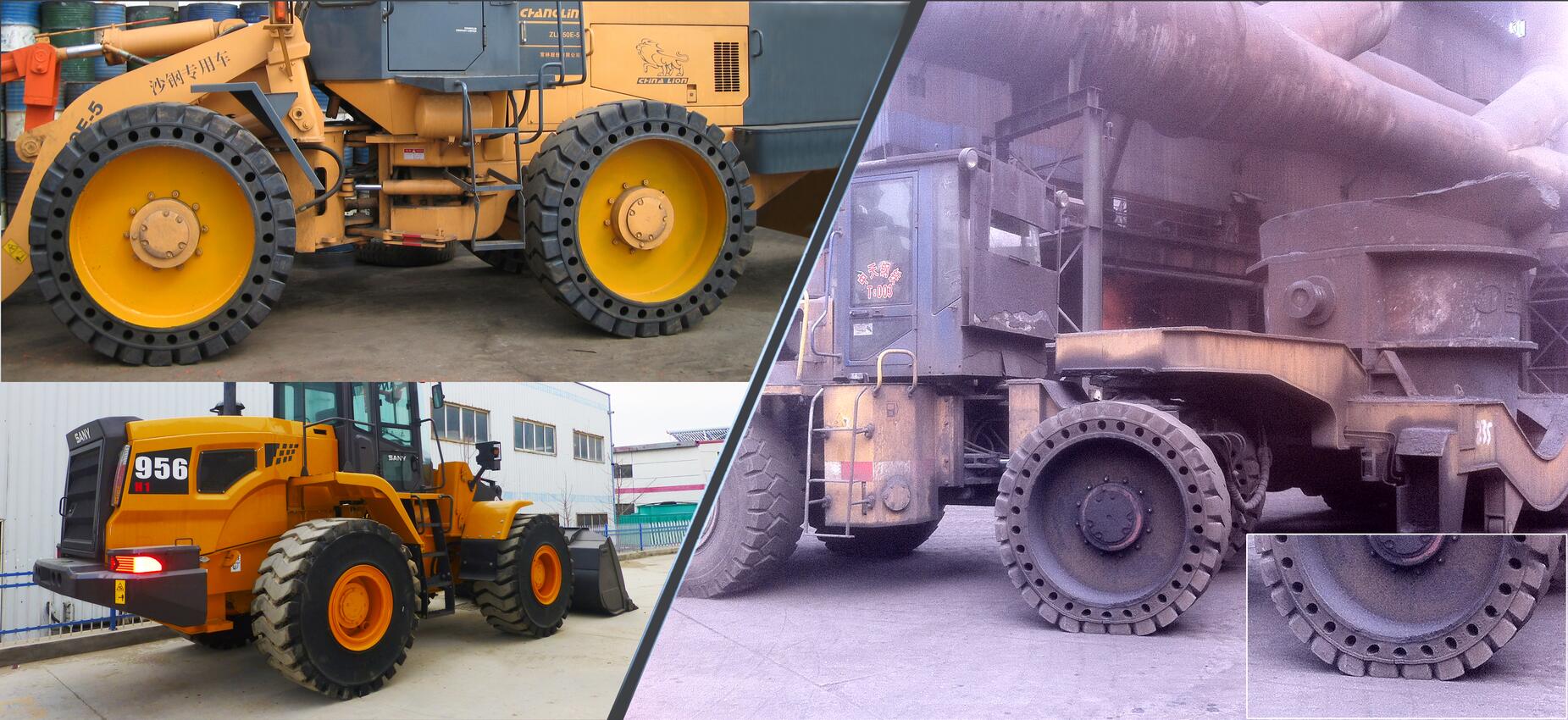
Key Advantages of Solid Tires in Metallurgical Applications
Solid tires offer a wide range of operational benefits specifically suited to steel production environments.
● High Temperature Resistance Performance
Special rubber compounds allow solid tires to withstand elevated ambient temperatures commonly found in steel plants and foundries.
● Exceptional Load Capacity Stability
Forklifts and transport vehicles carrying steel coils or molten ladles require consistent load balance, which solid tires provide.
● Resistance to Metal Debris and Sharp Objects
Scrap yards and steel cutting areas contain high levels of sharp debris, which do not affect solid tire integrity.
● Reduced Equipment Downtime
Eliminating punctures and pressure checks significantly increases operational uptime in continuous production environments.
● Enhanced Operator Safety
Stable tire structure reduces vibration and improves control accuracy in high-risk industrial zones.
Application Areas in Metallurgical Industry
Solid tires are widely used across different segments of metallurgical production and processing:
- Steel manufacturing plants
- Scrap metal recycling yards
- Foundries and casting workshops
- Hot rolling and cold rolling production lines
- Heavy-duty steel coil transport systems
In these environments, equipment must operate reliably under extreme physical and thermal stress conditions.
Engineering Features for Metallurgical Performance
Modern metallurgical solid tires are designed with specialized engineering enhancements:
● Multi-layer heat-resistant rubber structure
● Reinforced sidewall design for lateral load stability
● Deep tread patterns for better grip on oily or dusty floors
● Shock-absorbing cushion layers to reduce vibration impact
● Anti-cut compound formulation for scrap-heavy environments
These features ensure long service life even in the most aggressive industrial conditions.
Impact on Industrial Productivity
The use of solid tires in metallurgical operations directly improves production efficiency. Stable tire performance allows forklifts and transport vehicles to operate continuously without interruption.
This leads to:
- Faster material flow between production stages
- Reduced maintenance scheduling conflicts
- Improved equipment utilization rate
- Lower overall operational risk
In steel manufacturing, where timing is critical, these advantages have significant economic impact.
Long-Term Value and Cost Efficiency
Although solid tires require higher initial investment, their lifecycle cost is significantly lower compared to pneumatic alternatives.
Benefits include:
- Fewer replacements over time
- Reduced maintenance labor costs
- Lower downtime-related production losses
- Improved equipment lifespan
For metallurgical enterprises operating 24/7 production cycles, these savings become substantial over time.
Conclusion
Solid tires for metallurgical industry applications are a critical component in maintaining safe and efficient operations in steel plants, foundries, and heavy metal processing facilities. Their ability to withstand extreme heat, heavy loads, and abrasive conditions makes them essential for continuous production environments.
As metallurgical industries continue to modernize and increase automation, solid tire technology will remain a foundational element supporting safe, stable, and efficient material handling systems.
FAQ
1. Why are solid tires used in metallurgical plants?
Because they resist punctures, heat, and heavy loads in extreme industrial conditions.
2. Can solid tires handle molten metal environments?
Yes, they are designed with heat-resistant compounds suitable for high-temperature zones.
3. Are solid tires suitable for scrap yards?
Yes, they perform well in environments with sharp metal debris and scrap materials.
4. Do solid tires improve safety in steel plants?
Yes, they enhance stability and reduce equipment vibration under heavy loads.
Post time: 22-05-2026