
Solid tires are an essential component for industrial vehicles, providing durability, reliability, and long-term cost-effectiveness in demanding environments. Whether you operate forklifts, telehandlers, high-reach trucks, or other industrial equipment, choosing the right solid tires can significantly impact safety, performance, and operational efficiency. This guide explores the benefits, types, maintenance tips, selection considerations, and frequently asked questions regarding solid tires for industrial vehicles.
Benefits of Solid Tires for Industrial Vehicles
Solid tires offer numerous advantages over traditional pneumatic tires, making them ideal for heavy-duty and industrial applications:
● No risk of punctures or blowouts: Solid tires eliminate the threat of flats, ensuring uninterrupted operations.
● Enhanced durability: Made from high-quality rubber compounds, solid tires resist cuts, abrasions, and impact damage.
● Improved stability and load-bearing capacity: Solid tires provide superior support for heavy loads and enhance vehicle stability on uneven or rough surfaces.
● Longer lifespan: Compared to pneumatic tires, solid tires last longer, reducing replacement frequency and lowering long-term costs.
● Minimal maintenance required: Without the need for air pressure checks or inflation, solid tires save both time and labor.
● Cost-effective investment: Although the upfront cost may be higher than pneumatic tires, the durability and low maintenance result in significant long-term savings.
● Enhanced safety: The solid construction of these tires reduces the risk of accidents caused by sudden tire failure, protecting both operators and equipment.
● Operational efficiency: By minimizing downtime due to tire issues, solid tires help maintain consistent productivity in industrial operations.
● Versatility: Suitable for a variety of vehicles and surfaces, including forklifts, telehandlers, warehouse trucks, and material handling equipment.
● Eco-friendly: Longer-lasting tires produce less waste compared to frequently replaced pneumatic tires, supporting sustainable practices in industrial facilities.
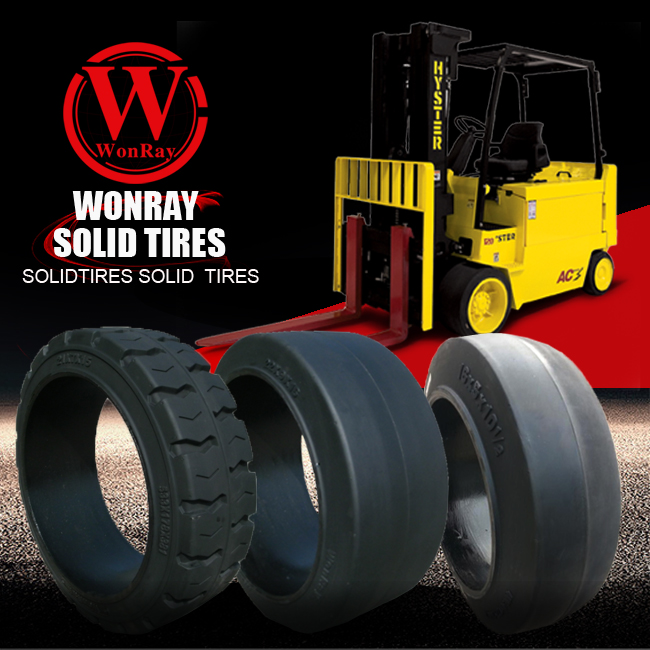
Types of Solid Tires
Selecting the right type of solid tire depends on the vehicle and application:
● Standard Solid Tires: Ideal for general-purpose industrial vehicles operating on smooth or moderately rough surfaces.
● Traction Solid Tires: Designed for enhanced grip on uneven or abrasive terrains, such as outdoor construction sites or loading yards.
● Smooth Solid Tires: Perfect for indoor applications, offering low rolling resistance and floor protection.
● Non-Marking Solid Tires: Commonly used in warehouses or distribution centers to prevent leaving marks on floors while maintaining durability.
Maintenance Tips for Solid Tires
Proper maintenance ensures the longest possible lifespan and optimal performance:
● Regular inspections: Check tires frequently for wear, cracks, or damage, and monitor for unusual patterns.
● Cleaning: Remove dirt, grease, or debris to prevent abrasion and premature wear.
● Rotation: Rotate tires periodically to promote even wear across all wheels.
● Alignment checks: Ensure proper vehicle alignment to avoid uneven tire wear and maintain stability.
● Environmental considerations: Store spare tires in cool, dry areas away from direct sunlight or harsh chemicals.
Considerations for Selecting Solid Tires
When choosing solid tires for industrial vehicles, consider these key factors:
● Vehicle specifications: Account for the weight, load capacity, and intended use of your industrial equipment.
● Operating environment: Evaluate terrain, surface conditions, and exposure to sharp objects or debris.
● Operational demands: Consider working hours, frequency of use, and downtime tolerance.
● Budget: Assess the balance between upfront cost and long-term savings based on tire lifespan and maintenance.
● Manufacturer reputation: Choose high-quality tires from trusted brands to ensure reliability and consistent performance.
FAQ – Frequently Asked Questions
● Q: What are the main advantages of solid tires over pneumatic tires?
A: Solid tires are puncture-proof, highly durable, low-maintenance, and ideal for heavy-duty industrial use.
● Q: Which industrial vehicles are suitable for solid tires?
A: Forklifts, telehandlers, stackers, high-reach trucks, and other material handling or construction vehicles.
● Q: How long do solid tires typically last?
A: Lifespan varies depending on load and operating conditions but is generally 2–5 times longer than pneumatic tires.
● Q: How can I extend the lifespan of solid tires?
A: Regular inspections, cleaning, proper alignment, periodic rotation, and choosing the right tire type for your application.
Conclusion
Solid tires are a vital investment for industrial vehicles, offering unparalleled durability, reliability, and cost-effectiveness. By understanding the benefits, types, maintenance requirements, and selection considerations, businesses can make informed decisions to optimize the performance, safety, and efficiency of their fleet. Incorporating high-quality solid tires ensures reduced downtime, enhanced load capacity, and safer operations, ultimately boosting productivity and lowering long-term costs.
Whether operating forklifts, telehandlers, or warehouse trucks, choosing the right solid tires is essential for maximizing vehicle performance, extending service life, and maintaining workplace safety. For heavy-duty industrial environments, solid tires remain the most reliable and efficient choice.
Post time: 06-01-2026