
In industrial operations, forklifts are indispensable tools for material handling, warehouse logistics, and manufacturing processes. Selecting the right tires for forklifts is a critical decision that affects safety, operational efficiency, and overall cost-effectiveness. Among the various tire options available, solid tires have grown in popularity due to their durability, stability, and minimal maintenance requirements. Unlike pneumatic tires, which are susceptible to punctures or deflation, solid tires offer consistent performance even under the most demanding working conditions. This article delves into the benefits of solid tires for forklifts and explains why they are increasingly favored in industrial workplaces.
Benefits of Solid Tires for Forklifts
1. Durability and Longevity
● Resistant to Punctures: Solid tires are constructed from dense rubber compounds, eliminating the risk of flats and punctures that are common with pneumatic tires. This allows forklifts to operate continuously without interruptions due to tire failure.
● High Load-Bearing Capacity: Designed to support heavy loads, solid tires are ideal for lifting and transporting materials in warehouses, industrial sites, and construction areas. They maintain structural integrity even when handling high-capacity pallets or bulky items.
● Extended Lifespan: The robust design of solid tires provides a longer service life, reducing the need for frequent replacements and lowering long-term operational costs.
● Reliable Performance in Harsh Environments: Solid tires maintain their shape and resilience on rough, uneven, or debris-laden surfaces, ensuring dependable performance in challenging industrial conditions.
2. Enhanced Safety
● Improved Stability: Solid tires offer superior stability compared to pneumatic tires, reducing the risk of tip-overs or accidents when transporting heavy or uneven loads.
● Consistent Traction: The tread patterns of solid tires provide reliable grip on warehouse floors, concrete surfaces, and industrial sites, enhancing operator control and maneuverability.
● Puncture-Proof Design: With no risk of sudden flats, solid tires minimize safety hazards and help prevent workplace accidents associated with tire failures.
● Reduced Downtime: The reliability of solid tires ensures fewer unexpected interruptions, allowing forklifts to maintain efficient and safe operations.
3. Cost-Effectiveness
● Lower Maintenance Requirements: Unlike pneumatic tires, solid tires do not need regular air pressure checks, inflation, or frequent patching. This reduces maintenance efforts and labor costs considerably.
● Fewer Replacements: The long lifespan of solid tires means fewer replacements over time, providing significant cost savings for businesses.
● Operational Efficiency: With fewer tire-related disruptions, forklifts can maintain consistent productivity, which improves overall workflow efficiency in warehouses and industrial facilities.
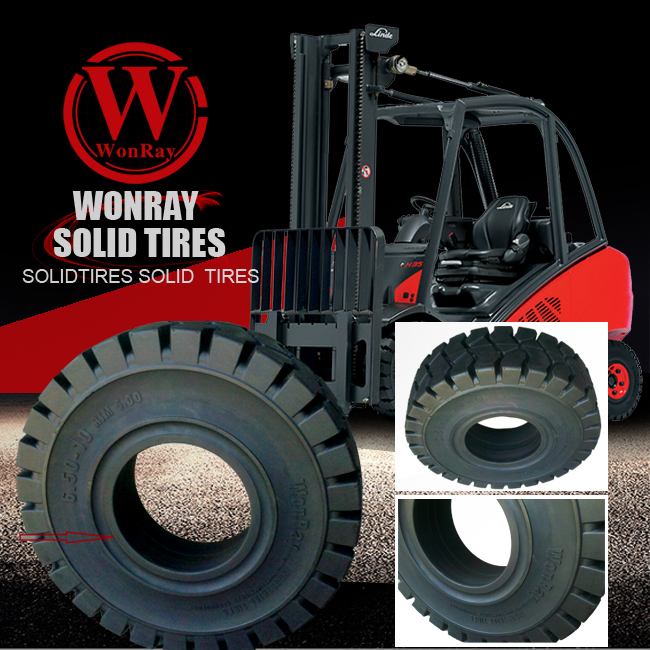
4. Versatility for Various Forklift Applications
● Indoor and Outdoor Use: Solid tires perform effectively both indoors in warehouses and outdoors in industrial settings.
● Compatibility with Heavy Loads: They are particularly suitable for forklifts that frequently handle high-capacity pallets or large, bulky materials.
● Adaptable Tread Designs: Solid tires are available in various tread patterns to meet specific operational needs, whether for smooth warehouse floors, rough surfaces, or mixed terrain conditions.
5. Environmental and Long-Term Benefits
● Reduced Waste: Due to their long service life, solid tires generate less waste compared to pneumatic tires, contributing to environmentally sustainable operations.
● Lower Downtime Costs: The durability and reliability of solid tires help reduce unplanned downtime, which translates into fewer operational delays and improved efficiency over time.
● Overall Cost Efficiency: While the initial investment in solid tires may be higher than that of pneumatic tires, the combined savings in maintenance, replacements, and downtime make them a financially wise choice in the long term.
Question-and-Answer Section
Q1: What types of solid tires are commonly used for forklifts?
A: Solid tires come in various sizes, load capacities, and tread patterns to suit different forklift applications, including small warehouse forklifts, medium-duty industrial forklifts, and heavy-duty construction forklifts.
Q2: How do solid tires compare to pneumatic tires for forklifts?
A: Pneumatic tires offer a smoother ride and better shock absorption, making them suitable for uneven outdoor terrain. Solid tires, however, are preferred in industrial settings due to their puncture resistance, durability, and minimal maintenance requirements. They are especially advantageous in environments with sharp debris or high-risk conditions.
Q3: Are solid tires suitable for all forklift types?
A: Yes, solid tires are compatible with most standard forklifts, particularly those used in warehouses, manufacturing plants, and construction sites. Selecting the correct tire size and load rating is essential to match the forklift’s specifications and operational demands.
Q4: Do solid tires affect forklift performance?
A: While solid tires offer less cushioning than pneumatic tires, they provide superior stability, durability, and traction in most industrial environments. Operators may notice a firmer ride, but overall efficiency, safety, and productivity are improved.
Q5: What maintenance practices are recommended for solid tires?
A: Although solid tires require minimal maintenance, regular inspections for wear, cracks, or damage are recommended. Maintaining proper wheel alignment and cleaning debris from tire surfaces helps extend tire life and ensures optimal performance.
Conclusion
Solid tires are essential for enhancing the safety, stability, and efficiency of forklift operations. Their durability, puncture resistance, and minimal maintenance requirements make them a cost-effective solution for industrial and warehouse applications. By choosing solid tires, forklift operators benefit from improved stability, reduced downtime, and increased productivity.
Investing in high-quality solid tires ensures that forklifts operate reliably under demanding conditions, safely handling heavy loads. For businesses aiming to optimize workplace safety, streamline operations, and reduce maintenance costs, solid tires provide a practical and reliable solution.
In summary, solid tires are a strategic investment for forklift owners and industrial operators seeking to maximize performance, safety, and long-term cost efficiency. Selecting the appropriate solid tires tailored to specific forklifts and operational environments allows businesses to achieve safer, more productive, and more efficient material handling operations.
Post time: 24-12-2025