
Solid tires are gaining widespread recognition in the industrial and commercial sectors due to their numerous advantages over traditional pneumatic tires. As businesses increasingly seek to optimize operations, minimize downtime, and enhance safety, solid tires have emerged as a practical and cost-effective solution. This article explores the top ten benefits of solid tires for industrial and commercial vehicles, highlighting why they are essential for fleets operating under demanding conditions.
1. Increased Durability
● Resistant to Punctures and Cuts: Solid tires are made from dense rubber compounds that provide exceptional resistance to punctures, cuts, and tears. Unlike pneumatic tires, which can be easily damaged by sharp debris, solid tires maintain their integrity in tough industrial environments.
● Reliable Performance in Harsh Conditions: Their robust design ensures consistent performance even on rough surfaces, construction sites, or uneven warehouse floors, minimizing disruptions due to tire failures.
● Reduced Replacement Frequency: The durability of solid tires significantly lowers the need for replacements, providing businesses with long-term cost savings and operational reliability.
2. Enhanced Productivity
● Minimized Downtime: By eliminating the risk of sudden flats or blowouts, solid tires allow vehicles to operate continuously, ensuring smooth workflow and higher efficiency.
● Consistent Performance: Solid tires maintain consistent traction and stability throughout their lifespan, helping operators maintain speed and precision in material handling or transportation tasks.
● Improved Fleet Reliability: With fewer tire-related interruptions, businesses can achieve higher fleet uptime, translating into increased overall productivity.
3. Improved Safety
● Stable Operation: Solid tires provide superior stability and control, especially when transporting heavy loads or maneuvering in tight spaces, reducing the risk of accidents.
● Puncture-Proof Design: Eliminating the likelihood of sudden tire failure enhances workplace safety, protecting operators and cargo alike.
● Reliable Traction: The consistent grip offered by solid tires ensures safe handling in indoor warehouses, outdoor industrial sites, or mixed-terrain environments.
4. Cost-Effectiveness
● Lower Maintenance Costs: Solid tires require minimal maintenance compared to pneumatic tires, which need regular air pressure checks and occasional repairs.
● Long-Term Investment: Although initial costs may be higher, the extended lifespan and reduced replacement frequency make solid tires a financially sound choice.
● Operational Savings: Reduced downtime and maintenance translate into significant savings over time, improving the overall cost-effectiveness of fleet operations.
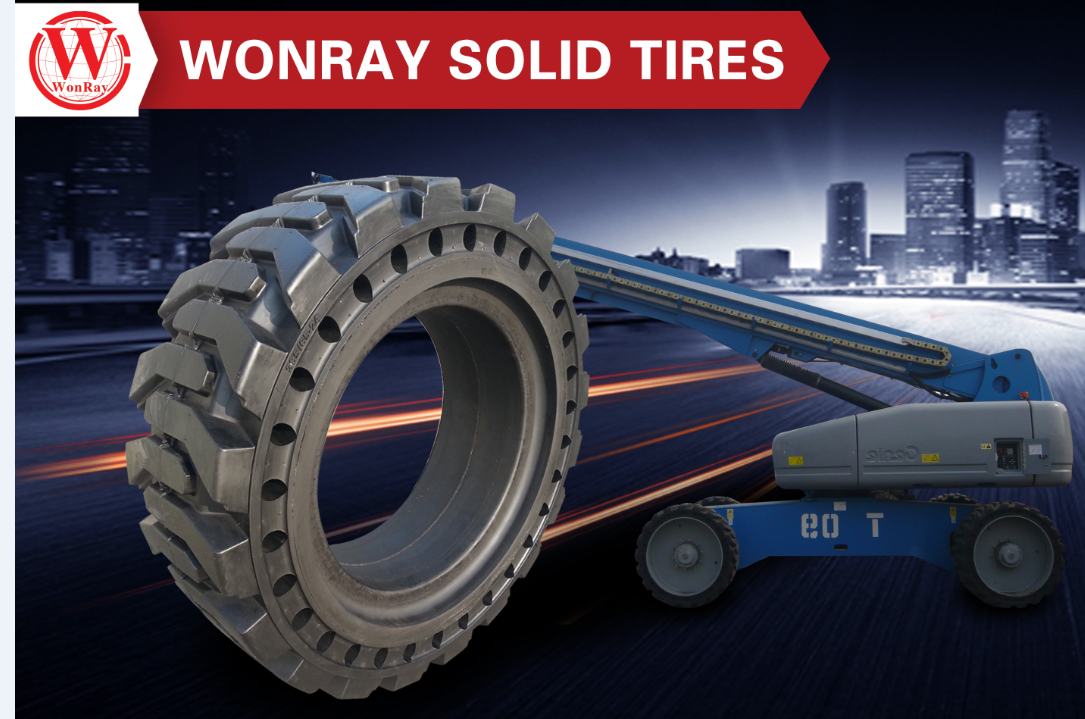
5. High Load Capacity
● Heavy-Duty Performance: Solid tires can carry substantial loads without deformation or damage, making them ideal for forklifts, construction vehicles, and industrial transport trucks.
● Stable Material Handling: High load capacity ensures that vehicles maintain stability even under varying weight conditions, contributing to safer and more efficient operations.
● Support for Specialized Applications: From pallet handling in warehouses to transporting bulky materials on construction sites, solid tires meet the demands of diverse industrial applications.
6. Reduced Maintenance
● Minimal Upkeep Required: Solid tires do not need inflation, air pressure monitoring, or frequent repairs, saving both time and labor costs.
● Ease of Management: Businesses benefit from simpler tire maintenance protocols, allowing staff to focus on operational efficiency rather than routine tire upkeep.
● Fewer Disruptions: Less maintenance translates into fewer interruptions, ensuring vehicles remain operational and productive.
7. All-Terrain Performance
● Versatility Across Surfaces: Solid tires are suitable for smooth warehouse floors, rough outdoor terrain, and mixed industrial environments.
● Reliable Traction: Their sturdy tread patterns provide excellent grip on various surfaces, enhancing maneuverability and operator confidence.
● Adaptability: Solid tires maintain performance whether operating in indoor or outdoor conditions, making them a versatile choice for multi-purpose vehicles.
8. Environmental Sustainability
● Longer Lifespan: Fewer tire replacements reduce waste, promoting environmentally responsible practices in industrial and commercial operations.
● Reduced Material Consumption: The durability and extended service life of solid tires lessen the environmental impact associated with manufacturing and disposal.
● Sustainable Fleet Management: By opting for solid tires, businesses support greener operations while maintaining operational efficiency.
9. Enhanced Stability
● Improved Vehicle Control: Solid tires offer superior stability during precise operations, particularly in heavy-duty lifting or material transport scenarios.
● Reduced Risk of Accidents: Greater stability helps prevent tip-overs or load shifts, protecting both operators and cargo.
● Confidence in Challenging Conditions: Operators can rely on consistent performance even in high-risk or uneven terrains.
10. Longevity
● Extended Service Life: Solid tires outlast pneumatic tires by a significant margin, ensuring long-term reliability.
● Consistent Performance: Durable materials and robust construction maintain performance over the entire lifespan, reducing operational disruptions.
● High Return on Investment: The combination of durability, stability, and minimal maintenance ensures that solid tires remain a cost-effective and reliable choice for businesses.
Conclusion
Solid tires offer a comprehensive range of benefits that make them an essential investment for industrial and commercial vehicles. Their durability, load-bearing capacity, low maintenance needs, and environmental advantages provide businesses with improved efficiency, reduced downtime, and enhanced safety. By incorporating solid tires into their fleets, companies can achieve long-lasting performance, operational cost savings, and increased productivity.
Product Selection Recommendations
When selecting solid tires, businesses should consider factors such as load capacity, terrain compatibility, and budget. Leading brands like Michelin, Bridgestone, and Continental offer high-quality solid tires suitable for specific industrial and commercial applications. Conducting research and consulting industry experts ensures that businesses choose the most appropriate tires for their fleet.
By integrating solid tires, businesses can maximize operational efficiency, enhance safety, and achieve long-term cost benefits, making them an indispensable component of any industrial or commercial fleet.
Post time: 25-12-2025