
In the modern industrial landscape, efficiency, reliability, and safety are crucial for businesses aiming to maximize productivity while minimizing operational costs. Among the many components that influence performance, wheels play a surprisingly critical role. Solid Rubber Tyre Wheels have emerged as a preferred solution in a wide range of B2B applications due to their combination of durability, maintenance-free operation, and stable performance under heavy loads.
For manufacturers, logistics operators, and industrial equipment suppliers, choosing the right wheels can determine the efficiency of material handling, reduce downtime, and contribute to overall cost savings. Solid rubber tyres, with their puncture-proof structure and resilient performance, provide the operational stability businesses demand in high-volume, fast-paced environments.
Key Advantages of Solid Rubber Tyre Wheels
Durability and Long-Term Reliability
Solid rubber tyre wheels are engineered for demanding industrial environments. Unlike pneumatic tyres, which are prone to punctures and air leaks, solid rubber wheels maintain consistent performance throughout their service life.
● Puncture-proof construction eliminates unplanned downtime.
● High resistance to abrasion, cuts, and deformation ensures longevity.
● Maintains structural integrity even under continuous heavy loads.
● Suitable for frequent, repetitive use in warehouses and industrial plants.
This durability makes them ideal for a wide variety of equipment, including forklifts, platform carts, trolleys, and industrial vehicles. Businesses benefit from reduced replacement cycles and consistent performance, which is particularly important for operations that rely on continuous material handling.
Low Maintenance and Cost Efficiency
One of the primary reasons B2B buyers prefer solid rubber tyre wheels is their minimal maintenance requirements. Unlike pneumatic tyres that require regular pressure monitoring, inflation, and occasional patching, solid rubber wheels are virtually maintenance-free.
● No air pressure monitoring or inflation is needed.
● Eliminates blowouts, flats, and puncture-related downtime.
● Reduces labor costs associated with wheel maintenance.
● Fewer replacements over the equipment’s lifecycle.
For large-scale operations with multiple vehicles or fleets, these savings can be substantial. By investing in solid rubber wheels, businesses can optimize operational budgets while improving overall equipment reliability.
Safety and Performance
Reliable mobility is essential not only for efficiency but also for workplace safety. Solid rubber tyre wheels contribute to both by providing stability, traction, and smooth rolling across various surfaces.
● Shock-absorbing capabilities reduce vibration for smoother operation.
● Strong traction enhances stability on concrete, asphalt, and warehouse floors.
● Controlled rolling minimizes the risk of slipping or tipping equipment.
● Noise reduction improves workplace comfort and safety.
These features make solid rubber wheels particularly valuable in environments where operator safety and ergonomic handling are priorities, such as manufacturing plants, logistics centers, and industrial warehouses.
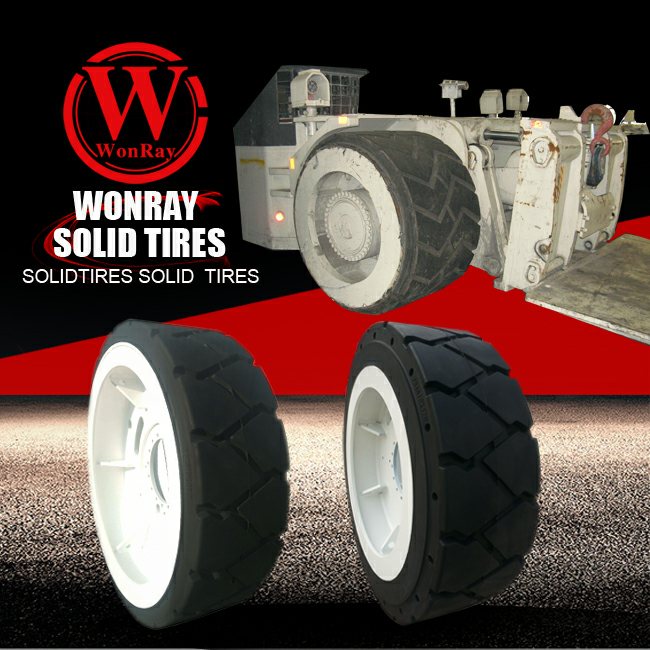
Common Industrial and Commercial Applications
Solid rubber tyre wheels are highly versatile, fitting a broad spectrum of industrial and commercial applications:
● Forklifts and pallet trucks – essential for heavy-duty material handling.
● Platform carts and warehouse trolleys – ensure smooth, reliable transport of goods.
● Airport baggage and cargo handling equipment – provide durability for high-frequency operations.
● Medical and hospital transport carts – combine stability and quiet movement.
● Custom industrial machinery – support OEM applications with specialized wheel configurations.
Their adaptability across equipment types makes them a standard choice for OEMs, distributors, and replacement markets alike.
Factors to Consider When Selecting Solid Rubber Tyre Wheels
Selecting the right solid rubber tyre wheel is critical for ensuring optimal performance and maximum ROI. B2B buyers should evaluate:
-
Load capacity – Ensure wheels can handle the equipment’s operational weight.
-
Wheel diameter and width – Larger diameters and appropriate widths improve stability.
-
Hub material and bearing type – Steel, nylon, or cast-iron hubs affect durability and rolling efficiency.
-
Floor conditions – Consider the surface type (smooth concrete, rough asphalt, or mixed surfaces).
-
Environmental factors – Exposure to chemicals, heat, or moisture can influence material choice.
Proper selection guarantees longer wheel lifespan, reduces operational disruptions, and enhances safety in material handling environments.
Customization and OEM Solutions
Many industrial buyers seek customized solutions to meet unique operational or branding requirements. Solid rubber tyre wheels can be tailored in several ways:
● Custom diameters, widths, and load ratings.
● Specialized tread patterns for traction or floor protection.
● Hub and bearing configurations compatible with specific equipment.
● Non-marking rubber compounds for indoor facilities.
● OEM branding and color options for fleet identification.
These options allow manufacturers and fleet operators to align wheel performance with both operational and marketing goals, improving efficiency and customer satisfaction.
Conclusion
Solid Rubber Tyre Wheels combine reliability, durability, and low maintenance to meet the demanding requirements of modern industrial operations. Their puncture-proof design, consistent performance under heavy loads, and adaptability across a wide range of equipment make them indispensable for B2B buyers.
Investing in high-quality solid rubber wheels ensures long-term operational efficiency, reduces costs associated with downtime and maintenance, and enhances workplace safety. For manufacturers, distributors, and industrial operators, these wheels offer a practical, scalable, and reliable solution for material handling and commercial equipment needs.
FAQ
Q1: What load capacities can solid rubber tyre wheels support?
Load capacity varies depending on wheel size, hub design, and rubber compound, but most industrial models support medium to heavy loads suitable for forklifts and trolleys.
Q2: Are solid rubber tyre wheels suitable for continuous industrial use?
Yes. Their solid construction ensures long-lasting performance without the risk of punctures or air pressure issues.
Q3: Can these wheels operate on both smooth and rough surfaces?
Absolutely. They provide stable traction and smooth rolling on concrete, asphalt, and industrial flooring.
Q4: How do solid rubber tyre wheels impact maintenance costs?
Significantly. The non-pneumatic design eliminates inflation, puncture repairs, and reduces labor, leading to lower overall maintenance expenses.
Q5: Can these wheels be customized for OEM or fleet purposes?
Yes. Solid rubber tyre wheels can be tailored for diameter, load capacity, hub type, tread patterns, and even color or branding to suit specific equipment or fleet requirements.
Post time: 27-02-2026