
Forklifts are essential assets in modern industrial operations, enabling efficient material handling across warehouses, factories, construction sites, and logistics hubs. However, the performance of a forklift is only as reliable as its components—especially its tires. In demanding workplaces where downtime is costly and safety is critical, choosing the right tire solution becomes a strategic decision.
Among the available options, solid forklift tires stand out as a durable, low-maintenance, and high-performance solution. This article provides an in-depth exploration of solid forklift tires, expanding on their structure, advantages, applications, and key selection considerations to help businesses optimize their operations.
Understanding Solid Forklift Tires
Solid forklift tires are manufactured from high-density rubber compounds and are designed without air cavities. Unlike pneumatic tires, which rely on internal air pressure, solid tires maintain their shape and performance regardless of external conditions.
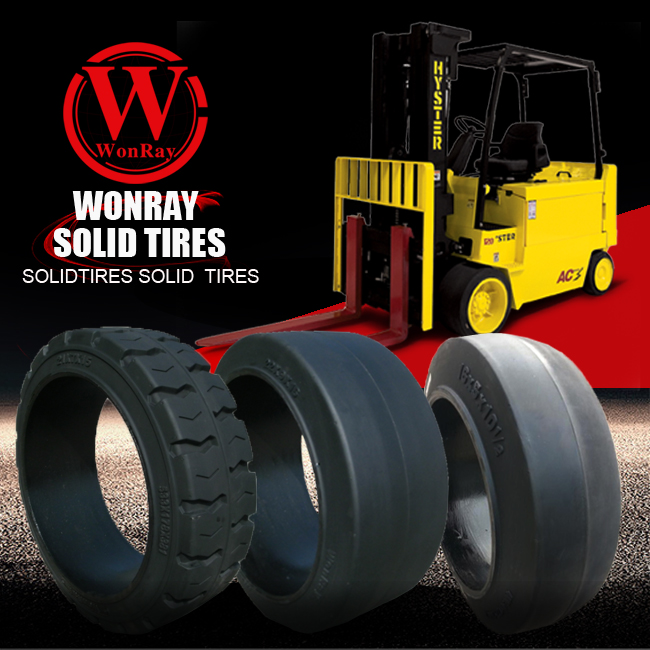
There are generally three types of solid forklift tires:
● Fully solid tires: maximum durability and puncture resistance
● Resilient (cushion) tires: improved comfort with layered construction
● Press-on band tires: designed for indoor forklifts with smaller rims
These variations allow businesses to choose the most suitable tire type based on operational needs.
Advantages of Solid Forklift Tires
Exceptional Durability and Resilience
One of the most important reasons companies switch to solid forklift tires is their unmatched durability.
Solid tires are engineered to handle:
● Rough surfaces such as concrete and asphalt
● Debris-filled environments with sharp materials
● Continuous heavy-duty operations
● Frequent start-stop and turning movements
Because they are puncture-proof, they eliminate the risk of sudden tire failure, ensuring uninterrupted operations. This resilience is especially valuable in industries where equipment must operate around the clock.
Increased Stability and Load Capacity
Stability is a critical factor in forklift performance, particularly when handling heavy or elevated loads.
Solid forklift tires enhance stability by:
● Maintaining consistent shape under load
● Distributing weight evenly across the contact surface
● Reducing the risk of tipping during lifting operations
● Improving control during maneuvering
Their higher load-bearing capacity makes them ideal for heavy-duty applications such as port handling, steel plants, and construction sites.
Minimal Maintenance Requirements
Maintenance costs can significantly impact overall operational expenses. Solid forklift tires help reduce these costs due to their simple and robust design.
Key maintenance benefits include:
● No need for air pressure checks or inflation
● No puncture repairs or tube replacements
● Longer replacement intervals
● Reduced labor and downtime
This low-maintenance nature allows businesses to focus more on productivity and less on equipment servicing.
Applications of Solid Forklift Tires
Solid forklift tires are widely used in industries where durability, safety, and efficiency are essential.
Common applications include:
● Warehousing and distribution centers with high traffic
● Manufacturing facilities handling heavy materials
● Construction sites with rough terrain
● Recycling plants with sharp debris
● Ports and shipping yards requiring continuous operation
Their versatility allows them to perform effectively in both indoor and outdoor environments, making them a preferred choice across multiple sectors.
Considerations for Selecting Solid Forklift Tires
Selecting the right solid forklift tire is crucial to achieving optimal performance and cost efficiency. Businesses should evaluate several factors before making a decision.
● Load capacity requirements
Ensure the tire can support the maximum load handled by the forklift, including dynamic loads during operation.
● Surface conditions and terrain
Choose tire compounds and tread designs suitable for the working surface, whether smooth indoor floors or rough outdoor environments.
● Operating environment
Determine whether the forklift operates indoors, outdoors, or in mixed conditions. For indoor use, non-marking tires may be required.
● Forklift type and size
Different forklifts require specific tire dimensions and mounting types. Compatibility is essential for safe operation.
● Budget and long-term value
While solid tires may have a higher initial cost, their durability and low maintenance often result in lower total cost of ownership.
Sample Selection Criteria Table
| Selection Criteria | Description |
|---|---|
| Load Capacity | Maximum weight the tire can safely support |
| Surface Conditions | Suitability for different terrains and environments |
| Operating Environment | Indoor, outdoor, or mixed usage |
| Forklift Type | Compatibility with equipment specifications |
| Budget Constraints | Balance between cost and long-term savings |
Additional Performance Benefits
Beyond the core advantages, solid forklift tires also offer additional operational benefits.
● Improved uptime due to reduced tire-related failures
● Enhanced safety for operators and surrounding workers
● Consistent performance across varying temperatures
● Better resistance to wear and deformation
These factors contribute to smoother workflows and increased operational reliability.
Product Selection Recommendations
For businesses operating in demanding environments, investing in high-quality solid forklift tires is a practical and strategic decision. It is important to prioritize:
● Advanced rubber compounds for enhanced durability
● Reinforced structures for heavy load applications
● Proven performance in similar industrial conditions
Working with experienced suppliers can help ensure the correct tire selection, tailored to specific equipment and operational requirements.
Conclusion
Solid forklift tires provide a reliable and efficient solution for workplaces that demand high performance, durability, and safety. Their puncture-proof design, strong load-bearing capacity, and minimal maintenance requirements make them ideal for heavy-duty industrial applications.
By understanding the advantages, applications, and selection criteria of solid forklift tires, businesses can make informed decisions that improve productivity, reduce downtime, and optimize long-term costs. In today’s competitive industrial landscape, choosing the right tire is not just a technical decision—it is a key factor in operational success.
FAQ
Q1: Are solid forklift tires better than pneumatic tires?
Yes, especially in harsh environments. They offer greater durability, eliminate puncture risks, and require less maintenance.
Q2: How long do solid forklift tires last?
Their lifespan depends on usage conditions, but they typically last significantly longer than pneumatic tires in heavy-duty applications.
Q3: Can solid tires be used indoors?
Yes, non-marking solid tires are specifically designed for indoor environments to prevent floor damage.
Q4: Do solid forklift tires improve safety?
Yes, they provide better stability and eliminate sudden tire failures, reducing operational risks.
Post time: 02-04-2026