
Skid steer solid tires are designed for compact construction and industrial machines that operate in tight spaces, frequent turning conditions, and high-intensity work environments. These machines are widely used in construction, agriculture, landscaping, municipal maintenance, and industrial material handling.
Why Skid Steer Machines Need Specialized Tires
Skid steer loaders are known for their agility. They can turn within a very small radius and operate efficiently in confined spaces. However, this maneuverability also creates high tire stress. Constant turning, rapid directional changes, and uneven load distribution can accelerate tire wear.
In many working environments, skid steer machines also operate on rough surfaces such as gravel, dirt, concrete, demolition sites, and mixed terrain. These conditions increase the risk of punctures, cuts, and sidewall damage when using pneumatic tires.
Solid tires provide a more stable solution by removing air dependency and improving resistance to external damage. This is particularly valuable for compact machines that are used intensively throughout the day in multi-purpose job sites.
Key Operating Conditions for Skid Steer Tires
Skid steer tires must perform under unique stress patterns caused by machine design. Unlike standard vehicles, skid steer loaders apply force through differential wheel speed, which results in frequent friction and lateral stress on the tires.
A suitable solid tire must therefore balance durability with flexibility. It must resist surface wear while still supporting smooth movement during repeated turning cycles.
Important operating requirements include:
● High resistance to sidewall stress caused by tight turning
● Strong tread durability for abrasive and uneven surfaces
● Stable load support for lifting and pushing operations
● Puncture-free structure for harsh jobsite environments
● Reduced downtime in high-frequency working cycles
● Consistent performance under continuous directional changes
These conditions make skid steer tire selection a key factor in machine efficiency and operating cost control.
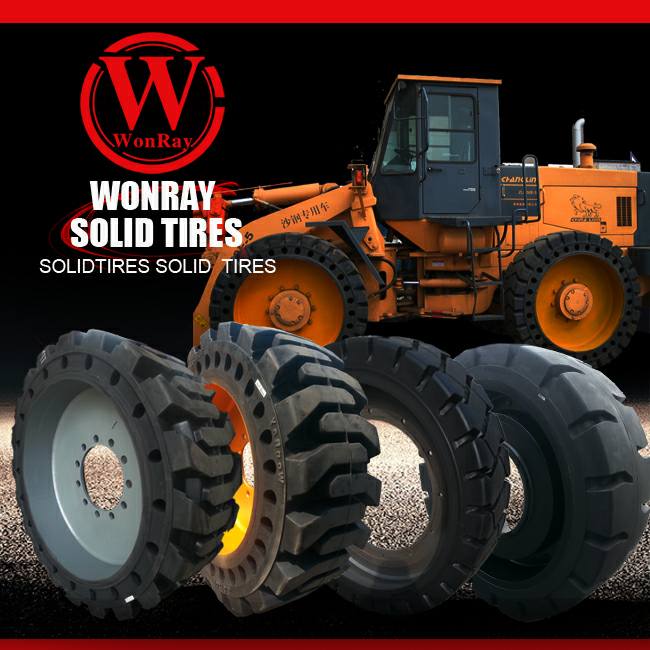
How Solid Tire Design Supports Compact Equipment
Skid steer solid tires use reinforced rubber construction to support both load and movement stress. The tread is designed to resist rapid wear caused by constant turning, while the internal structure supports impact absorption during uneven ground contact.
Because skid steer machines often operate in short working cycles with frequent acceleration and braking, tire stability plays a critical role in operator control. Solid tires help maintain consistent contact with the ground, improving handling predictability in tight working areas.
Heat generation is also an important factor. Continuous turning and friction can increase tire temperature. A well-designed solid tire helps manage heat buildup, improving long-term durability and reducing performance decline.
Advantages of Skid Steer Solid Tires in Industrial Use
Skid steer solid tires are widely used in environments where machines must remain operational despite harsh working conditions. Their advantages are particularly valuable for contractors and equipment fleets that rely on compact machinery for daily tasks.
● Puncture-free design reduces downtime caused by nails, metal fragments, and construction debris
● High wear resistance supports frequent turning and directional changes
● Strong structural stability improves machine control in tight working spaces
● Heavy-load capability supports lifting, pushing, and material handling tasks
● Reduced maintenance requirements lower operational workload
● Improved durability extends service life in abrasive environments
● Reliable performance supports continuous jobsite productivity
These benefits help ensure skid steer machines remain productive even in challenging working conditions where tire damage risk is high.
Common Applications of Skid Steer Solid Tires
Skid steer loaders equipped with solid tires are used in a wide variety of industries due to their compact size and versatility. They are especially valuable in environments that require frequent movement, tight turning, and rough surface handling.
Typical applications include construction demolition sites, municipal maintenance projects, agricultural operations, landscaping work, warehouse material handling, recycling facilities, and industrial cleaning operations.
In demolition environments, tires are exposed to sharp debris, broken concrete, and steel fragments. In landscaping and agriculture, machines often operate on soil, gravel, and uneven terrain. In warehouses and industrial sites, skid steers may move materials in confined spaces with frequent direction changes.
Solid tires help maintain operational stability across all these conditions.
Maintenance and Fleet Efficiency Benefits
For fleet operators, skid steer machines are often high-utilization assets. They are used across multiple tasks in a single day, which increases tire wear rate. Pneumatic tire failures can cause interruptions that affect multiple job assignments.
Solid tires reduce this risk by eliminating air-related issues such as punctures or pressure loss. This allows maintenance teams to plan service activities more effectively and reduce emergency repair situations.
In addition, consistent tire performance improves operator confidence. Machines behave more predictably during tight turns and load movement, which supports both safety and productivity in busy jobsite environments.
Summary
Skid steer solid tires are designed for compact construction and industrial machines operating in high-stress, high-turning, and abrasive environments. Their puncture-free structure, wear resistance, stable handling performance, and low maintenance requirements make them suitable for construction, agriculture, landscaping, and industrial material handling applications. For B2B users, they offer a practical solution for improving uptime, reducing maintenance interruptions, and supporting efficient compact equipment operation.
FAQ
1、What are skid steer solid tires used for?
Skid steer solid tires are used on compact loaders operating in construction, landscaping, agriculture, recycling, and industrial material handling environments.
2、Why are solid tires important for skid steer machines?
They are important because skid steers experience high turning stress and frequent directional changes, which can quickly damage pneumatic tires. Solid tires reduce puncture risk and improve durability.
3、Do skid steer solid tires last longer than pneumatic tires?
In harsh environments, solid tires generally last longer because they resist punctures and sidewall damage, especially under heavy use and abrasive conditions.
4、Are skid steer solid tires suitable for all terrains?
They are suitable for many rough industrial and construction surfaces, but performance depends on load, surface type, and operating intensity. Proper selection ensures best results.
Post time: 18-05-2026