
In demanding industrial environments, tire failure is one of the most common causes of unexpected downtime. Sharp debris, heavy loads, and continuous operation put immense pressure on conventional tires. Puncture proof molded solid tires are designed to eliminate these risks, offering unmatched durability and reliability for modern industrial applications.
What Are Puncture Proof Molded Solid Tires?
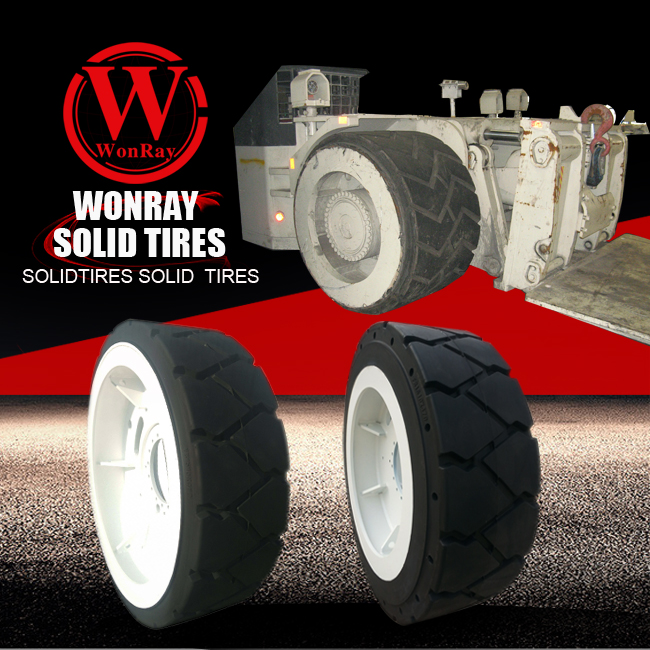
Puncture proof molded solid tires are non-pneumatic tires manufactured through a molding and vulcanization process using high-density rubber compounds. Unlike pneumatic tires that rely on air pressure, these tires are completely solid, meaning they cannot be punctured, deflated, or burst.
The molding process ensures precise structure, uniform density, and enhanced bonding between layers, resulting in a highly durable and stable tire suitable for heavy-duty operations.
These tires are commonly used in:
● Forklifts and material handling equipment
● Port and terminal machinery
● Construction and demolition equipment
● Mining and recycling environments
Their core value lies in delivering consistent performance without the risk of tire-related interruptions.
How Molded Solid Tires Are Manufactured
The manufacturing process plays a key role in the performance of puncture proof molded solid tires.
Compression Molding Technology
The most common method is high-pressure compression molding. Rubber compounds are placed into molds and subjected to heat and pressure.
● Ensures uniform material distribution
● Eliminates internal air pockets
● Improves structural integrity
Vulcanization Process
During vulcanization, rubber is chemically treated to enhance elasticity, strength, and heat resistance.
● Increases wear resistance
● Improves load-bearing capability
● Enhances durability under extreme conditions
Multi-Layer Construction
Many molded solid tires use a layered structure to balance performance.
● Outer layer: wear-resistant rubber for durability
● Middle layer: elastic compound for shock absorption
● Inner layer: high-strength base for load support
This engineered structure allows the tire to perform reliably across various applications.
Key Advantages of Puncture Proof Molded Solid Tires
These tires offer significant benefits compared to traditional pneumatic or foam-filled alternatives.
● Zero puncture risk
Completely eliminates downtime caused by flats or air leaks.
● Long service life
High-density rubber and molded construction provide superior wear resistance.
● Low maintenance requirements
No need for inflation, pressure checks, or repairs.
● High load capacity
Maintains structural integrity under heavy loads without deformation.
● Stable performance
Consistent shape and contact area improve operational safety and efficiency.
These advantages make them ideal for industries where uptime is critical.
Applications Across Industries
Puncture proof molded solid tires are widely adopted in sectors that demand reliability and durability.
Material Handling and Warehousing
● Used in forklifts and pallet trucks
● Ideal for indoor and outdoor operations
● Non-marking options available for clean environments
Ports and Logistics
● Suitable for baggage trailers and container handling equipment
● Resistant to debris and heavy loads
● Ensures continuous operation in high-traffic areas
Construction and Demolition
● Performs well on rough surfaces such as concrete and rubble
● Reduces downtime caused by tire damage
● Supports heavy-duty equipment under harsh conditions
Recycling and Metal Processing
● Resistant to sharp materials like metal scraps and glass
● Minimizes tire failure rates
● Enhances safety in hazardous environments
Molded Solid Tires vs Pneumatic Tires
Understanding the differences helps in making informed decisions.
● Durability
Molded solid tires outperform pneumatic tires in harsh environments.
● Maintenance
No air-related maintenance is required for solid tires.
● Comfort
Pneumatic tires provide better shock absorption, but this is less critical in low-speed industrial applications.
● Cost Efficiency
Although initial costs are higher, molded solid tires reduce long-term expenses through longer lifespan and lower maintenance.
Key Factors to Consider When Choosing Molded Solid Tires
Selecting the right tire requires evaluating operational needs.
● Load capacity and equipment type
● Working environment (sharp debris, temperature, surface conditions)
● Frequency of operation
● Required tread design (smooth vs patterned)
Matching these factors ensures optimal performance and cost efficiency.
Trends in Molded Solid Tire Technology
The industry continues to innovate to meet evolving demands.
● Advanced rubber compounds for extended wear life
● Improved molding techniques for better structural consistency
● Eco-friendly materials for sustainable production
● Custom-engineered solutions for specific applications
These developments are enhancing the performance and versatility of molded solid tires.
Conclusion
Puncture proof molded solid tires represent a major advancement in industrial tire technology. By eliminating the risk of punctures and reducing maintenance requirements, they provide a reliable solution for heavy-duty operations. Their durability, stability, and long service life make them a valuable investment for businesses aiming to maximize efficiency and minimize downtime.
FAQ
1. Are molded solid tires completely puncture proof?
Yes, since they contain no air, they cannot be punctured or deflated.
2. What equipment uses puncture proof solid tires?
They are commonly used on forklifts, port equipment, construction machinery, and industrial vehicles.
3. How long do molded solid tires last?
Their lifespan depends on usage conditions but is generally much longer than pneumatic tires.
4. Are molded solid tires suitable for outdoor use?
Yes, they perform well in both indoor and outdoor environments, including harsh conditions.
Post time: 09-04-2026