
Press-on solid tires are widely used on forklifts and industrial vehicles that operate in warehouses, factories, distribution centers, and production facilities. For B2B users, these tires are valued for their compact structure, stable performance, and ability to support frequent indoor material handling without the risk of punctures.
WonRay press-on solid tires are designed for industrial operations where equipment reliability directly affects workflow efficiency. With strong load support, durable rubber compounds, and low maintenance requirements, they help businesses reduce tire-related interruptions and keep forklifts working consistently.
What Are Press-On Solid Tires?
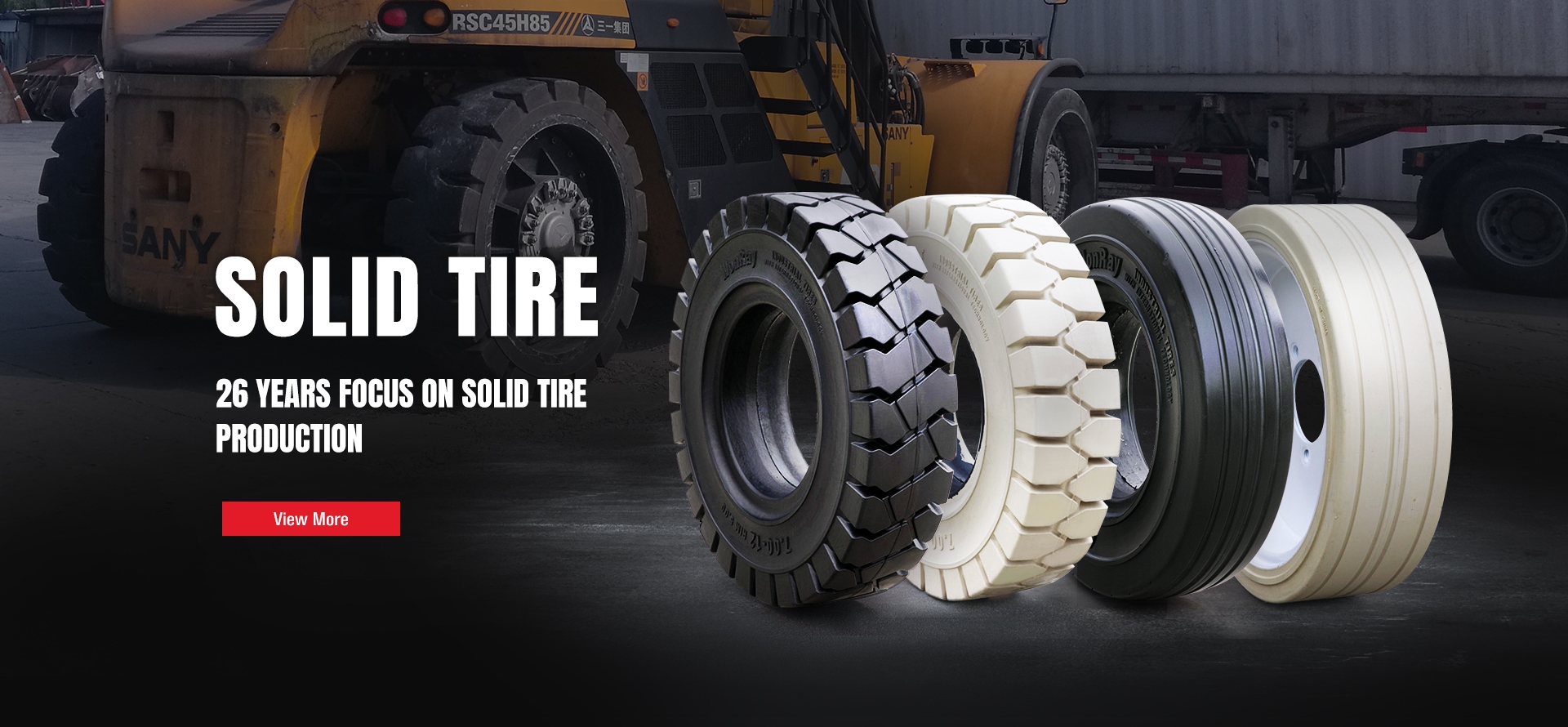
Press-on solid tires are industrial tires made with a solid rubber tread bonded to a steel band. Unlike pneumatic tires or some resilient solid tires, press-on tires are not mounted on traditional rims. Instead, they are pressed directly onto the wheel hub using specialized equipment.
This structure gives press-on solid tires several practical advantages. They are compact, stable, and suitable for forklifts that operate on smooth indoor floors. Because the rubber is bonded to a steel base, the tire remains securely fitted during repeated movement, turning, loading, and braking.
For warehouse and factory environments, press-on solid tires are often used on electric forklifts, reach trucks, order pickers, pallet trucks, and other material handling machines. They are especially suitable for facilities where vehicles move constantly through narrow aisles and high-density storage areas.
Why Press-On Tires Are Important for B2B Operations
In many industrial facilities, forklifts are not occasional-use machines. They work throughout the day, moving pallets, raw materials, finished goods, tools, components, and packaged products. A single forklift tire issue can delay loading, slow production, or interrupt order fulfillment.
Press-on solid tires help reduce this risk because they are puncture-free and do not depend on air pressure. There is no need to check inflation, repair tubes, or stop equipment due to sudden air loss. This gives fleet managers a more predictable tire solution for indoor operations.
For B2B buyers, predictability is valuable. Stable tire performance makes it easier to plan maintenance, manage equipment availability, and control operating costs. When forklifts stay productive, warehouse and factory processes can run more smoothly.
Main Advantages of WonRay Press-On Solid Tires
WonRay press-on solid tires are developed for demanding indoor industrial use. Their structure and rubber design support long service life, strong bonding, and reliable load performance.
● Puncture-free construction helps prevent unexpected tire flats during daily operation.
● Steel band base provides secure fitment and stable connection to the wheel hub.
● Durable rubber tread supports long wear life on warehouse floors and factory surfaces.
● Strong load stability helps forklifts move pallets and goods with better control.
● Low maintenance requirements reduce time spent on tire checks and emergency repairs.
● Compact design supports maneuverability in narrow aisles and indoor logistics spaces.
● Smooth operation helps improve handling on flat concrete or coated floors.
● Reliable bonding reduces the risk of tire separation under normal industrial use.
These advantages are especially important for businesses that operate multiple forklifts across long shifts. A tire that works consistently helps improve the reliability of the entire material handling system.
Suitable Applications for Press-On Solid Tires
Press-on solid tires are commonly used in indoor material handling environments where the ground is relatively smooth and the vehicle operates at low speed. They are not designed for rough outdoor terrain, but they perform well in controlled industrial spaces.
In distribution centers, press-on tires support continuous pallet movement between storage zones, loading docks, and picking areas. In manufacturing plants, they help forklifts move components and finished goods between production lines and warehouses. In retail logistics facilities, they are suitable for compact vehicles that operate in indoor storage areas.
They are also useful for electric forklifts. Because many electric forklifts are used indoors, they require tires that offer clean, stable, and low-maintenance performance. Press-on solid tires match these requirements and can help support efficient battery-powered operations.
The Role of Tire Stability in Narrow Aisle Work
Warehouse operations often depend on tight turning, accurate positioning, and repeated short-distance movement. In narrow aisles, tire stability directly affects operator confidence and vehicle control.
Press-on solid tires provide a firm contact surface and stable support. This helps forklifts make controlled turns and maintain balance while moving goods. Since these tires do not suffer from air pressure changes, their operating shape remains more consistent than pneumatic tires.
For high-density warehouses, this consistency is valuable. Forklift operators need predictable handling when moving close to racks, pallets, doors, and other vehicles. A stable tire can help reduce unnecessary movement and improve daily handling efficiency.
Reducing Downtime Through Puncture-Free Performance
Downtime is one of the most expensive problems in industrial vehicle operation. Even a short tire-related stoppage can affect workers, loading schedules, production flow, and customer delivery commitments.
Press-on solid tires help reduce downtime because they cannot be punctured in the same way as air-filled tires. This is especially useful in warehouses and factories where small debris, pallet nails, packaging materials, and metal fragments may appear on the floor.
Although good housekeeping is still important, puncture-free tires create an added layer of reliability. They help businesses avoid sudden tire failures and reduce emergency maintenance. For fleet managers, this means fewer unexpected service events and better equipment utilization.
Press-On Solid Tires Compared with Other Solid Tire Types
Press-on solid tires are one category within the wider solid tire product range. They are different from resilient solid tires, which are often mounted on standard pneumatic rims and may be used in both indoor and outdoor industrial environments.
Press-on tires are best suited for indoor equipment operating on smooth floors. Resilient solid tires are typically more flexible for rougher ground or heavier outdoor use. Non-marking solid tires are selected when clean-floor performance is required. Industrial OTR solid tires are used for heavier machines in ports, mining sites, waste handling, and construction-related environments.
This product variety allows B2B customers to match tire type with equipment, surface condition, load requirement, and working environment.
Summary
WonRay press-on solid tires provide a practical solution for indoor forklifts and warehouse vehicles that need puncture-free reliability, stable load support, and low maintenance performance. Their compact structure, steel band base, and durable rubber tread make them suitable for factories, warehouses, distribution centers, and electric forklift applications.
For industrial buyers, the main value is clear: fewer tire failures, more predictable operation, and better equipment availability. In facilities where material handling efficiency matters every day, press-on solid tires can help support safer, smoother, and more cost-effective operations.
FAQ
1、What is the advantage of the steel band structure?
The steel band provides a secure connection between the tire and wheel hub. This helps maintain stable fitment during turning, braking, and load movement.
2、Can press-on solid tires be used outdoors?
They can be used in limited outdoor areas with smooth surfaces, but they are mainly designed for indoor industrial environments. For rough outdoor ground, resilient solid tires may be more suitable.
3、How do press-on solid tires reduce operating costs?
They reduce puncture-related downtime, require less maintenance, and can provide long service life when used in suitable applications.
4、What equipment can use press-on solid tires?
They can be used on forklifts, electric forklifts, reach trucks, order pickers, pallet trucks, and other warehouse material handling machines.
Post time: 13-05-2026