
Ports are among the busiest industrial environments in the world, where equipment operates continuously under heavy loads, complex logistics demands, and challenging working conditions. In such high-intensity applications, the performance of port handling tyres directly affects equipment stability, operational efficiency, and maintenance costs. Whether used on container handlers, reach stackers, terminal tractors, forklifts, or rubber-tyred gantry cranes, selecting the right tyre solution has become increasingly important for modern port operators.
As global trade volumes continue to grow, ports are under pressure to improve cargo handling speed while reducing downtime and operational risks. This is why durable and high-performance port handling tyres are now considered a critical part of port infrastructure efficiency.
Why Port Handling Tyres Matter in Heavy-Duty Port Equipment
Port handling equipment operates under conditions that are far more demanding than ordinary industrial applications. Heavy cargo loads, long operating hours, abrasive surfaces, and exposure to harsh weather all place significant stress on tyres.
Unlike standard industrial tyres, port handling tyres must provide:
● High load-bearing capacity for container transport and stacking
● Resistance to wear caused by concrete yards and rough surfaces
● Stable traction during continuous movement and turning
● Reliable heat dissipation under long-duty cycles
● Strong structural integrity to prevent deformation under heavy pressure
Because ports often operate around the clock, tyre reliability directly impacts operational continuity and overall logistics efficiency.
Common Types of Port Handling Tyres
Different types of port equipment require different tyre configurations depending on operational demands and environmental conditions.
Pneumatic Port Tyres
Pneumatic tyres are commonly used for heavy container handling equipment because they provide excellent shock absorption and ride comfort.
Advantages include:
● Better cushioning on uneven surfaces
● Improved operator comfort during long shifts
● Suitable for high-speed transport applications
However, they may require more maintenance due to puncture risks and pressure monitoring.
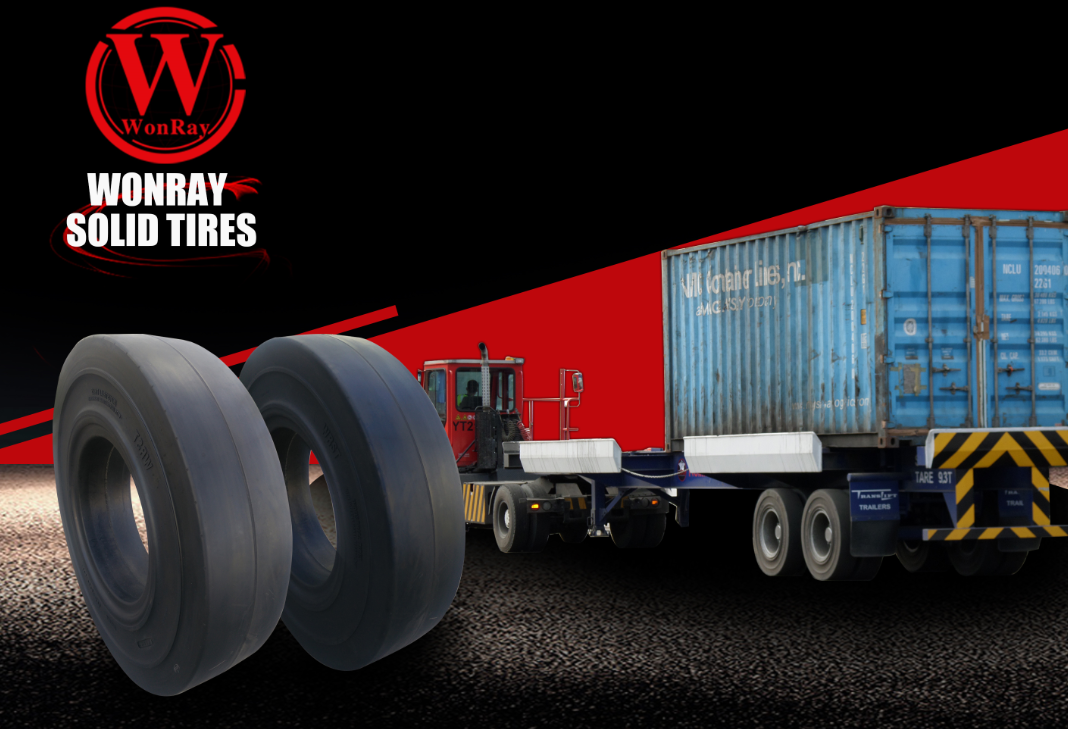
Solid Port Handling Tyres
Solid tyres are increasingly popular in port environments where punctures and maintenance downtime are major concerns.
Key benefits include:
● Puncture-proof performance
● Longer service life under heavy-duty conditions
● Lower maintenance requirements
● Stable load handling performance
Solid tyres are widely used on forklifts, terminal trailers, and certain cargo handling vehicles operating in demanding areas.
Foam-Filled Industrial Tyres
Foam-filled tyres combine some benefits of pneumatic and solid tyre technologies.
They offer:
● Improved puncture resistance
● Better shock absorption than standard solid tyres
● Reliable performance in mixed indoor and outdoor conditions
These tyres are often selected for equipment operating across multiple work zones within large ports.
Key Performance Factors for Port Handling Tyres
Choosing the right tyre involves more than matching dimensions. Performance characteristics should align with operational requirements.
Load Capacity
Port machinery frequently handles containers and oversized cargo with extremely high weights. Tyres must support these loads without excessive deformation or instability.
Using tyres with insufficient load ratings can lead to premature wear, structural failure, and safety risks.
Heat Resistance
Continuous operation generates significant heat buildup, especially in large equipment working under high loads.
High-quality port handling tyres use advanced rubber compounds designed to resist overheating and maintain structural integrity during long operating cycles.
Wear Resistance
Port surfaces are often abrasive due to concrete, steel debris, and heavy friction from repeated turning movements.
Tyres with superior wear resistance provide:
● Longer operational lifespan
● Lower replacement frequency
● Reduced operating costs over time
Traction and Stability
Reliable traction is essential for safe cargo handling, particularly in wet or slippery conditions.
Stable tyres help improve:
● Equipment control during turning
● Container positioning accuracy
● Overall operational safety
How High-Quality Port Handling Tyres Improve Operational Efficiency
Tyre quality directly influences productivity across port logistics systems.
Reduced Downtime
Frequent tyre failures can disrupt cargo movement and create delays throughout the supply chain.
Durable port handling tyres reduce unexpected breakdowns and minimize maintenance interruptions.
Improved Fuel Efficiency
Modern tyre designs can lower rolling resistance, helping reduce fuel consumption and improve energy efficiency in both diesel and electric equipment.
Better Equipment Protection
Tyres absorb operational stress and vibration, reducing strain on vehicle suspension systems and other mechanical components.
This contributes to:
● Lower maintenance costs
● Extended equipment lifespan
● Improved overall fleet reliability
Enhanced Safety Standards
Stable and reliable tyres improve braking, steering, and load control, helping reduce workplace accidents in busy port environments.
Challenges Facing Port Tyre Operations
Despite technological advancements, port operators still face several challenges related to tyre management.
Continuous Heavy Loads
Container handling equipment often works at maximum capacity, accelerating tyre wear.
Harsh Environmental Exposure
Salt air, moisture, UV exposure, and temperature fluctuations can all affect tyre durability over time.
Multi-Shift Operations
24/7 port operations increase cumulative stress on tyres and require highly reliable products capable of sustaining long duty cycles.
Maintenance Scheduling
Managing tyre inspections and replacements without disrupting operations remains a major challenge for fleet managers.
Trends in Modern Port Handling Tyre Technology
As ports become increasingly automated and sustainability-focused, tyre technology is also evolving.
Advanced Rubber Compounds
New formulations improve heat resistance, durability, and energy efficiency.
Smart Tyre Monitoring Systems
Integrated monitoring technologies help operators track:
● Temperature changes
● Pressure levels
● Wear conditions
This enables predictive maintenance and reduces unexpected failures.
Eco-Friendly Tyre Development
Manufacturers are exploring recyclable materials and low-resistance designs to support greener port operations.
Conclusion
Port handling tyres are far more than simple replacement parts—they are essential components that influence safety, productivity, and operational continuity across modern port logistics systems. From handling extreme loads to supporting continuous operations, high-quality tyres help ensure that cargo movement remains stable and efficient in demanding environments.
As global ports continue evolving toward smarter and more efficient operations, investing in durable and high-performance port handling tyres will remain a key strategy for improving reliability, reducing downtime, and enhancing long-term operational performance.
FAQ
1. What are port handling tyres used for?
Port handling tyres are used on equipment such as forklifts, reach stackers, terminal tractors, and container handlers operating in ports and logistics terminals.
2. Are solid tyres suitable for port equipment?
Yes, solid tyres are widely used in port environments because they offer puncture resistance, durability, and lower maintenance requirements.
3. Why is heat resistance important in port tyres?
Port equipment often operates continuously under heavy loads, generating heat that can affect tyre performance and lifespan.
4. How can port operators extend tyre service life?
Regular inspections, correct load management, proper tyre selection, and scheduled maintenance can significantly improve tyre lifespan.
Post time: 06-05-2026