
Choosing the right tires for vehicles or equipment is critical for ensuring performance, durability, safety, and cost-efficiency. The decision between pneumatic and solid tires can have a significant impact on operational outcomes, particularly in industrial, construction, and heavy-duty environments. Each type of tire offers distinct advantages and limitations, making it essential to understand the differences before making a selection. This article provides a detailed comparison of pneumatic and solid tires, highlighting their features, benefits, drawbacks, and ideal applications to help you make an informed decision.
Pneumatic Tires
Definition: Pneumatic tires are rubber tires filled with compressed air. The air inside acts as a cushion, providing shock absorption and improved ride comfort. Pneumatic tires are commonly used in cars, trucks, bicycles, and various industrial equipment.
Advantages of Pneumatic Tires:
● Superior Shock Absorption: Pneumatic tires absorb shocks and vibrations from uneven terrain, providing a smoother ride for the driver and reducing stress on vehicle components.
● Enhanced Traction: The air pressure allows the tire to conform to the surface, improving grip and handling across wet, dry, or uneven terrains.
● Lower Rolling Resistance: Compared to solid tires, pneumatic tires typically have lower rolling resistance, which improves fuel efficiency and reduces operational costs.
Disadvantages of Pneumatic Tires:
● Prone to Punctures: Pneumatic tires are susceptible to punctures from sharp objects, debris, or rough surfaces, which can lead to downtime for repairs.
● Air Pressure Maintenance: Maintaining correct tire pressure is essential. Over-inflation or under-inflation can negatively affect handling, tire wear, and safety.
● Higher Maintenance Costs: Pneumatic tires require frequent inspections, inflation checks, and repairs, increasing overall maintenance expenses over time.
Solid Tires
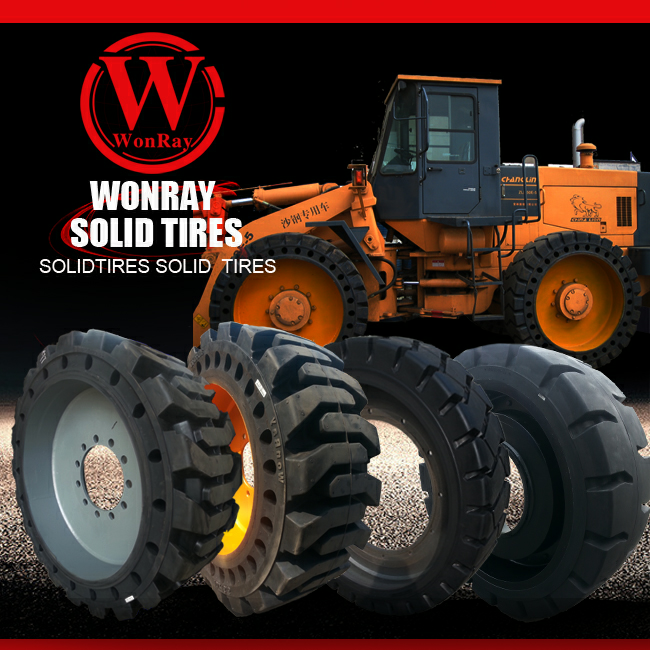
Definition: Solid tires, also known as non-pneumatic tires, are made of solid rubber or filled with resilient foam. They are highly durable and resistant to punctures, making them ideal for industrial and heavy-duty vehicles such as forklifts, skid steers, loaders, and construction equipment.
Advantages of Solid Tires:
● Puncture Resistance: Solid tires are virtually immune to punctures, cuts, and tears, allowing them to operate reliably in environments with sharp debris, nails, rocks, or uneven surfaces.
● Minimal Maintenance: Unlike pneumatic tires, solid tires do not require air pressure checks, inflation, or frequent repairs, reducing downtime and maintenance costs.
● Longer Lifespan: Solid tires generally last significantly longer than pneumatic tires, providing cost savings over the life of the equipment due to reduced replacements.
Disadvantages of Solid Tires:
● Reduced Ride Comfort: Solid tires provide less cushioning and shock absorption, which can result in a rougher ride, especially over uneven or bumpy surfaces.
● Limited Traction: On certain surfaces, particularly wet or slippery conditions, solid tires may provide lower traction compared to pneumatic tires, affecting vehicle handling.
● Increased Wear on Equipment: The rigid structure of solid tires can transmit more vibrations to the equipment, potentially accelerating wear on suspension or other mechanical components.
Pneumatic vs Solid Tires: Key Comparison
| Feature | Pneumatic Tires | Solid Tires |
|---|---|---|
| Shock Absorption | Excellent | Limited |
| Puncture Resistance | Vulnerable | High |
| Maintenance | Regular air checks | Minimal |
| Durability | Moderate | High |
| Traction | Superior | Limited |
| Ride Comfort | Smooth | Rougher |
This table illustrates the fundamental differences, highlighting where each tire type excels and where compromises may exist.
FAQs on Pneumatic and Solid Tires
Q1: Which type of tire is better for heavy industrial equipment?
A: Solid tires are generally better suited for heavy industrial applications due to their durability, puncture resistance, and low maintenance requirements.
Q2: Are pneumatic tires suitable for rough terrain?
A: Yes, pneumatic tires can perform well on rough terrain due to their shock absorption and traction capabilities, but they are more prone to punctures and may require more frequent maintenance.
Q3: How does tire choice affect operational costs?
A: Pneumatic tires may have higher maintenance costs due to air pressure checks, repairs, and potential downtime. Solid tires, while sometimes higher in upfront cost, reduce long-term maintenance and replacement expenses.
Q4: Can solid tires be used on passenger vehicles?
A: Solid tires are rarely used on passenger vehicles because they provide less comfort and traction compared to pneumatic tires. They are mainly suited for industrial and heavy-duty applications.
Q5: What factors should be considered when choosing between pneumatic and solid tires?
A: Consider load capacity, terrain type, maintenance capability, ride comfort requirements, operating costs, and the environment in which the vehicle will be used.
Conclusion
The choice between pneumatic and solid tires depends on the specific requirements of your vehicle and operating environment. Pneumatic tires excel in comfort, traction, and adaptability to various surfaces, making them ideal for passenger vehicles, bicycles, and light-duty commercial equipment. Solid tires, on the other hand, are the preferred choice for heavy-duty industrial vehicles, construction equipment, and environments with a high risk of punctures or rough terrain, offering long-term durability and minimal maintenance.
By evaluating factors such as load, terrain, safety, maintenance costs, and operational efficiency, you can make a well-informed decision that maximizes performance, reduces downtime, and optimizes overall vehicle or equipment productivity.
Product Selection Recommendations
● Heavy-duty industrial equipment, construction vehicles, and mining operations: Solid tires are recommended for their durability, puncture resistance, and cost-effectiveness over long-term operations.
● Passenger vehicles, bicycles, and light commercial vehicles: Pneumatic tires are ideal for providing comfort, better traction, and fuel efficiency, while still maintaining manageable maintenance requirements.
Understanding the advantages and limitations of each tire type ensures that your equipment operates safely, efficiently, and cost-effectively in its intended application.
Post time: 26-12-2025