
In industries where cleanliness, floor maintenance, and equipment durability are critical, choosing the right tire solution is essential. Non marking solid rubber tires have become a preferred choice for warehouses, manufacturing facilities, hospitals, and food processing plants, offering a combination of durability, safety, and floor protection.
For B2B buyers managing fleets of forklifts, pallet jacks, or industrial trolleys, these tires provide a strategic advantage by reducing maintenance costs, preventing unsightly floor marks, and ensuring continuous operation in high-traffic environments.
Why Non Marking Tires Are Essential for Modern Facilities
Industrial facilities face unique challenges when it comes to floor surfaces and equipment operation. Standard rubber tires may leave black marks, scuffs, or debris stains, which can compromise facility aesthetics and require frequent cleaning. Non marking solid rubber tires address these concerns by offering:
● Floor-friendly performance with zero black streaks
● High resistance to abrasion and wear
● Puncture-proof solid construction
● Consistent traction on smooth or polished surfaces
For B2B operators, this translates into cleaner floors, reduced maintenance, and enhanced safety for both workers and machinery.
Key Advantages of Non Marking Solid Rubber Tires
1. Floor Protection
Non marking tires are specially formulated to avoid leaving black streaks, scuffs, or scratches on sensitive surfaces. They are ideal for:
● Polished concrete warehouses
● Retail and logistics floors
● Hospital corridors and pharmaceutical facilities
Preserving floor integrity reduces maintenance costs and extends the life of flooring materials.
2. Durability and Maintenance Efficiency
Constructed from high-density solid rubber, these tires are resistant to punctures, tears, and uneven wear. Their benefits include:
● Minimal downtime due to tire damage
● Reduced maintenance interventions
● Long service life under continuous industrial use
B2B fleet operators gain predictable tire performance, reducing unexpected operational interruptions.
3. Enhanced Safety and Stability
Non marking solid rubber tires maintain reliable traction without leaving residue, which improves workplace safety:
● Consistent grip for forklifts and carts
● Reduced risk of slips or skidding on polished surfaces
● Stable handling even under heavy loads
This stability is especially important in facilities handling sensitive goods, chemicals, or food products.
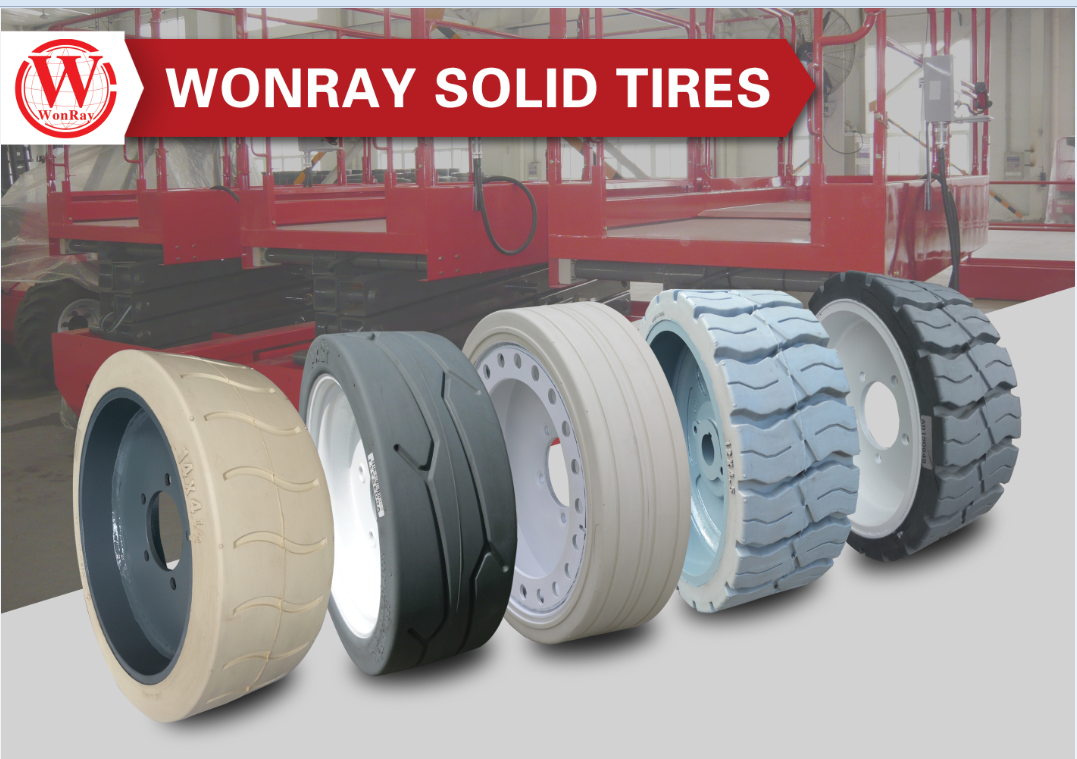
Suitable Applications for Non Marking Solid Rubber Tires
These tires are particularly effective in environments where floor appearance, cleanliness, and safety are critical. Typical applications include:
● Warehouses and distribution centers
● Food and beverage processing plants
● Hospitals and pharmaceutical facilities
● Retail and commercial facilities
● Indoor logistics and storage operations
By using non marking tires, businesses protect both floor surfaces and equipment, improving overall operational efficiency.
Total Cost of Ownership (TCO) Benefits
While non marking solid rubber tires may have a higher initial cost compared to standard rubber tires, the long-term financial benefits often outweigh the upfront investment. Key TCO advantages include:
● Lower floor maintenance and cleaning costs
● Fewer tire replacements due to durable construction
● Reduced downtime and associated labor costs
● Longer service life resulting in better ROI
B2B buyers focusing on lifecycle cost analysis can justify investing in high-quality non marking tires as a strategic operational decision.
Choosing the Right Non Marking Solid Rubber Tires
When selecting non marking tires for industrial fleets, consider:
-
Load capacity compatibility with forklifts or carts
-
Tread pattern and surface type for optimal traction
-
Rubber compound hardness for wear resistance
-
Rim size and ease of installation
-
Environmental exposure (chemicals, moisture, temperature)
Collaborating with experienced manufacturers ensures consistent quality, technical support, and compliance with industrial standards.
Conclusion
Non marking solid rubber tires offer a combination of floor protection, durability, and safety that makes them an ideal choice for modern industrial operations. For B2B buyers managing warehouses, logistics fleets, or sensitive facility environments, these tires provide predictable performance, reduce maintenance costs, and improve operational efficiency. Investing in high-quality non marking tires is not just about equipment maintenance—it’s a strategic decision that safeguards flooring, ensures workplace safety, and supports long-term cost efficiency.
FAQ
Q1: What are non marking solid rubber tires used for?
They are designed for industrial environments where floor protection, cleanliness, and safety are critical, such as warehouses, food processing facilities, and hospitals.
Q2: Do non marking tires reduce maintenance costs?
Yes. Their durable solid construction reduces punctures and wear, and their non marking formula protects floors, lowering cleaning and repair expenses.
Q3: Can these tires handle heavy loads?
Absolutely. Non marking solid rubber tires are engineered for forklifts, pallet jacks, and trolleys, maintaining stability even under significant weight.
Q4: Are non marking tires cost-effective for large fleets?
While upfront costs may be higher, their extended lifespan, reduced downtime, and lower floor maintenance costs make them a cost-efficient option over time.
Post time: 26-02-2026