
Metallurgical equipment works in some of the harshest industrial environments, where high loads, abrasive ground, heat exposure, metal debris, and continuous operation create severe tire challenges. Solid tires for metallurgical applications are designed to support heavy-duty machines with puncture-free performance, stable load capacity, and reduced maintenance requirements.
Tire Challenges in Metallurgical Environments
Steel plants, foundries, metal processing facilities, and smelting-related operations place extreme demands on industrial vehicles. Equipment may move heavy billets, coils, molds, slag containers, scrap metal, refractory materials, and production supplies. Ground conditions may include metal chips, sharp edges, rough concrete, heat-affected areas, and abrasive surfaces.
In these environments, pneumatic tires may be vulnerable to punctures, cuts, and pressure loss. Even a short equipment stoppage can affect material flow, production support, or internal logistics. For heavy industrial operations, tire reliability is closely connected with safety, efficiency, and maintenance planning.
Metallurgical equipment solid tires provide a stronger alternative for low-speed industrial machines working in these high-risk areas. Their solid rubber structure eliminates flats caused by punctures and provides stable support for demanding load conditions.
Designed for Heavy Materials and Continuous Operation
Metallurgical facilities often run under strict production schedules. Industrial vehicles may operate across multiple shifts, transporting materials between workshops, storage zones, processing areas, and loading points. Tires must support not only heavy weight but also repeated movement under tough surface conditions.
A solid tire used in metallurgical equipment must resist compression, abrasion, tearing, cutting, and heat-related stress. It must also help the machine remain stable while carrying dense materials such as steel products or foundry components.
For B2B users, the main goal is dependable operation. A tire failure in a steel plant can create delays that affect multiple departments. Reliable solid tires help reduce this risk and allow equipment to stay productive for longer periods.
Key Advantages of Metallurgical Equipment Solid Tires
Solid tires for metallurgical equipment are developed for strength, durability, and practical maintenance reduction. They help industrial users manage tire performance in environments where ordinary tire solutions may fail too often.
● Puncture-free construction helps prevent flats caused by metal scraps, sharp steel edges, nails, slag fragments, and industrial debris.
● Heavy-load stability supports equipment transporting coils, billets, molds, containers, and dense production materials.
● Durable rubber compound improves resistance to abrasion, cutting, tearing, and surface damage on rough industrial floors.
● Heat-resistant performance can support operation near high-temperature areas, depending on the specific application and tire specification.
● Low maintenance structure eliminates inflation checks and reduces emergency tire repair needs.
● Strong tire body helps maintain stable performance during repeated turning, braking, and load movement.
● Reduced downtime supports more reliable production logistics and internal material flow.
● Suitable tire categories can serve forklifts, trailers, transfer vehicles, and special metallurgical equipment.
These features help reduce operational uncertainty in steel and metal processing environments where tire damage risk is high.
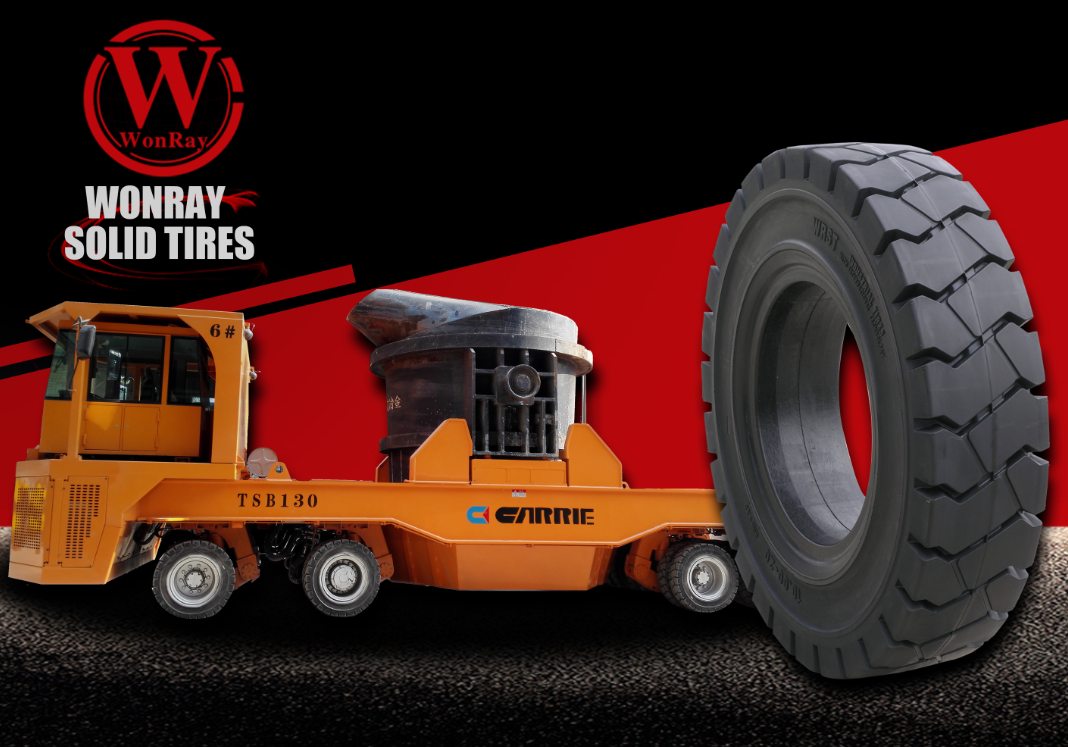
Applications in Steel Plants
Steel plants require strong internal transport systems. Vehicles may move raw materials, semi-finished products, finished steel, tools, molds, and maintenance components. Because these materials are heavy and often handled in demanding areas, tire performance must be reliable.
Metallurgical equipment solid tires are suitable for forklifts, platform trucks, trailers, and other low-speed vehicles used around steel production and storage areas. They help reduce flats caused by metal fragments and support stable transport of heavy materials.
In coil handling areas, billet storage zones, and workshop logistics routes, solid tires can improve equipment availability and reduce maintenance interruptions.
Applications in Foundries and Metal Processing Facilities
Foundries and metal processing workshops expose tires to heavy parts, rough floors, sharp scraps, and sometimes elevated ambient temperatures. Vehicles may carry castings, molds, sand boxes, dies, components, or waste materials.
Solid tires are practical in these facilities because they can resist punctures and provide stable load support. They also reduce the need for emergency repairs in busy production areas, where stopping a vehicle may affect workflow.
For metal processing companies, consistent tire performance helps maintain internal logistics and supports safer movement around workers, machines, and storage zones.
Applications in Scrap Handling and Heavy Industrial Recycling
Metallurgical operations often include scrap movement. Scrap yards and recycling areas may contain sharp metal, wires, broken components, uneven ground, and abrasive surfaces. These conditions can quickly damage pneumatic tires.
Solid tires provide better puncture resistance for equipment handling scrap materials. They help vehicles continue working even when ground conditions are difficult to control. This is useful for plants that process steel scrap, metal waste, or production offcuts.
Reduced tire failure can improve the efficiency of scrap collection, sorting, loading, and internal transfer processes.
Stability Under Dense Loads
One of the most important requirements in metallurgical applications is load stability. Steel coils, billets, molds, and metal parts are dense and heavy. When moved by forklifts or industrial transport vehicles, these loads place significant pressure on tires.
Solid tires provide consistent support because they do not rely on air pressure. There is no risk of pressure loss during operation, which helps maintain predictable handling. This is valuable when machines travel through narrow workshop lanes, turn near storage racks, or move around production equipment.
Stable tire performance can also help operators feel more confident when transporting heavy materials over short distances.
Lower Maintenance for High-Pressure Production Sites
Maintenance teams in steel plants and metal processing facilities already manage complex equipment systems. Tire problems add extra pressure when they require urgent repairs or machine stoppage.
Metallurgical equipment solid tires reduce maintenance demand by eliminating air-related issues. No inflation checks are required, and puncture repairs are not needed. Regular inspections should still be carried out to monitor tread wear, cuts, embedded debris, or abnormal damage, but the service process becomes more predictable.
This helps maintenance teams plan tire replacement based on actual wear rather than sudden tire failure.
Supporting Long-Term Operational Efficiency
In heavy industry, equipment uptime directly affects productivity. A tire that lasts longer and requires fewer repairs can support smoother material movement and better internal logistics. Over time, reduced downtime and lower emergency service needs can help improve operational efficiency.
Solid tires designed for metallurgical environments are not only about durability. They also support safer handling, better maintenance planning, and stronger fleet reliability.
For B2B users, this makes metallurgical equipment solid tires a valuable choice for steel plants, foundries, metal processing workshops, and heavy industrial recycling operations.
Summary
Metallurgical equipment solid tires are built for steel plants, foundries, metal processing facilities, scrap handling areas, and heavy industrial operations where ordinary tires face severe risks. Their puncture-free construction, heavy-load stability, durable rubber structure, low maintenance design, and resistance to tough surface conditions help reduce downtime and support more reliable internal transport.
For industrial users handling dense materials, sharp debris, and continuous production schedules, solid tires provide a practical solution for improving equipment availability and long-term operating efficiency.
FAQ
1、What are metallurgical equipment solid tires?
They are heavy-duty solid tires designed for vehicles and equipment used in steel plants, foundries, metal processing facilities, and related industrial environments.
2、Why are solid tires suitable for metallurgical applications?
They are puncture-free, stable under heavy loads, and resistant to harsh surfaces with metal debris, sharp scraps, and abrasive ground conditions.
3、What equipment can use metallurgical solid tires?
They can be used on suitable forklifts, trailers, platform trucks, transfer vehicles, and special equipment used in steel and metal processing operations.
4、Do metallurgical equipment solid tires reduce maintenance?
Yes. Because they do not contain air, they do not require inflation checks or puncture repairs, which helps reduce emergency tire maintenance.
Post time: 15-05-2026