
Electric scissor lift platforms are vital tools in modern industrial, warehousing, and construction operations. Their efficiency depends not only on the machinery but also on the tyres supporting them. Durable solid tyres for electric scissor lift platforms provide a combination of reliability, strength, and maintenance-free performance, making them indispensable for businesses aiming to maximize uptime and reduce operational costs. Choosing the wrong tyre can lead to downtime, increased maintenance, and compromised safety—critical factors for B2B operations.
Understanding the Role of Solid Tyres
Unlike pneumatic tyres, which rely on air pressure and are prone to punctures, solid tyres are constructed from robust rubber compounds. They are specifically designed to:
● Resist wear and abrasion over extended periods
● Operate reliably on smooth, rough, or debris-laden surfaces
● Maintain consistent platform stability under heavy loads
● Eliminate downtime caused by flats or deflated tyres
This makes solid tyres the preferred choice for electric scissor lifts, particularly in environments where maintenance and safety cannot be compromised.
Advantages for B2B Operations
Durable solid tyres offer several strategic advantages for B2B businesses managing fleets of electric scissor lifts:
● Operational Reliability – Solid tyres withstand repeated lifting cycles and reduce the frequency of unexpected downtime.
● Lower Total Cost of Ownership – Minimal maintenance and longer lifespan reduce operational expenditures.
● Enhanced Safety – Consistent traction and stability lower the risk of accidents on both indoor and outdoor surfaces.
● Improved Productivity – Reliable tyres allow workers to focus on tasks without interruption, increasing workflow efficiency.
● Adaptability – Suitable for various surfaces, including concrete floors, asphalt, and slightly uneven terrains.
Companies that rely on mobile aerial platforms for warehouse, maintenance, or construction tasks can greatly benefit from these advantages.
Types of Durable Solid Tyres
Not all solid tyres are created equal. Selecting the right type requires understanding the operational context:
● Standard Solid Rubber Tyres – Durable and cost-effective, suitable for light to medium-duty indoor lifts.
● Heavy-Duty Industrial Solid Tyres – Designed for outdoor sites and high-load applications, resistant to cuts and abrasion.
● Non-Marking Solid Tyres – Ideal for warehouse and indoor environments where floor aesthetics matter.
● Polyurethane-Coated Tyres – Provide chemical and wear resistance for harsh industrial conditions.
Choosing the correct tyre type ensures the lift performs optimally in the intended environment while protecting both the platform and facility surfaces.
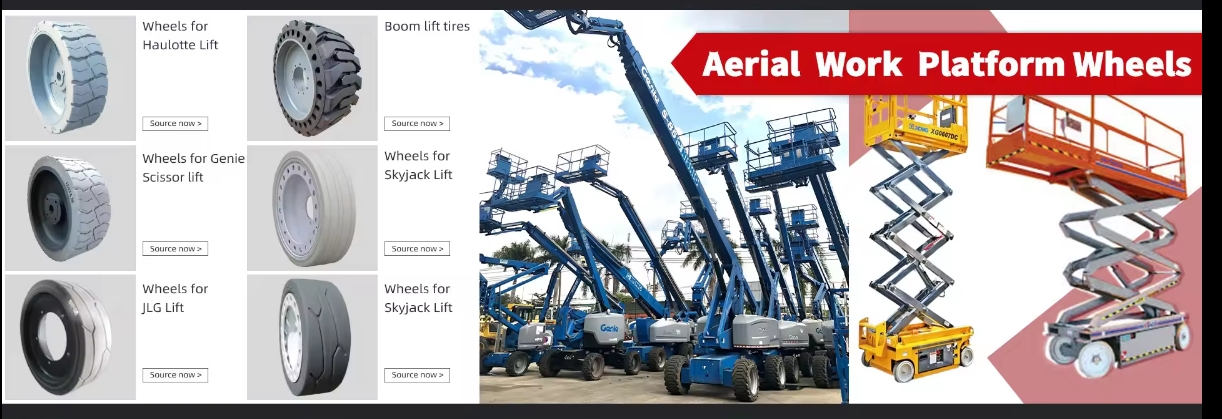
Key Considerations Before Purchase
Before investing in solid tyres for scissor lifts, B2B operators should evaluate:
● Weight Capacity – Confirm tyres can handle the combined weight of the platform, equipment, and personnel.
● Usage Frequency – High-frequency use requires tyres with reinforced compounds for durability.
● Surface Type – Match tyre material and tread pattern to operational terrain for stability and traction.
● Environmental Factors – Consider exposure to chemicals, temperature extremes, or debris.
● Maintenance Capabilities – Although solid tyres are low-maintenance, regular inspection is still necessary to identify wear or damage.
Considering these factors helps prevent operational interruptions and extends the life of the equipment.
Proactive Maintenance Strategies
Even durable solid tyres benefit from preventive measures to maximize lifespan:
● Conduct routine visual inspections for cracks, uneven wear, or embedded debris
● Ensure tyres are properly installed and securely fastened
● Monitor load distribution to prevent overloading or uneven wear patterns
● Replace tyres before excessive wear affects safety or performance
Adopting a proactive maintenance approach enhances uptime, protects employees, and ensures investment longevity.
Why Solid Tyres Are a Strategic B2B Investment
For companies managing fleets of electric scissor lifts, durable solid tyres are more than a component—they are a business advantage:
● Reducing unplanned downtime improves operational efficiency
● Extending tyre and lift platform lifespan reduces capital replacement costs
● Enhancing safety minimizes liability and workplace accidents
● Maintaining consistent performance across facilities increases reliability and client confidence
B2B operators benefit from these strategic advantages by integrating high-quality solid tyres into their operational planning.
Conclusion
Durable solid tyres for electric scissor lift platforms are critical for maintaining safety, reliability, and productivity in B2B operations. Selecting the right tyre type based on load capacity, surface conditions, and frequency of use ensures maximum uptime and minimal maintenance. Proactive inspections and replacement strategies further enhance performance, making these tyres a smart investment for businesses relying on vertical mobility solutions.
FAQ
Q1: Can solid tyres be used for outdoor scissor lift applications?
● Yes, heavy-duty industrial solid tyres are designed for outdoor surfaces, providing durability and traction on rough terrain.
Q2: How do non-marking solid tyres benefit warehouse operations?
● They protect floors from scuffs and marks while maintaining safe traction and lift stability.
Q3: What maintenance is required for solid tyres?
● Visual inspections, secure mounting, monitoring load distribution, and proactive replacement when wear appears.
Q4: Do polyurethane-coated solid tyres handle harsh chemicals?
● Yes, they are engineered for chemical resistance and abrasion, ideal for industrial settings.
Q5: Why should B2B operators choose solid tyres over pneumatic options?
● Solid tyres offer greater reliability, eliminate flat tyre issues, reduce maintenance, and provide long-term cost savings.
Post time: 04-03-2026