
In industrial transport systems, trailers are responsible for moving heavy materials across warehouses, construction sites, ports, and production facilities, where efficiency and reliability are directly tied to operational profitability. While many businesses focus on load capacity and structural design of trailers, tire performance remains one of the most critical yet underestimated factors affecting long-term performance. Trailer solid rubber tires offer a strategic solution for B2B users who require durability, low maintenance, and uninterrupted operation under demanding conditions.
The Operational Challenges Faced by Industrial Trailers
Industrial trailers operate in environments that are often unpredictable and physically demanding, where surface conditions, debris, and heavy loads combine to create constant stress on tires.
● Continuous exposure to sharp materials such as metal scraps, gravel, and construction debris increases the risk of tire damage and unexpected failure
● Frequent loading and unloading cycles place repeated pressure on tires, accelerating wear and reducing service life in conventional tire solutions
● Harsh ground conditions, including uneven surfaces and abrasive materials, create additional friction and structural strain
● Extended operating hours in logistics and manufacturing environments demand consistent performance without downtime interruptions
These challenges highlight the need for tire solutions that prioritize reliability over temporary comfort advantages.
Structural Design That Defines Solid Rubber Tire Performance
Trailer solid rubber tires are engineered to provide long-lasting performance by eliminating the vulnerabilities associated with air-filled designs and enhancing structural integrity through advanced material composition.
● High-density rubber construction ensures resistance to punctures, cuts, and deformation even under heavy loads
● Multi-layer design integrates wear-resistant outer layers with flexible internal structures to balance durability and shock absorption
● Reinforced core architecture supports secure mounting and prevents structural failure during prolonged use
● Specialized rubber compounds improve resistance to heat, abrasion, and environmental stress
This combination of features allows solid tires to maintain consistent performance in environments where traditional tires struggle.
Performance Benefits That Drive Industrial Adoption
The increasing use of trailer solid rubber tires across industries is driven by measurable improvements in performance, safety, and operational efficiency.
● Elimination of puncture-related downtime enables continuous operation without unexpected interruptions
● Superior durability extends tire lifespan, reducing replacement frequency and associated costs
● Stable load-bearing performance enhances transport safety, particularly when handling heavy or uneven loads
● Minimal maintenance requirements reduce labor costs and simplify operational management
● Consistent traction improves control and reduces the risk of slippage during transport
These benefits collectively contribute to improved productivity and reduced operational risk.
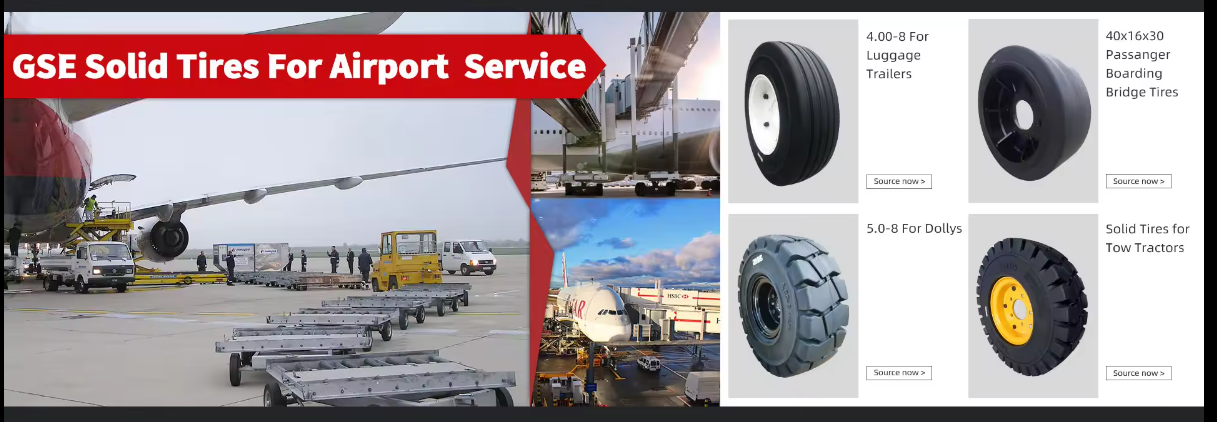
Application Scenarios Where Solid Tires Deliver Maximum Value
Trailer solid rubber tires are particularly effective in industries where operating conditions are harsh and reliability is critical for maintaining workflow continuity.
● In construction environments, where debris and uneven terrain are unavoidable, solid tires ensure uninterrupted material transport without damage
● In warehouse logistics, where efficiency and uptime are essential, solid tires reduce maintenance interruptions and support continuous movement of goods
● In agricultural operations, where terrain variability can impact performance, solid tires provide stability and durability across different surfaces
● In port and terminal applications, where heavy loads and constant usage are standard, solid tires support consistent performance and reduce downtime
● In manufacturing facilities, where internal transport must remain efficient and predictable, solid tires contribute to smooth workflow integration
These applications demonstrate the versatility and reliability of solid rubber tire solutions.
Comparing Solid Rubber Tires with Conventional Alternatives
When evaluating tire options for industrial trailers, it is essential to consider how solid rubber tires compare with traditional pneumatic solutions in real-world conditions.
● Solid tires provide unmatched resistance to punctures and structural damage, making them ideal for high-risk environments
● Pneumatic tires offer better shock absorption but require frequent maintenance and are more susceptible to failure
● Solid tires maintain consistent performance without the variability caused by air pressure changes
● Maintenance requirements for solid tires are significantly lower, reducing operational complexity
While each option has its place, solid rubber tires are often the preferred choice for heavy-duty and high-reliability applications.
Long-Term Cost Efficiency for B2B Operations
From a financial perspective, trailer solid rubber tires offer strong long-term value by reducing both direct and indirect costs associated with tire management.
● Reduced maintenance needs lower labor and service expenses
● Extended service life decreases the frequency of tire replacements
● Improved equipment uptime increases productivity and revenue potential
● Lower risk of unexpected failures minimizes operational disruptions and associated costs
For businesses managing multiple trailers, these advantages can result in substantial cost savings over time.
Key Considerations for Selecting Trailer Solid Rubber Tires
To maximize the benefits of solid tire solutions, B2B buyers must carefully evaluate their operational requirements and align them with appropriate tire specifications.
● Load capacity must be matched to the maximum weight the trailer will carry during operation
● Environmental conditions, including surface type and exposure to debris, should guide material and design selection
● Tire size and compatibility must align with trailer specifications to ensure safe and efficient performance
● Rubber compound characteristics should be chosen based on wear resistance, flexibility, and temperature tolerance
Proper selection ensures that the tire delivers optimal performance and longevity.
Future Trends in Solid Rubber Tire Technology
As industrial operations become more demanding and efficiency-driven, solid rubber tire technology continues to evolve to meet new challenges and expectations.
● Advanced material development is improving durability while reducing rolling resistance for better energy efficiency
● Sustainable manufacturing practices are gaining importance as industries focus on environmental responsibility
● Integration of monitoring technologies may enable predictive maintenance and real-time performance tracking
These innovations will further enhance the role of solid tires in modern industrial transport systems.
Conclusion
Trailer solid rubber tires provide a robust and reliable solution for industrial transport applications where durability, stability, and low maintenance are essential. Their ability to eliminate puncture risks, extend service life, and support continuous operation makes them a valuable asset for B2B businesses seeking to optimize efficiency and reduce costs.
By selecting the right tire specifications and aligning them with operational needs, companies can significantly improve transport reliability and achieve long-term performance benefits in demanding industrial environments.
FAQ
- What are the main advantages of trailer solid rubber tires?
They offer puncture resistance, durability, low maintenance, and stable performance under heavy loads. - Are solid tires suitable for all trailer applications?
They are ideal for heavy-duty and harsh environments but may not be necessary for light-duty use. - How do solid tires affect maintenance requirements?
They significantly reduce maintenance needs by eliminating air pressure management and repair frequency. - Are solid rubber tires cost-effective in the long run?
Yes, their durability and reduced downtime typically result in lower overall operating costs.
Post time: 27-04-2026