
In industrial and logistics environments, choosing the right tow tractor tires is critical for ensuring operational efficiency and safety. Whether in warehouses, airports, or manufacturing facilities, selecting durable and application-specific tires directly impacts traction, load stability, and overall vehicle performance. For B2B buyers, this decision can translate into higher uptime and lower maintenance costs.
Why Tow Tractor Tires Matter
Tow tractors are designed to transport heavy loads across smooth or uneven surfaces under demanding conditions. Their tires must provide:
-
Superior load-bearing capacity for uninterrupted operation.
-
Consistent traction and grip to prevent slippage.
-
Wear, puncture, and abrasion resistance for long service life.
-
Stable handling even under full load conditions.
Types of Tow Tractor Tires
Solid Rubber Tires
-
Ideal for indoor and smooth surfaces.
-
Maintenance-free and puncture-resistant.
-
Resistant to oil, chemicals, and debris.
Pneumatic Tires
-
Suitable for outdoor or rough terrains.
-
Absorbs shocks for operator comfort.
-
Provides better traction on wet or uneven surfaces.
Non-Marking Tires
-
Perfect for cleanroom or food industry settings.
-
Leaves no marks on floors while maintaining durability.
Key Benefits for Businesses
-
Extended tire lifespan, reducing downtime.
-
Improved safety through consistent grip.
-
Energy-efficient operation with lower rolling resistance.
-
Lower total cost of ownership for fleets of tow tractors.
Industry Applications
-
Manufacturing Plants – Efficient material transport.
-
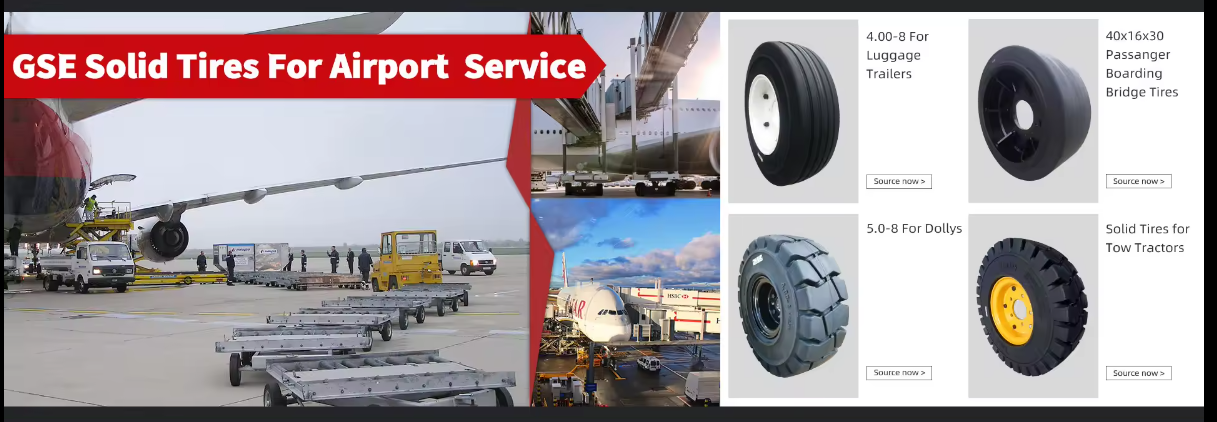
Airports – Safe towing of luggage carts and equipment.
-
Warehouses & Distribution Centers – Smooth cargo handling over long shifts.
-
Automotive and Assembly Lines – Reliable internal logistics.
Conclusion
Investing in high-quality tow tractor tires enhances productivity, safety, and long-term efficiency. Selecting tires tailored to your operational environment reduces maintenance needs and prolongs the service life of your fleet, making them a critical factor in successful B2B operations.
FAQ:
1. What tire type is best for indoor use?
Solid rubber or non-marking tires ensure durability and prevent floor damage.
2. How often should tow tractor tires be replaced?
Depending on usage and load, typically every 12–24 months in industrial settings.
3. Are non-marking tires as durable as standard tires?
Modern non-marking compounds offer similar durability while protecting floors.
4. Can one tire type suit both indoor and outdoor operations?
Hybrid tires exist, but using environment-specific tires generally delivers optimal performance.
Post time: 31-10-2025