
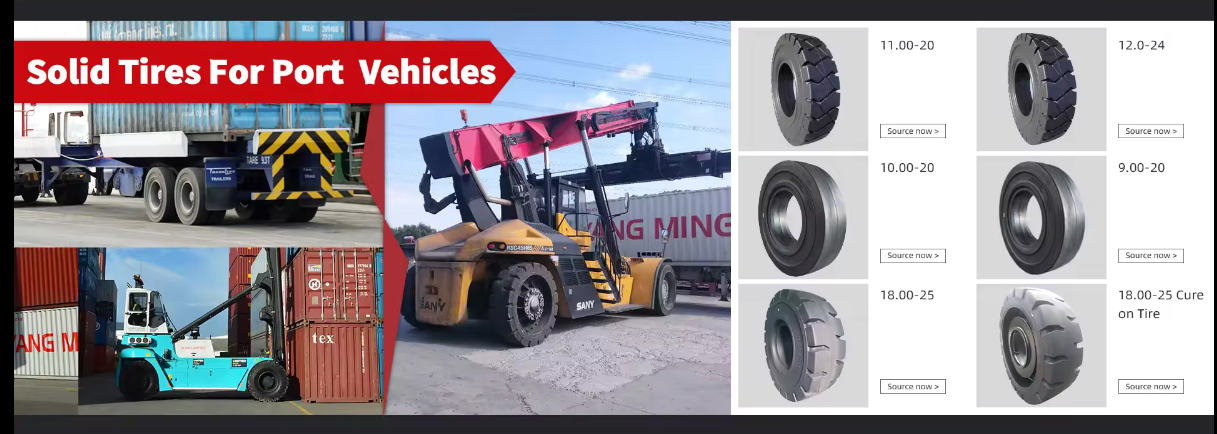
In the fast-paced environment of ports and container terminals, the performance of handling vehicles is critical. One key component that directly affects operational efficiency, safety, and cost-effectiveness is the choice of tyres. Industrial solid tires for port handling vehicles play a pivotal role in ensuring smooth, reliable, and safe operations in challenging port environments. Choosing the right tyres can prevent downtime, extend vehicle life, and improve overall logistics performance.
Why Tyre Selection Matters in Port Operations
Tyres are more than just a support mechanism—they influence the vehicle’s traction, stability, and load-bearing capacity. In port environments, where vehicles such as reach stackers, forklifts, and terminal tractors operate under heavy loads, tyre performance is critical:
● Proper tyres enhance vehicle stability, reducing the risk of tipping accidents
● Durable tyres minimize maintenance requirements and prevent unexpected downtime
● High-quality tyres improve traction on diverse surfaces, from smooth concrete to rough pavements
● Efficient tyres contribute to faster handling of cargo, improving overall throughput
For port operators and logistics companies, selecting the right tyres is both a safety and operational priority.
Key Types of Industrial Solid Tyres for Port Vehicles
Industrial solid tyres are specifically engineered to handle heavy-duty operations and extreme wear conditions. Main types include:
● Heavy-Duty Solid Rubber Tyres – Ideal for high-load applications and rough surfaces, these tyres resist punctures and wear, ensuring long operational life.
● Non-Marking Solid Tyres – Designed for indoor terminals and areas with sensitive flooring, leaving no marks while maintaining durability.
● Polyurethane-Coated Solid Tyres – Offer high wear resistance and reduced noise, suitable for repetitive, high-intensity port handling tasks.
● Custom-Fit Solid Tyres – Tailored to specific vehicle models and operational requirements to maximize efficiency and safety.
Each tyre type addresses different operational challenges, including load capacity, frequency of use, and environmental conditions.
Factors to Consider When Choosing Solid Tyres
When selecting industrial solid tyres for port handling vehicles, operators should evaluate multiple criteria:
● Vehicle Type and Load – Tyres must support the vehicle’s weight and maximum cargo capacity
● Operating Surface – Concrete, asphalt, or mixed surfaces require different tread designs for optimal traction
● Usage Frequency – High-frequency operations need more durable, wear-resistant tyres
● Environmental Conditions – Exposure to chemicals, extreme temperatures, and moisture should be considered
● Maintenance Capability – Solid tyres require less frequent maintenance but still need regular inspection for wear and alignment
By carefully analyzing these factors, companies can ensure both safety and cost efficiency.
Benefits of High-Quality Solid Tyres
Investing in premium industrial solid tyres provides tangible advantages:
● Enhanced Safety – Improved grip and stability reduce accidents in busy port operations
● Reduced Maintenance Costs – Puncture-resistant and durable tyres require fewer replacements
● Minimized Downtime – Reliable tyres prevent unexpected stops, keeping logistics operations on schedule
● Extended Vehicle Life – Proper tyres reduce wear on vehicle axles and suspension systems
● Operational Efficiency – Optimized tyre performance enables faster cargo handling and improved productivity
These benefits directly contribute to reduced operational costs and improved ROI for port operators managing a fleet of handling vehicles.
Maintenance Tips for Industrial Solid Tyres
Even though solid tyres are designed for heavy-duty, low-maintenance use, routine checks are essential:
● Inspect for uneven wear, cracks, or surface damage
● Ensure tyres are properly mounted and securely fastened
● Monitor operational load and replace tyres when necessary
● Maintain records of usage conditions to anticipate replacements before failure
Regular inspections prevent costly downtime and maintain safe working conditions in high-traffic port environments.
Conclusion
Industrial solid tyres for port handling vehicles are a critical component for safe, efficient, and cost-effective port operations. Selecting the right tyre type—whether heavy-duty rubber, non-marking, polyurethane-coated, or custom-fit—ensures that vehicles perform reliably under heavy loads and diverse surface conditions.
For B2B operators, investing in high-quality solid tyres is a strategic decision that enhances safety, reduces maintenance, minimizes downtime, and improves overall operational efficiency. Proper tyre selection is not just a maintenance consideration—it is a long-term investment in productivity and operational excellence.
FAQ
Q1: How do I select the right solid tyre for port handling vehicles?
● Consider the vehicle type, load capacity, surface conditions, and frequency of use to determine the most suitable tyre.
Q2: Can non-marking solid tyres be used outdoors at port terminals?
● They are primarily designed for indoor use on sensitive flooring; for outdoor operations, heavy-duty solid tyres are recommended.
Q3: How often should industrial solid tyres be inspected?
● Depending on usage, inspect tyres every 3–6 months for wear, cracks, or uneven tread, with higher usage requiring more frequent checks.
Q4: Are polyurethane-coated tyres suitable for heavy loads?
● Yes, they are durable and wear-resistant, but always verify that their load rating matches the vehicle’s maximum capacity.
Post time: 03-03-2026