
Boom lifts are essential machines for construction, facility maintenance, warehousing, and industrial installation projects. While most buyers focus on engine power, reach, or platform capacity, tire performance often determines real-world reliability and uptime. Choosing the right industrial solid rubber tires for boom lift equipment directly affects safety, stability, maintenance costs, and long-term operating efficiency.
For B2B fleet managers and equipment suppliers, upgrading from pneumatic or foam-filled tires to solid rubber designs is no longer just an option—it is a strategic decision that reduces downtime and protects productivity across demanding worksites.
Why Tires Matter More Than You Think on Boom Lifts
Boom lifts operate under unique conditions compared to forklifts or loaders. They carry heavy structures, extend vertically and horizontally, and frequently work on rough or debris-filled surfaces. Any tire failure at height can cause not only delays but also serious safety risks.
Unlike air-filled tires, solid rubber tires eliminate the possibility of punctures, blowouts, or sudden pressure loss. This reliability is critical when equipment must perform consistently during multi-shift or outdoor operations.
From a business perspective, tire selection influences:
● Machine uptime
● Operator safety
● Maintenance frequency
● Ground protection
● Total cost of ownership
● Fleet efficiency
Because boom lifts are often deployed in construction zones, factories, and rental fleets, durability and predictability become more important than ride softness alone.
What Are Industrial Solid Rubber Tires for Boom Lift Equipment?
Industrial solid rubber tires are manufactured using high-density rubber compounds molded into a fully solid structure rather than relying on compressed air. Some designs include multi-layer constructions with a wear-resistant tread, cushioning center, and reinforced base for strength and stability.
This structure provides consistent shape retention under heavy loads and harsh environments. There is no need for inflation, patching, or pressure checks, making them particularly attractive for industrial users who value low maintenance and operational certainty.
Compared with traditional pneumatic tires, solid tires offer:
● 100% puncture resistance
● Stable load-bearing capacity
● Longer service life
● Reduced maintenance requirements
● Improved safety in hazardous areas
These characteristics make them well suited for articulated and telescopic boom lifts working on construction sites, concrete floors, gravel, and mixed terrain.
Key Technical Advantages for Industrial Use
Solid rubber tires are engineered specifically for high-stress applications. For boom lifts that frequently maneuver while extended, tire strength and stability are crucial to prevent sway or uneven movement.
The most important technical benefits include:
● Reinforced rubber compounds that resist cuts, chips, and tearing
● Deep tread patterns that enhance traction on uneven or loose ground
● High load capacity to support heavy platforms and tools
● Heat-resistant materials that handle long operating cycles
● Stable sidewalls that reduce deformation during turning
● Optional non-marking or anti-static formulations for indoor projects
These features ensure that the tires maintain consistent performance even under demanding duty cycles and heavy equipment loads.
Safety and Stability at Working Height
Safety is non-negotiable when operators are elevated several meters above the ground. Tire instability can compromise platform balance, especially when the boom is fully extended or when traveling across uneven surfaces.
Solid rubber tires provide a firmer, more consistent footprint compared to pneumatic alternatives. This consistency supports better control and smoother handling, which directly improves operator confidence.
Additional safety benefits include:
● No sudden deflation that could destabilize the machine
● Reduced sidewall flex for improved steering precision
● Enhanced grip on wet or dusty surfaces
● Better braking performance
● Lower risk of rollover caused by uneven pressure
For industrial and construction compliance standards, these features help reduce accident risks and support safer jobsite operations.
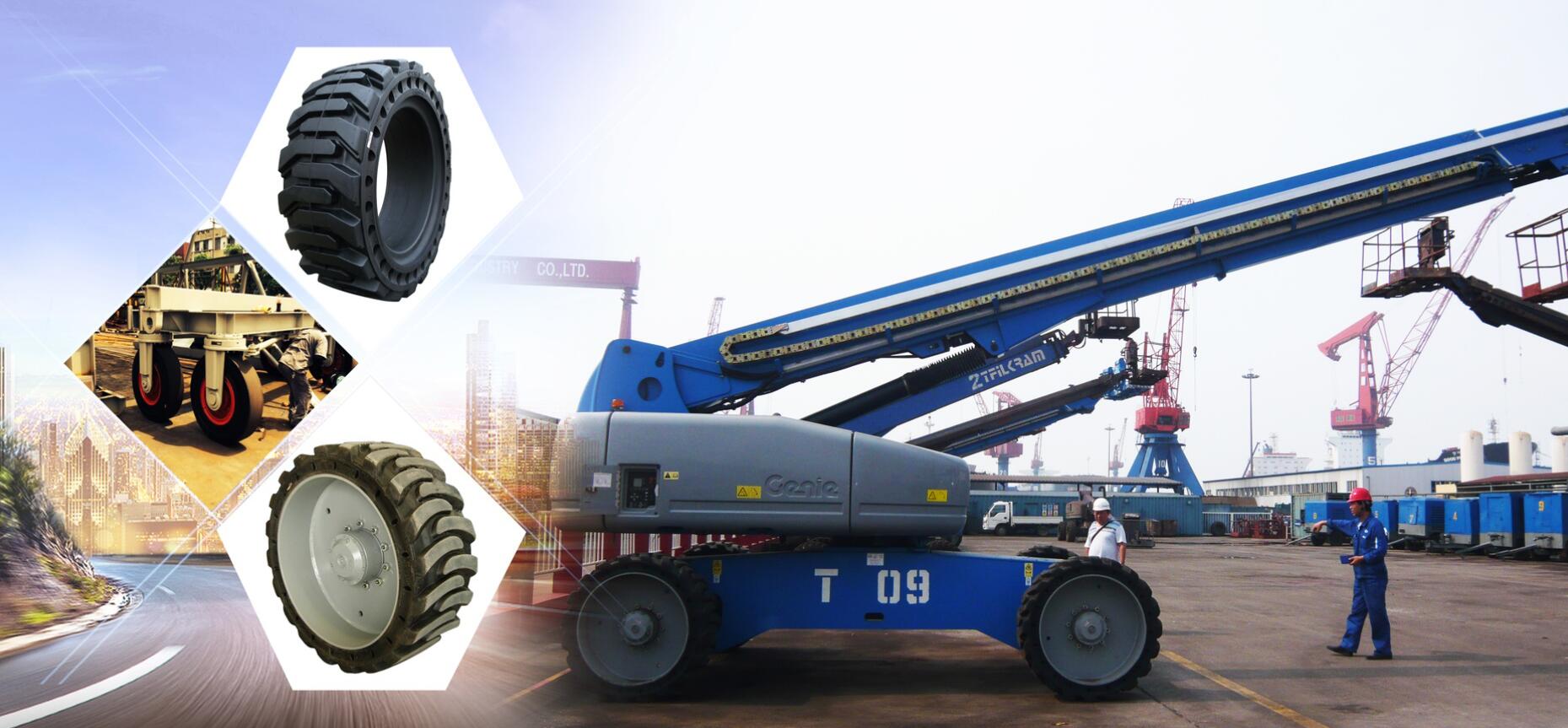
Ideal Application Environments
Industrial solid rubber tires are particularly valuable in challenging environments where conventional tires struggle to survive. Boom lifts are often used outdoors in rough, debris-heavy conditions that quickly damage air-filled tires.
Typical applications include:
● Construction and infrastructure projects
● Steel fabrication yards
● Mining and quarry support areas
● Industrial plants and factories
● Equipment rental fleets
● Ports and logistics terminals
● Facility maintenance and installation work
In these environments, durability and reliability matter far more than ride softness, making solid tires the more practical long-term solution.
Long-Term Cost Efficiency and ROI
Although industrial solid rubber tires generally have a higher initial purchase price than pneumatic tires, the total lifecycle cost is often significantly lower. Businesses that evaluate cost per operating hour rather than upfront price tend to see clear financial benefits.
Savings typically come from:
● Extended wear life
● Reduced downtime
● Lower maintenance labor
● Fewer emergency replacements
● Improved productivity
When machines stay operational longer and require fewer interventions, the return on investment becomes evident. For B2B buyers managing large fleets, these small improvements per unit translate into meaningful overall savings.
Selection Considerations Before Purchasing
Choosing the right tire specification ensures optimal performance. Not all solid tires are identical, and proper matching to the boom lift model and work environment is essential.
Before ordering, buyers should evaluate:
● Load rating and machine weight capacity
● Tread design for terrain type
● Compound hardness for wear resistance
● Indoor or outdoor usage requirements
● Non-marking or standard rubber options
● Rim compatibility and mounting style
Working with experienced industrial tire suppliers can help ensure the correct balance between durability, traction, and ride comfort.
Future Trends in Solid Tire Technology
As electric boom lifts and sustainable jobsite practices become more common, tire technology continues to evolve. Manufacturers are developing new compounds and designs that enhance both efficiency and environmental performance.
Emerging developments include:
● Low rolling resistance formulas to extend battery life
● Eco-friendly rubber materials
● Improved shock absorption structures
● Smart wear indicators for predictive maintenance
● Advanced molding for lighter weight without sacrificing strength
These innovations further strengthen the case for adopting solid tires as the standard solution for industrial lifting equipment.
Conclusion
Industrial solid rubber tires for boom lift equipment deliver dependable performance where it matters most. By eliminating punctures, reducing maintenance, and enhancing stability, they help businesses maintain safer operations and higher productivity. For B2B fleet managers, contractors, and rental providers, the benefits extend beyond durability to measurable cost savings and improved uptime.
Investing in high-quality solid rubber tires is not simply a component upgrade—it is a strategic decision that supports long-term operational reliability and better returns across the entire fleet.
FAQ
Q1: Are solid rubber tires better than pneumatic tires for boom lifts?
Yes. Solid tires eliminate punctures and air pressure issues, providing greater reliability and lower maintenance in industrial and construction environments.
Q2: Do solid tires affect ride comfort?
They are firmer than pneumatic tires, but modern multi-layer designs include cushioning to reduce vibration while maintaining stability.
Q3: How long do industrial solid rubber tires typically last?
Service life is usually significantly longer than pneumatic options, often two to three times depending on usage and terrain.
Q4: Can these tires be used both indoors and outdoors?
Yes. Standard compounds suit outdoor sites, while non-marking versions are ideal for indoor or finished floor environments.
Post time: 09-02-2026