
Industrial OTR solid tires are built for machines that work under severe load, harsh surfaces, and demanding schedules. In ports, mining areas, waste treatment plants, steel mills, and construction-related sites, tire reliability is not just a maintenance issue—it is a key part of operational continuity.
WonRay industrial OTR solid tires are designed for heavy-duty applications where puncture-free performance, strong structural stability, and long service life are essential. For B2B customers managing industrial equipment fleets, these tires help reduce downtime and support reliable machine operation in tough environments.
Understanding Industrial OTR Solid Tires
OTR stands for off-the-road. Industrial OTR solid tires are used on heavy equipment that works away from normal roads, often on rough ground, industrial yards, or material handling sites. These tires are different from standard forklift tires because they are built for larger machines, heavier loads, and more severe surface conditions.
Common applications include wheel loaders, skid steer loaders, terminal tractors, trailers, underground equipment, slag pot carriers, and other special industrial vehicles. Depending on the equipment and working environment, solid OTR tires can help replace pneumatic tires where punctures, cuts, and sidewall damage are frequent problems.
For many heavy-duty operations, tire failure can stop an entire work process. A loader waiting for tire repair may delay material transfer. A waste handling vehicle with a damaged tire may interrupt processing. A port machine out of service may affect cargo movement. This is why solid tire reliability is highly valuable in industrial OTR applications.
Why Harsh Worksites Need Solid Tire Solutions
Some workplaces are simply too difficult for ordinary air-filled tires. Waste handling areas may contain glass, metal, wire, sharp debris, and broken construction materials. Mining and quarry sites may involve rocks, uneven ground, and abrasive surfaces. Steel plants and metal recycling facilities may have hot materials, scrap edges, and demanding load conditions.
In these environments, pneumatic tires may suffer punctures, cuts, sidewall damage, and air loss. When this happens, equipment must stop for repair or replacement. For large machines, tire service can be time-consuming, costly, and difficult to arrange quickly.
Industrial OTR solid tires remove the risk of air loss because they have no air chamber. Their solid rubber structure gives machines a more dependable tire option for low-speed, heavy-load work in severe environments.
Product Advantages for Heavy-Duty Industrial Fleets
WonRay industrial solid tires are developed with a focus on durability, stability, and practical fleet operation. For B2B users, these advantages can directly support productivity and maintenance planning.
● Puncture-free design helps machines continue operating in debris-heavy worksites.
● Heavy-load structure supports industrial vehicles carrying bulk materials, scrap, waste, and cargo.
● Strong sidewall and solid rubber body help resist cuts, impacts, and surface damage.
● Long service life can reduce tire replacement frequency in demanding environments.
● Low maintenance performance helps reduce emergency repairs and tire pressure checks.
● Stable grounding supports safer movement during loading, pushing, lifting, and transporting.
● Suitable tread designs can improve traction on industrial yards and rough surfaces.
● Reduced downtime helps companies keep production, loading, and material handling schedules on track.
These benefits are especially important for companies where equipment works continuously and downtime causes direct financial loss.
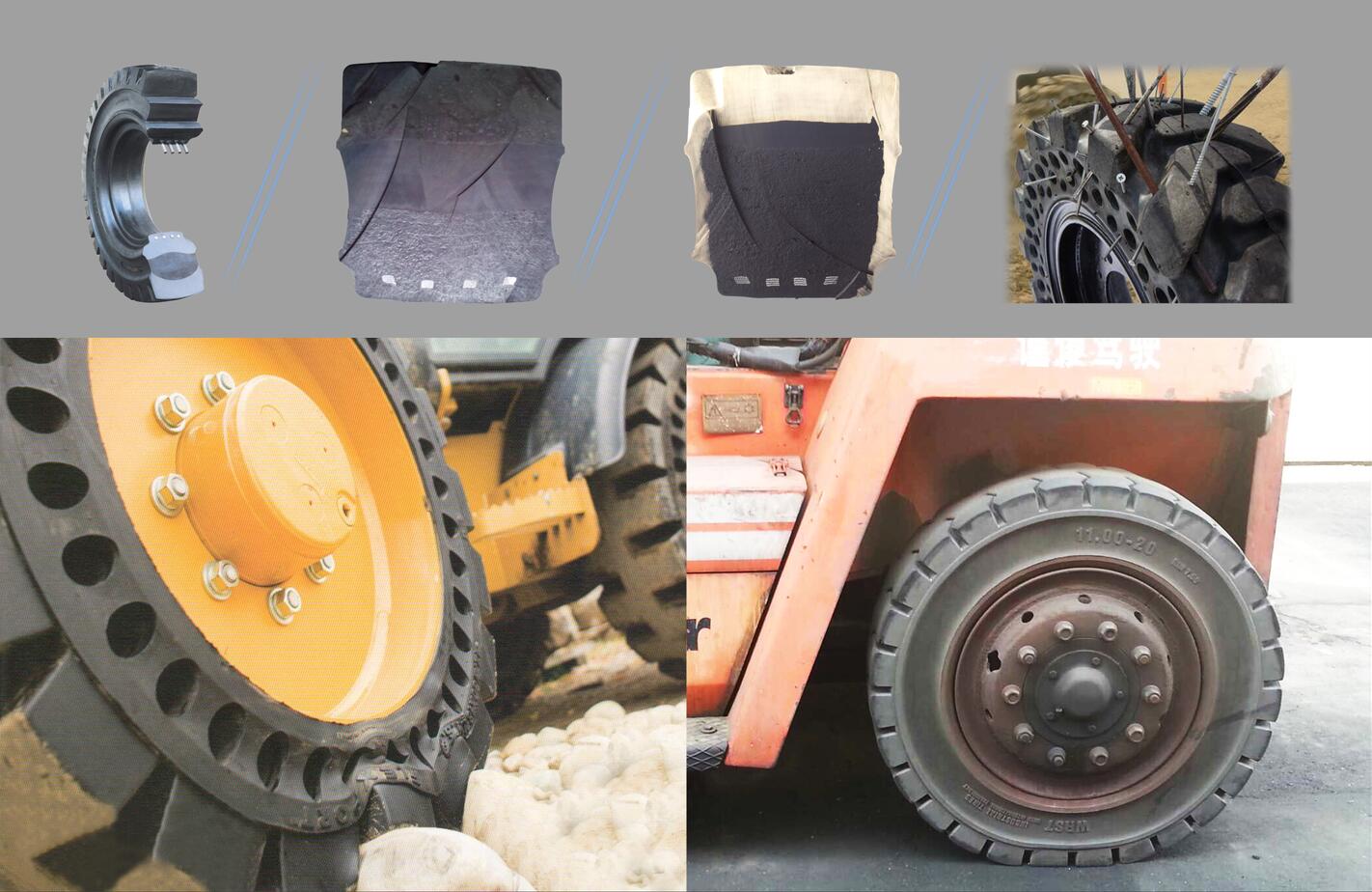
Applications in Port and Terminal Operations
Ports and terminals require equipment that can move heavy cargo efficiently. Machines may work around containers, bulk goods, loading zones, storage yards, and transfer areas. Surfaces are often hard but demanding, with frequent turning, braking, and load movement.
Industrial solid tires can be used on certain port equipment where puncture resistance and load stability are priorities. They help support continuous operation and reduce the chance of tire failure caused by debris, metal pieces, or harsh yard conditions.
For terminal operators, predictable equipment availability is critical. A tire that reduces emergency stoppages can improve cargo handling efficiency and support better scheduling across busy work areas.
Applications in Waste and Recycling Facilities
Waste handling and recycling are among the toughest environments for tires. Equipment may drive over broken glass, metal fragments, wires, nails, sharp plastics, and uneven piles of material. Pneumatic tires can be damaged quickly in these conditions.
Solid tires are highly practical for waste transfer stations, recycling plants, scrap yards, and demolition material handling sites. Their puncture-free structure helps machines keep working even when ground conditions are unpredictable.
For wheel loaders, skid steer loaders, and industrial trailers used in these facilities, solid tires can reduce the need for frequent tire repairs. This supports better machine availability and helps operators keep material moving through the processing flow.
Applications in Mining, Quarry, and Construction-Related Sites
Mining and quarry operations require tires that can handle abrasive ground, rocks, heavy loads, and repeated impact. While not every mining machine is suitable for solid tires, many low-speed support vehicles and material handling machines can benefit from solid tire durability.
In construction-related environments, machines may work around debris, rebar, broken concrete, gravel, and sharp objects. Solid tires help reduce the risk of puncture and improve reliability for equipment that operates at lower speeds.
For contractors and industrial service providers, reduced tire downtime can help maintain project schedules. When machines are not waiting for tire repair, they can spend more time working on site.
Load Stability and Operator Confidence
Heavy-duty industrial vehicles often handle large loads in difficult areas. Tire stability affects not only the machine but also the operator’s control and confidence. A tire that deforms too much, loses pressure, or becomes damaged can create handling problems.
Industrial solid tires provide consistent support because they do not depend on air pressure. Their structure helps maintain stable ground contact during loading, turning, pushing, and transporting. This is important for machines working around people, equipment, materials, and restricted work zones.
Stable tires also help reduce unpredictable movement. In industrial environments, predictable handling contributes to safer and more efficient operation.
Reducing Maintenance Complexity
Managing tire maintenance for heavy equipment can be difficult. Pneumatic tires require inflation checks, puncture repairs, emergency service, and sometimes special replacement arrangements. For machines working in remote or harsh sites, tire service can create long delays.
Solid tires simplify this process. Because there is no air pressure to monitor, maintenance teams can reduce routine tire pressure work. Because punctures do not cause flats, emergency tire events become less frequent.
This does not mean solid tires require no inspection. Operators should still check for wear, cuts, abnormal damage, and correct fitment. However, the overall maintenance burden is lower compared with pneumatic tires in severe environments.
Matching Solid Tire Categories to Industrial Needs
WonRay industrial tire products can serve different applications through multiple solid tire categories. Resilient solid tires are suitable for forklifts and industrial vehicles working in yards, factories, and logistics areas. Press-on solid tires serve indoor warehouse equipment. Non-marking solid tires help protect clean floors. Industrial OTR solid tires are designed for more severe heavy-duty machines.
For B2B customers, this category range is important because each working environment has different requirements. A food warehouse may need non-marking tires, while a scrap yard may require heavy-duty OTR solid tires. A factory forklift may need resilient solid tires, while an indoor reach truck may use press-on tires.
This broad product coverage helps industrial users select practical tire solutions based on real working conditions.
Summary
WonRay industrial OTR solid tires are designed for heavy-duty operations where punctures, downtime, and harsh surfaces create major challenges. Their solid construction, heavy-load stability, low maintenance needs, and durable rubber structure make them suitable for ports, mining support areas, waste handling sites, recycling plants, construction-related environments, and industrial yards.
For B2B equipment users, the main advantage is operational reliability. By reducing tire-related interruptions and supporting stable machine movement, industrial OTR solid tires help companies improve productivity, control maintenance pressure, and keep heavy equipment working in difficult conditions.
FAQ
1、How do solid tires help reduce downtime?
They reduce puncture failures, lower emergency repair needs, and support more predictable equipment availability in harsh environments.
2、Are industrial OTR solid tires suitable for high-speed road use?
No. They are mainly designed for low-speed industrial and off-road work. They are not intended for normal highway driving.
3、What are the maintenance benefits of OTR solid tires?
They do not require air pressure checks or puncture repairs. Regular visual inspection is still recommended to monitor wear and damage.
4、Why choose solid tires for waste and recycling equipment?
Waste and recycling sites often contain sharp debris that can damage pneumatic tires. Solid tires help equipment continue working without frequent puncture-related stoppages.
Post time: 13-05-2026