
In industrial settings, forklifts are critical for efficient material handling, warehouse operations, and logistics management. However, the performance and safety of forklifts heavily depend on the tires they use. Choosing the right industrial forklift tires ensures optimal traction, durability, and operational efficiency, while reducing downtime and maintenance costs.
The Importance of Industrial Forklift Tires
Industrial environments present unique challenges, including uneven surfaces, heavy loads, and continuous operation. Standard or worn-out tires may fail under these conditions, leading to:
● Reduced traction and maneuverability
● Increased risk of accidents or product damage
● Higher maintenance and replacement costs
● Downtime that affects productivity
By selecting high-quality industrial forklift tires, businesses can maintain consistent performance, enhance safety, and extend the lifespan of their equipment.
Key Features of Industrial Forklift Tires
Industrial forklift tires are specifically engineered to handle the demanding conditions of warehouses, factories, and outdoor industrial sites. Essential features include:
● Durable Rubber Compounds – Tires are made from materials designed to withstand heavy loads, abrasive surfaces, and harsh conditions.
● Tread Patterns – Optimized tread designs provide excellent grip, stability, and resistance to slippage on concrete, asphalt, and other industrial surfaces.
● Load Capacity – Designed to support the forklift’s maximum operational weight safely.
● Puncture and Wear Resistance – Industrial tires are reinforced to resist damage from debris, sharp objects, and rough terrain.
● Heat and Friction Management – High-quality tires dissipate heat effectively, reducing the risk of tire failure during continuous operation.
These features ensure that forklifts can operate reliably, even under heavy workloads and challenging industrial conditions.
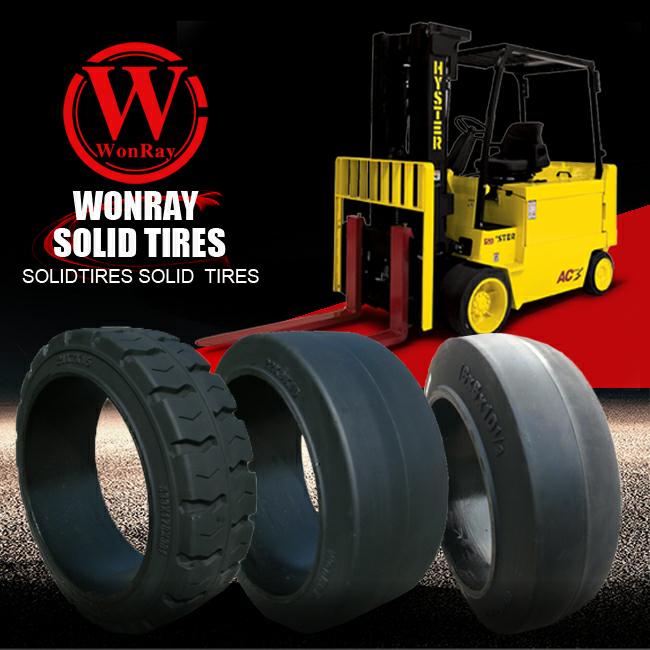
Types of Industrial Forklift Tires
Selecting the correct type of tire is critical for performance, safety, and efficiency. Common options include:
● Solid Tires – Ideal for indoor use and smooth surfaces, these tires are maintenance-free and highly durable.
● Pneumatic Tires – Air-filled tires provide better cushioning on uneven surfaces, suitable for both indoor and outdoor use.
● Polyurethane Tires – Lightweight and abrasion-resistant, offering excellent durability for high-turnover operations.
● Cushion Tires – Designed for smooth, flat surfaces, offering reduced vibration and excellent maneuverability.
Understanding the operating environment and load requirements is key to choosing the best tire type for industrial forklifts.
Benefits of High-Quality Industrial Forklift Tires
Investing in premium industrial forklift tires provides tangible advantages for B2B operations:
● Enhanced Safety – Better traction and stability reduce accidents and protect both workers and goods.
● Extended Tire Life – High-quality tires withstand heavy use, lowering replacement frequency.
● Improved Productivity – Reliable tires enable forklifts to operate efficiently without interruptions.
● Cost Efficiency – Reduced downtime and maintenance translate into significant operational savings.
● Adaptability – Certain industrial tires can handle diverse conditions, from smooth warehouse floors to rough outdoor terrain.
These benefits make industrial forklift tires a strategic investment for companies aiming to optimize logistics and warehouse operations.
Maintenance Tips for Industrial Forklift Tires
Proper maintenance is essential to maximize performance and extend tire lifespan:
● Regular Inspections – Check for wear, cracks, punctures, or other damage weekly.
● Correct Inflation – Maintain the recommended tire pressure for pneumatic tires to ensure safety and optimal traction.
● Proper Load Management – Avoid exceeding the forklift’s rated capacity to prevent tire damage.
● Surface Monitoring – Keep operating areas free of debris and sharp objects that can cause tire punctures.
● Seasonal Considerations – Replace or adjust tires according to seasonal or environmental changes, such as switching to specialized tires for outdoor winter operations.
Consistent maintenance ensures forklifts continue to operate safely and efficiently while protecting the company’s investment.
Conclusion
Industrial forklifts are vital for efficient material handling, but their performance and safety heavily depend on the tires they use. High-quality industrial forklift tires improve traction, durability, and operational efficiency while reducing downtime and maintenance costs. Choosing the right tire type and ensuring proper maintenance helps businesses optimize workflow, enhance safety, and extend the lifespan of their equipment. For industrial operations, the right tires are not just a component—they are a critical factor in operational success.
FAQ
Q1: What are the main differences between solid and pneumatic industrial forklift tires?
Solid tires are maintenance-free and ideal for smooth indoor surfaces, while pneumatic tires provide better cushioning and are suitable for outdoor or uneven surfaces.
Q2: How often should industrial forklift tires be inspected?
Weekly inspections are recommended to check for wear, cracks, punctures, or other potential damage.
Q3: Can industrial forklift tires be used in all types of environments?
While some tires are versatile, it is important to select tires based on the specific operating surface, load requirements, and indoor/outdoor conditions.
Q4: How do high-quality industrial forklift tires improve productivity?
Better traction and durability allow forklifts to operate safely and efficiently without frequent downtime or tire replacements, boosting overall workflow.
Post time: 05-03-2026