
Choosing the right tires for boom lifts is critical for ensuring safety, operational efficiency, and long-term cost control. In demanding environments such as construction sites, warehouses, and industrial yards, solid tires for boom lift applications provide a reliable, puncture-proof solution. For B2B buyers, understanding how to choose the right solid tire can directly impact uptime, maintenance costs, and equipment lifespan.
This guide explains the key factors, technical considerations, and practical insights needed to make the best purchasing decision.
Why Solid Tires Are the Preferred Choice for Boom Lifts in Industrial Environments
Solid tires are widely used in aerial work platforms due to their durability and maintenance-free design. Unlike pneumatic tires, they eliminate the risk of flats and ensure consistent performance.
● Puncture-proof performance
No air means no risk of sudden tire failure, especially in debris-heavy environments
● Low maintenance requirements
No inflation, pressure checks, or frequent repairs needed
● Stable load-bearing capacity
Maintains shape under heavy loads, improving platform stability
● Long service life
Designed for continuous operation with minimal wear
These advantages make solid tires ideal for high-frequency, heavy-duty boom lift operations.
Key Factors to Consider When Choosing Solid Tires for Boom Lift
Selecting the right tire requires evaluating both technical specifications and operational conditions.
● Load capacity and machine compatibility
Ensure the tire can handle the maximum weight of the boom lift, including payload, and matches OEM requirements
● Tire size and fitment
Check rim dimensions, outer diameter, and width to ensure correct installation
● Material type (rubber vs polyurethane)
Rubber provides better shock absorption and grip, while polyurethane offers higher wear resistance
● Tread design and traction
Choose tread patterns based on surface type such as concrete, asphalt, or rough terrain
● Operating environment
Consider temperature, chemicals, indoor or outdoor use, and surface conditions
A well-matched tire improves both safety and operational efficiency.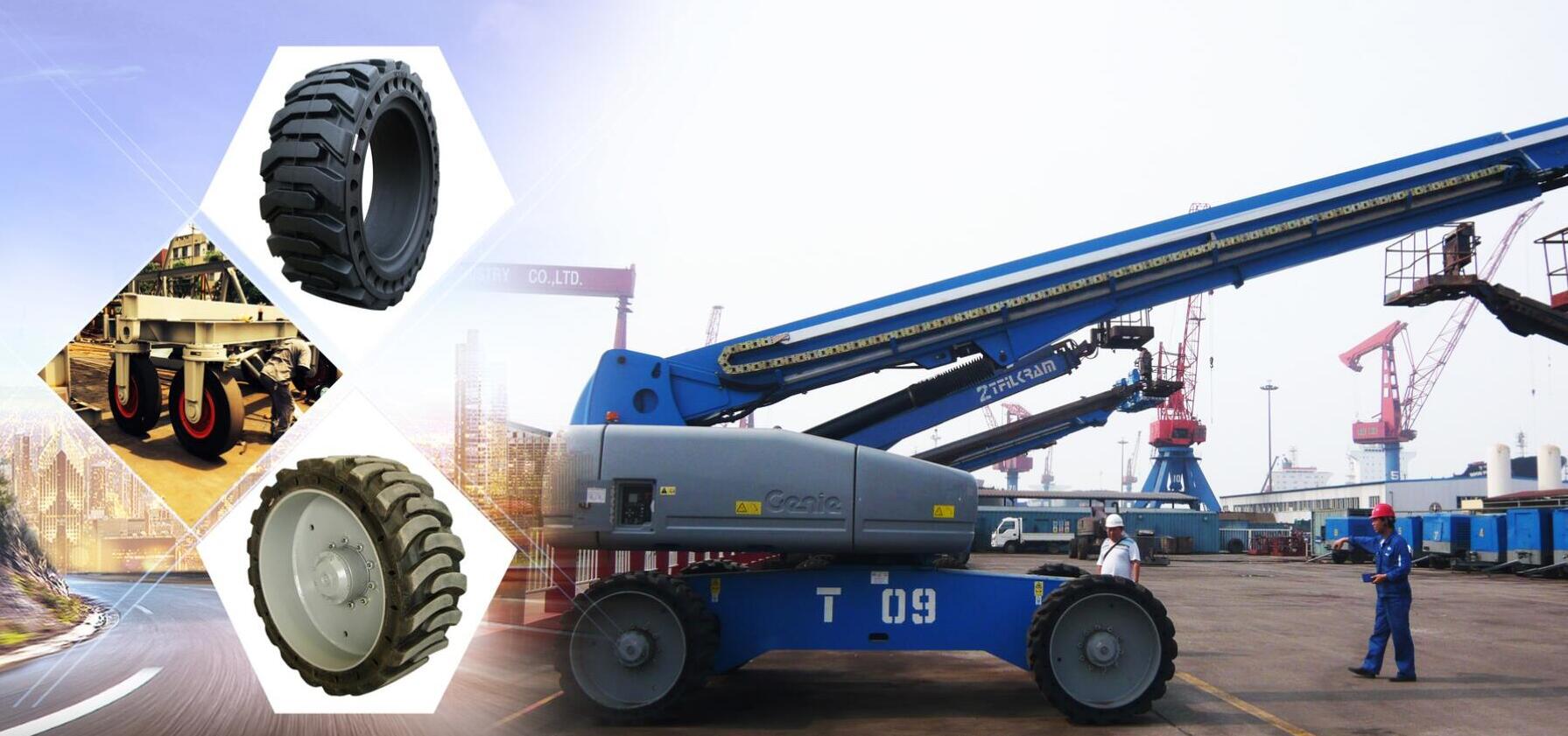
Solid vs Pneumatic Tires for Boom Lifts: Which Is Better?
Understanding the differences between tire types helps buyers make informed decisions.
● Solid tires advantages
No punctures or blowouts
Minimal maintenance
Consistent performance under load
● Pneumatic tires advantages
Better shock absorption
More comfortable ride on uneven terrain
● Key decision insight
For industrial environments where downtime is costly, solid tires are generally the better choice. Pneumatic tires may only be suitable for highly uneven terrain requiring extra cushioning.
Application-Based Selection: Matching Tires to Working Conditions
Different industries require different tire characteristics. Matching tire type to application ensures maximum return on investment.
● Construction sites
Require heavy-duty, cut-resistant solid tires for rough terrain and debris
● Warehouses and indoor facilities
Non-marking solid tires protect floors and reduce marks
● Ports and logistics hubs
High-load capacity tires support continuous, heavy operations
● Outdoor industrial yards
Weather-resistant tires handle temperature changes and harsh conditions
Choosing the right tire for the environment reduces wear and extends service life.
Cost vs Performance: Evaluating Total Cost of Ownership
While solid tires may have a higher initial cost, they often provide better long-term value.
● Reduced downtime costs
No flat tires means fewer operational interruptions
● Lower maintenance expenses
Eliminates inflation systems and repair labor
● Extended replacement cycles
Longer lifespan reduces procurement frequency
● Improved operational efficiency
Stable performance increases productivity
B2B buyers should evaluate total lifecycle cost rather than focusing only on purchase price.
Conclusion
Choosing the right solid tires for boom lift applications requires a comprehensive evaluation of load capacity, materials, working environment, and long-term cost efficiency. Solid tires offer clear advantages in durability, safety, and reduced maintenance, making them the preferred solution for most industrial applications.
For B2B buyers, investing in high-quality solid tires improves equipment reliability, minimizes downtime, and enhances operational efficiency. As industrial demands continue to grow, selecting the right tire solution will remain a key factor in maintaining competitiveness.
FAQ
1. What are the main benefits of solid tires for boom lifts?
Solid tires are puncture-proof, require minimal maintenance, and provide stable performance under heavy loads, making them ideal for industrial use.
2. How do I choose the correct size of solid tire for my boom lift?
Always follow the equipment manufacturer’s specifications, including rim size, tire diameter, and load capacity requirements.
3. Are solid tires suitable for both indoor and outdoor use?
Yes, but the tread design and material should be selected based on the specific environment, such as non-marking tires for indoor use.
4. Do solid tires cost more than pneumatic tires?
They usually have a higher upfront cost, but their longer lifespan and lower maintenance make them more cost-effective in the long term.
Post time: 20-03-2026