
In many industrial sectors, unpredictability is the biggest obstacle to efficiency. Equipment breakdowns, especially those caused by tire damage, can disrupt entire workflows and create cascading delays across operations. For businesses operating in construction, mining, logistics, and waste management, the ability to maintain consistent performance is a competitive advantage. This is where puncture-proof industrial tires play a transformative role, offering a solution that prioritizes reliability, stability, and long-term operational predictability.
Moving Beyond Traditional Tire Limitations
Conventional pneumatic tires have long been used in industrial equipment due to their cushioning and flexibility. However, in high-risk environments, their dependence on air pressure becomes a significant vulnerability.
Sharp debris, uneven surfaces, and heavy loads can easily compromise pneumatic tires, leading to sudden failures. Even with regular maintenance, the risk of punctures cannot be fully eliminated. This creates an operational model where businesses must constantly react to unexpected issues.
Puncture-proof industrial tires fundamentally change this model by removing the root cause of these failures.
The Engineering Principle Behind Puncture-Proof Performance
Puncture-proof tires are designed to maintain structural integrity without relying on internal air pressure. This is typically achieved through solid or reinforced construction, using advanced rubber compounds that resist cuts, abrasions, and impacts.
Unlike traditional designs, these tires do not collapse or lose functionality when exposed to sharp objects. Their performance remains consistent across varying conditions, making them suitable for environments where reliability is critical.
In addition, modern engineering techniques have improved their ability to absorb shocks and reduce vibration, addressing one of the historical limitations of solid tire solutions.
Industries Where Reliability Is Non-Negotiable
Certain industries operate in conditions where tire failure is not just inconvenient but unacceptable. In these sectors, puncture-proof tires are increasingly becoming the standard.
● In mining operations, where equipment operates on rocky and abrasive surfaces, tire durability directly impacts productivity
● In recycling and waste management facilities, sharp materials are constantly present, making puncture resistance essential
● In construction projects, unpredictable terrain and debris create high risks for traditional tires
● In logistics hubs and ports, continuous movement of heavy loads requires uninterrupted equipment performance
In these environments, the ability to eliminate tire-related downtime provides a clear operational advantage.
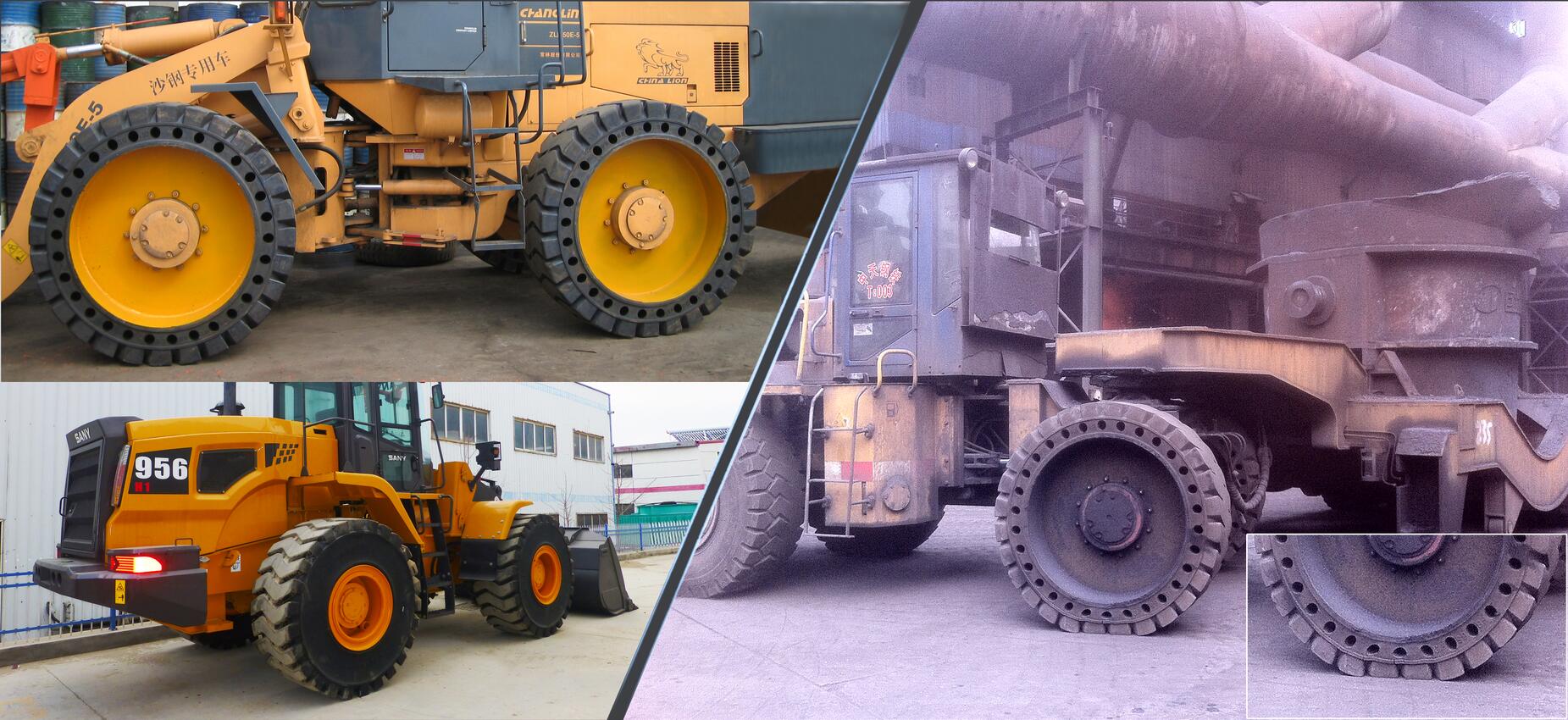
Operational Stability as a Productivity Driver
One of the most significant benefits of puncture-proof industrial tires is the stability they bring to daily operations. When equipment performance becomes predictable, planning and execution improve across the entire workflow.
Operators can rely on machines to perform consistently without interruptions. Maintenance teams can shift focus from emergency repairs to scheduled inspections. Managers can plan operations with greater confidence, knowing that unexpected downtime is minimized.
This stability leads to smoother workflows, higher output, and improved overall efficiency.
Safety Implications in Industrial Settings
Safety is a critical consideration in any industrial environment, and tire performance plays a direct role in maintaining safe operations.
Puncture-proof tires reduce the risk of sudden failures that could lead to accidents. Their stable structure ensures better load distribution and improved traction, particularly in challenging conditions.
By enhancing control and reducing unpredictability, these tires contribute to a safer working environment for both operators and surrounding personnel.
Evaluating Cost from a Strategic Perspective
While puncture-proof industrial tires often require a higher upfront investment, their value becomes evident when viewed through a strategic lens.
Instead of focusing solely on purchase price, businesses should consider the broader financial impact of tire performance.
● Reduced downtime leads to increased operational output
● Lower maintenance requirements decrease labor and repair costs
● Extended lifespan reduces replacement frequency
● Improved reliability minimizes unexpected expenses
When these factors are combined, the overall return on investment becomes highly favorable.
Integration with Modern Industrial Systems
As industries move toward automation and data-driven operations, equipment reliability becomes even more critical. Puncture-proof tires support this transition by providing consistent performance that aligns with automated workflows.
In environments where machines operate in coordination, even a single failure can disrupt the entire system. By minimizing the risk of tire-related issues, puncture-proof tires help maintain system integrity and efficiency.
This makes them not only a practical choice for current operations but also a forward-looking investment.
Environmental and Sustainability Considerations
Sustainability is becoming an important factor in industrial decision-making. Puncture-proof tires contribute to environmental goals in several ways.
Their longer lifespan reduces waste associated with frequent tire replacement. Lower maintenance requirements also mean fewer resources are used for repairs and servicing.
Additionally, ongoing advancements in material technology are enabling the development of more environmentally friendly tire compounds, further supporting sustainability initiatives.
Conclusion
Puncture-proof industrial tires represent a shift toward more reliable and predictable industrial operations. By eliminating one of the most common sources of equipment failure, they enable businesses to maintain consistent performance, improve safety, and reduce long-term costs.
For B2B buyers operating in demanding environments, adopting puncture-proof tire solutions is not just a technical upgrade—it is a strategic decision that supports efficiency, stability, and future growth.
FAQ
- What makes industrial tires puncture-proof?
They use solid or reinforced construction that does not rely on air pressure, preventing failure from punctures. - Are puncture-proof tires suitable for all applications?
They are ideal for harsh environments but may not be necessary for low-risk or comfort-focused uses. - Do they improve operational efficiency?
Yes, by reducing downtime and ensuring consistent equipment performance. - Are they environmentally friendly?
Their longer lifespan and reduced maintenance contribute to lower environmental impact.
Post time: 27-04-2026