
Port vehicle solid tires have become an essential component in modern terminal logistics systems where speed, reliability, and continuous operation define overall productivity. In busy ports, equipment is expected to move heavy containers and cargo around the clock, often with minimal downtime and extremely tight operational schedules. Under these conditions, tire performance is not just a mechanical factor but a direct driver of terminal efficiency.
Unlike pneumatic alternatives, solid tires eliminate air-based structures entirely, which fundamentally changes how they behave under load, impact, and continuous use. This structural simplicity combined with high-strength rubber engineering makes them particularly suitable for port tractors, yard trucks, and container handling equipment operating in demanding industrial environments.
Structural Simplicity That Translates Into Operational Stability
One of the defining characteristics of port vehicle solid tires is their fully solid construction, which removes internal air cavities and replaces them with engineered rubber compounds designed for load absorption and impact resistance. This design ensures that the tire maintains consistent shape regardless of pressure conditions or external environment.
In port operations, where vehicles often carry maximum container loads across short but repetitive cycles, structural predictability is essential. Any deformation or pressure fluctuation can lead to handling instability, uneven wear, or unexpected downtime.
Solid tire architecture solves these issues by ensuring a stable footprint at all times, which directly contributes to smoother vehicle control and safer cargo movement.
● Fully solid construction eliminates pressure variability
● Stable footprint improves vehicle handling consistency
● No internal air system reduces failure points
● Predictable performance under maximum load conditions
● Enhanced structural integrity during repetitive cycles
● Improved safety in continuous terminal operations
Why Terminal Environments Demand Non-Pneumatic Solutions
Port terminals operate under conditions that are significantly more demanding than standard logistics environments. Heavy cargo movement, constant stop-and-go cycles, abrasive concrete surfaces, and exposure to environmental elements such as salt, moisture, and debris all contribute to rapid tire degradation in conventional systems.
Pneumatic tires are particularly vulnerable in such environments because even minor punctures can halt operations immediately. In contrast, solid tires continue functioning even after surface damage, ensuring that vehicles remain operational without interruption.
This reliability is critical in ports where equipment downtime can create cascading delays across entire shipping schedules.
● Eliminates downtime caused by punctures or pressure loss
● Maintains operation under harsh terminal conditions
● Reduces sensitivity to debris and surface damage
● Supports uninterrupted cargo handling cycles
● Improves operational resilience in logistics hubs
● Enhances overall terminal throughput efficiency
Wear Behavior and Lifecycle Performance in Real Operations
Unlike traditional tire systems that gradually lose performance due to air pressure fluctuations and casing fatigue, port vehicle solid tires degrade in a more controlled and predictable manner. The wear process is primarily influenced by surface friction rather than internal structural breakdown.
This makes performance monitoring easier for fleet operators, as tire condition can be assessed visually without specialized pressure checks. Additionally, modern rubber compounds used in solid tires are engineered to resist abrasion caused by rough terminal surfaces, significantly extending service intervals.
The result is a more stable lifecycle performance profile, which allows operators to plan maintenance schedules more efficiently.
● Predictable wear pattern simplifies maintenance planning
● High abrasion resistance improves service lifespan
● No pressure monitoring required for operational safe
● Surface-based wear reduces sudden failure risks
● Supports efficient fleet maintenance scheduling
● Enhances long-term operational predictability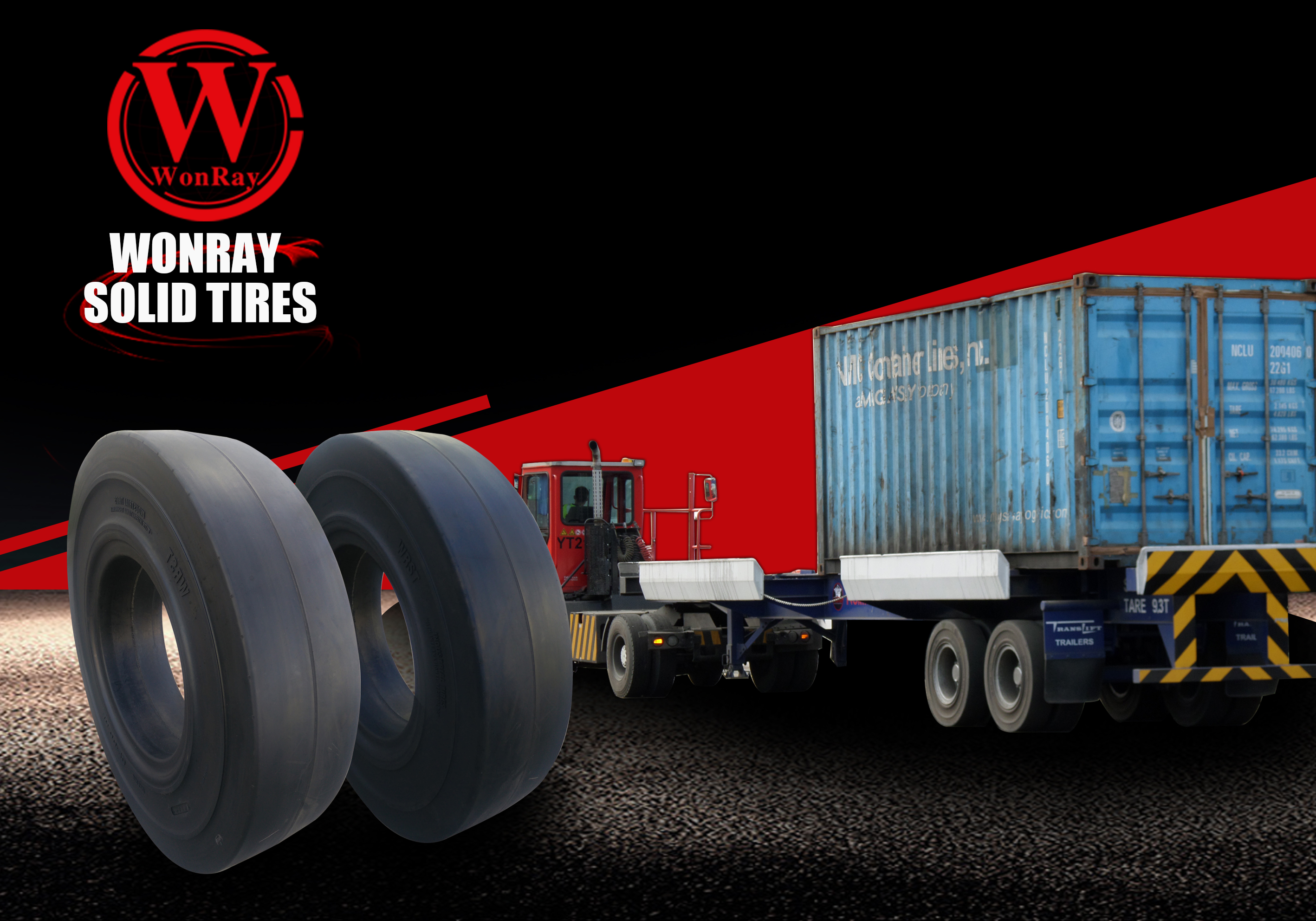
Integration With Modern Port Equipment Systems
Port vehicle solid tires are designed to integrate seamlessly with a wide range of terminal machinery, including container tractors, yard handling vehicles, and industrial towing systems. These machines typically operate under repetitive high-load cycles, requiring tires that can maintain consistent performance without frequent adjustment or calibration.
The uniform structure of solid tires ensures compatibility with automated and semi-automated port systems, where precision and reliability are increasingly important. As port automation continues to expand globally, the demand for stable and maintenance-efficient tire systems continues to grow.
● Compatible with container tractors and yard trucks
● Supports automated port logistics systems
● Maintains stability in high-frequency operations
● Reduces need for mechanical adjustments
● Enhances precision in cargo handling workflows
● Aligns with modern port automation trends
Operational Safety Improvements in High-Traffic Zones
Safety is a major concern in port environments due to the constant movement of heavy machinery and cargo. Tire-related failures can pose serious risks not only to equipment but also to operators and surrounding infrastructure.
Solid tires significantly reduce these risks by eliminating the possibility of sudden deflation or blowouts. Their stable structure also improves braking consistency and directional control, particularly under heavy load conditions.
This contributes to a safer working environment in congested terminal zones where multiple vehicles operate simultaneously.
● Eliminates risk of sudden tire deflation
● Improves braking stability under load
● Enhances directional control in tight spaces
● Reduces operational hazards in busy terminals
● Supports safer coordination of multiple vehicles
● Increases overall workplace safety standards
Economic Impact on Terminal Fleet Operations
From an operational cost perspective, port vehicle solid tires offer long-term financial advantages for terminal operators. While initial investment may be higher compared to pneumatic alternatives, the reduction in maintenance requirements and elimination of downtime-related losses significantly improves total cost efficiency.
In high-volume ports where equipment utilization rates are extremely high, even small reductions in downtime can translate into substantial productivity gains. This makes solid tires a strategic investment for fleet optimization rather than a simple consumable component.
● Reduces long-term maintenance expenditure
● Minimizes downtime-related financial losses
● Improves equipment utilization rates
● Enhances cost efficiency in fleet operations
● Supports high-productivity terminal environments
● Increases return on operational investment
FAQ:
1. What types of port equipment use solid tires?
They are commonly used on terminal tractors, yard trucks, container carriers, and industrial towing vehicles operating in port environments.
2. How do solid tires perform in heavy-load port operations?
They maintain stable structure and consistent performance even under continuous heavy-load and high-frequency operational cycles.
3. Can solid tires be used in automated port systems?
Yes, their stable and predictable performance makes them suitable for automated and semi-automated logistics systems.
4. What is the main advantage over pneumatic tires in ports?
The key advantage is the elimination of air-related failures, which significantly reduces downtime and improves operational reliability.
Port vehicle solid tires continue to play a crucial role in enhancing efficiency, safety, and continuity in modern terminal operations. As global trade volumes increase and ports evolve toward higher automation and throughput demands, their importance in ensuring uninterrupted logistics performance will continue to grow.
Post time: 03-06-2026