
Mining operations push equipment to its limits every day, and tires are often the first component to fail under constant impact, abrasion, and overload conditions. When a tire goes down in a mining site, the entire workflow can be interrupted, causing delays in material transport, loading cycles, and production output. For this reason, many operators are shifting toward mining solid tires as a more stable and durable alternative to traditional pneumatic solutions.
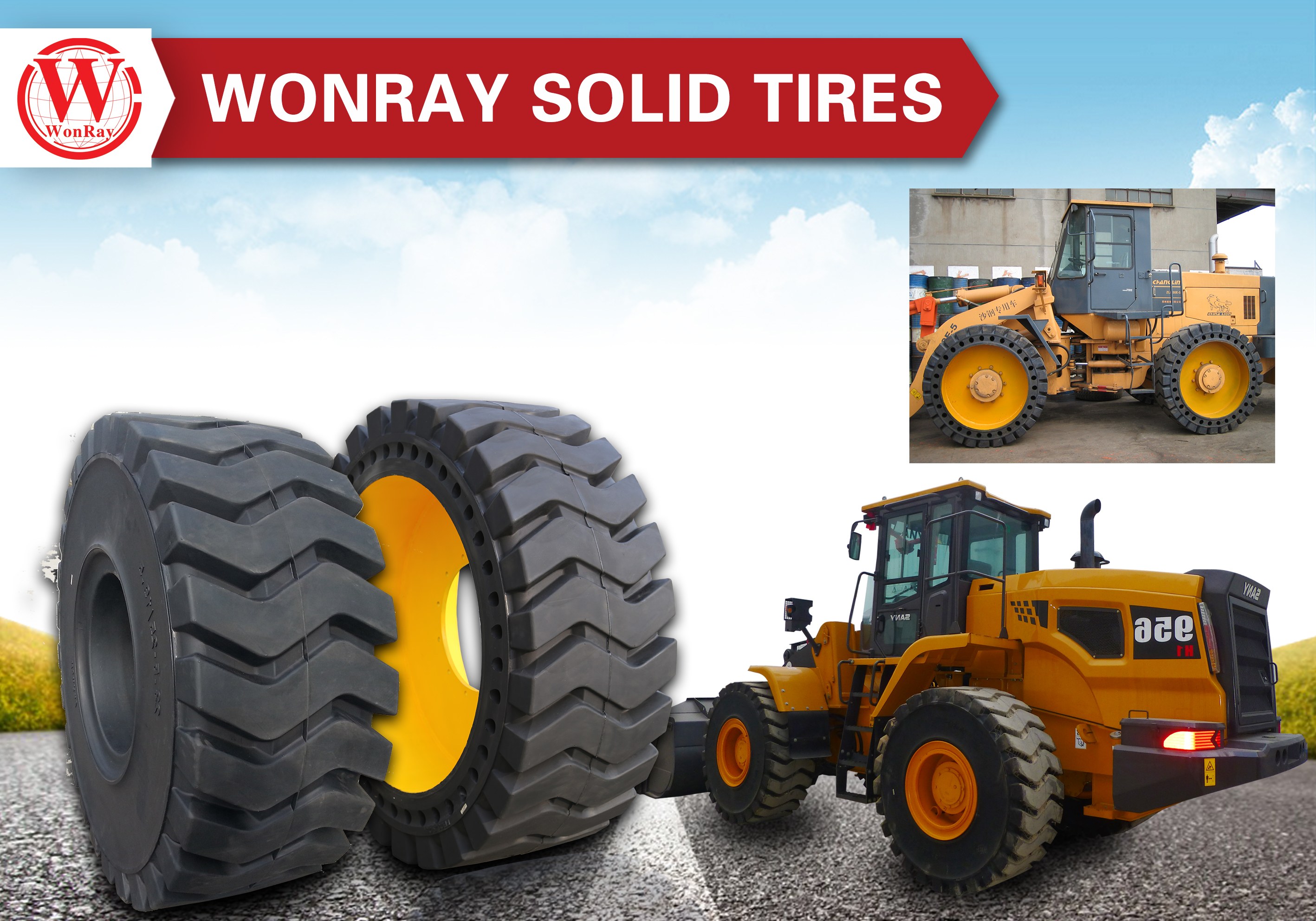
Mining solid tires are designed to maintain structural integrity in environments where sharp rocks, heavy loads, and continuous operation would quickly destroy standard tires. Their airless construction and reinforced rubber composition make them especially suitable for underground and surface mining equipment that cannot afford unexpected downtime.
Why Tire Structure Matters More in Mining Than in Other Industries
In mining applications, tire performance is not just about mobility but also about safety, productivity, and cost control. Unlike road vehicles, mining machines operate in uncontrolled environments where surface conditions constantly change and hazards are unavoidable.
Mining solid tires solve these challenges through their unique structure:
● A fully solid rubber body eliminates internal air pressure systems, which are the primary failure point in pneumatic tires.
● Multi-layer rubber engineering distributes load stress evenly across the entire tire body, reducing localized damage.
● Reinforced outer compounds resist cutting and chipping caused by sharp rock edges and metallic debris.
● Heat-resistant materials help maintain performance during long, continuous working cycles under heavy load.
This structural approach ensures that the tire remains functional even under conditions that would immediately disable conventional alternatives.
What Makes Mining Solid Tires Different from Standard Industrial Tires?
Although industrial tires are designed for durability, mining solid tires operate in a completely different performance category due to the severity of mining conditions.
The key differences include:
● Mining solid tires are built without any air cavity, meaning they cannot experience blowouts or sudden pressure loss during operation.
● The rubber density is significantly higher, allowing the tire to withstand constant abrasion from crushed rock surfaces.
● The internal reinforcement structure is designed for extreme payload support, often far exceeding standard industrial load ratings.
● The tread compounds are optimized for slow-speed, high-torque environments rather than highway or mixed-use conditions.
These differences make mining solid tires a specialized solution rather than a general-purpose industrial product.
How Mining Solid Tires Perform Under Continuous Heavy Load Conditions
One of the defining challenges in mining is continuous heavy-duty operation, where machines often run for long shifts without interruption. Under these conditions, tire deformation and heat buildup are common problems for pneumatic systems.
Mining solid tires address these issues through structural stability:
● They maintain consistent shape under extreme weight, ensuring stable contact with the ground surface.
● They reduce deformation during lifting, loading, and transport cycles, improving machine balance.
● They distribute pressure evenly, preventing uneven wear patterns that shorten tire lifespan.
● They remain stable under repetitive loading cycles, making them suitable for high-frequency operations.
This consistency directly improves machine reliability and reduces the need for frequent maintenance checks.
How Do Solid Tires Handle Abrasive Mining Surfaces?
Mining environments are dominated by abrasive materials such as crushed stone, ore fragments, and sharp-edged rock formations. These surfaces create continuous wear stress that rapidly damages conventional tires.
Mining solid tires are engineered to resist this type of degradation:
● High-density rubber compounds reduce surface erosion caused by friction with rough terrain.
● Anti-cut structures protect against sharp-edge penetration and tearing.
● Reinforced shoulder zones reduce damage during turning and directional changes.
● Wear-resistant tread designs extend operational lifespan even in high-abrasion zones.
This makes them particularly effective in both underground tunnels and open-pit mining roads where surface conditions are constantly harsh.
Why Mining Operations Value Predictable Tire Performance
In mining logistics, unpredictability is one of the most costly operational risks. A single tire failure can disrupt multiple downstream processes, including loading schedules, hauling cycles, and ore processing.
Mining solid tires improve predictability in several ways:
● They eliminate sudden tire failures caused by punctures or air leaks.
● They reduce variability in maintenance planning, allowing more accurate production scheduling.
● They provide consistent traction performance across shifts and environmental conditions.
● They lower dependency on emergency repair operations in remote mining areas.
By stabilizing tire-related variables, operators can better control overall production efficiency.
Load Stability and Safety in High-Risk Mining Operations
Mining equipment often operates in steep, uneven, or confined environments where stability is critical for safety. Tire failure in such conditions can pose serious operational risks.
Mining solid tires contribute to safety through:
● High load-bearing capacity that supports heavy equipment without structural instability.
● Reduced risk of sudden deflation that could destabilize machinery during operation.
● Improved lateral support when operating on uneven or sloped terrain.
● Consistent ground contact that enhances braking and maneuvering control.
These features make them especially valuable in underground mining operations where working space is limited and safety margins are tight.
Where Mining Solid Tires Deliver the Highest Value
While mining solid tires can be used across various applications, they deliver the strongest value in environments with extreme wear conditions and minimal tolerance for downtime.
Typical high-value applications include:
● Underground mining loaders operating in narrow tunnels with sharp rock surfaces.
● Surface mining haul trucks transporting heavy ore over long abrasive routes.
● Material handling equipment in ore processing facilities.
● Rock excavation and waste transport machinery working in continuous cycles.
In these environments, tire reliability directly influences operational output and cost efficiency.
The Evolution of Mining Solid Tire Technology
Modern mining solid tires are significantly more advanced than earlier generations, largely due to improvements in materials science and structural engineering.
Recent advancements include:
● Enhanced rubber compounds that improve durability without increasing rolling resistance excessively.
● Improved internal geometry that absorbs impact energy more effectively.
● Heat management designs that reduce performance loss during long shifts.
● More precise manufacturing processes that ensure consistency across large-scale fleet usage.
These improvements have expanded their usability across a wider range of mining equipment categories.
Final Conclusion
Mining solid tires represent a highly specialized engineering solution designed for one of the most demanding industrial environments in the world. Their airless structure, reinforced rubber composition, and high-load performance capabilities make them an essential component for improving equipment reliability in mining operations.
Although they require a higher initial investment compared to standard pneumatic tires, their long-term benefits in reducing downtime, increasing operational stability, and extending service life make them a practical choice for mining companies focused on efficiency and continuous production.
FAQ
1. Why are mining solid tires preferred in extreme environments?
● They are preferred because their airless structure eliminates puncture risks and allows continuous operation in environments filled with sharp rocks, heavy loads, and constant abrasion.
2. Can mining solid tires be used on all mining machines?
● They are suitable for most low-speed heavy mining equipment, especially loaders, haul trucks, and underground transport vehicles, but may not be ideal for high-speed transport applications.
3. How do mining solid tires improve safety?
● They improve safety by eliminating sudden air loss, maintaining stable load support, and ensuring consistent machine control in uneven and confined mining environments.
4. Do mining solid tires require special maintenance?
● They require minimal maintenance compared to pneumatic tires, mainly limited to visual inspections for wear and damage rather than air pressure management or frequent repairs.
Post time: 08-06-2026