
In modern logistics and warehouse environments, forklift performance depends heavily on tire quality and durability. High-performance solid tires for forklifts have become a preferred choice for demanding material handling operations where stability, safety, and uptime are critical. These tires are engineered to deliver consistent performance under heavy loads and challenging working conditions.
Unlike pneumatic tires, solid forklift tires eliminate the risk of punctures and air leakage, making them highly reliable in continuous operations. As warehouses become more automated and efficiency-driven, solid tires are playing an increasingly important role in reducing downtime and improving overall productivity.
The Importance of Solid Tires in Forklift Applications
Forklifts operate in environments where floors may contain sharp debris, uneven surfaces, or heavy repeated stress from constant movement. In such conditions, traditional air-filled tires often face punctures, blowouts, or pressure inconsistencies that affect safety and performance.
Solid tires are manufactured using high-density rubber compounds designed to withstand extreme wear while maintaining structural integrity. This makes them especially suitable for industries such as manufacturing, logistics centers, ports, and heavy-duty warehouses where uninterrupted operation is essential.
By eliminating air pressure dependency, solid tires ensure stable load handling performance, which directly contributes to safer lifting and transporting of goods.
Key Performance Advantages of High-Performance Solid Forklift Tires
High-performance solid tires are designed not only for durability but also for operational efficiency. Their engineering focuses on load-bearing strength, traction control, and long service life.
● Enhanced Load Stability
Solid tires maintain consistent shape under heavy loads, reducing deformation during lifting and transport. This improves balance and minimizes the risk of load shifting, especially at higher lifting heights.
● Superior Puncture Resistance
Since there is no internal air cavity, solid tires are completely immune to punctures, cuts, and blowouts. This is particularly valuable in environments with metal debris, nails, or rough flooring conditions.
● Extended Service Life
High-quality rubber compounds and reinforced structures allow solid tires to withstand long-term wear. This reduces replacement frequency and lowers long-term operational costs.
● Improved Operational Safety
Stable tire performance ensures smoother forklift control, reducing vibration and enhancing operator comfort. This leads to safer maneuvering in tight warehouse aisles.
● Reduced Downtime
Because solid tires do not require inflation or frequent maintenance, forklifts spend more time in operation and less time in service bays.
These advantages make solid tires a strategic investment for businesses aiming to improve warehouse efficiency and reduce unexpected operational interruptions.
Applications in Material Handling and Industrial Operations
High-performance forklift solid tires are widely used across industries that demand continuous and heavy-duty operations. Their ability to perform under stress makes them suitable for both indoor and outdoor environments.
Common application areas include:
● Warehousing and distribution centers with high-frequency pallet movement
● Manufacturing plants handling raw materials and finished goods
● Port logistics and container handling operations
● Construction material yards with uneven and rough surfaces
● Cold storage and food processing facilities requiring stable handling
In each of these environments, tire reliability directly affects productivity. Even minor downtime caused by tire failure can disrupt entire supply chain operations.
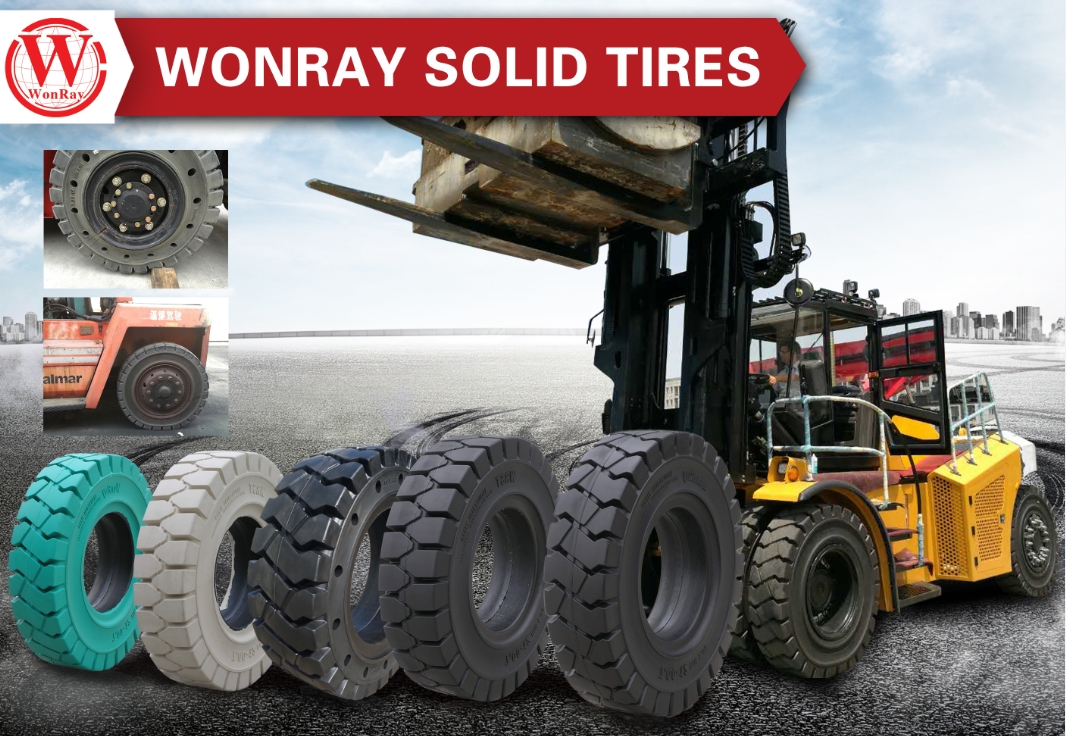
Technical Features That Improve Performance
Modern solid forklift tires are engineered with advanced structural and material technologies. These enhancements significantly improve performance compared to conventional tire designs.
● Three-layer structure design combining tread, cushion, and base rubber
● Heat-resistant rubber compounds to reduce internal temperature buildup
● Non-marking tread options for clean warehouse environments
● Reinforced sidewalls for improved impact resistance
● Precision-molded tread patterns for better grip and traction
These features ensure that the tires maintain performance consistency even during long shifts and heavy-duty cycles. The structural design also helps absorb shock and reduce vibration transfer to the forklift chassis, improving both equipment lifespan and operator comfort.
Factors to Consider When Choosing Forklift Solid Tires
Selecting the right solid tire is essential for maximizing forklift performance and ensuring operational efficiency. Several technical and operational factors should be evaluated before making a decision.
● Load Capacity Requirements
The tire must match the maximum load rating of the forklift to ensure safe operation under peak conditions.
● Operating Surface Conditions
Smooth warehouse floors, rough outdoor surfaces, or mixed environments require different tread designs and rubber hardness levels.
● Temperature and Environmental Conditions
Facilities with high heat, cold storage, or exposure to chemicals may require specialized rubber compounds.
● Frequency of Operation
High-usage forklifts benefit more from premium-grade solid tires with extended wear resistance.
● Cushion vs Press-On Types
Different forklift models require specific mounting types, making compatibility an important selection factor.
By carefully evaluating these aspects, businesses can ensure optimal performance and cost efficiency over the long term.
Maintenance and Operational Benefits
One of the major advantages of solid forklift tires is their low maintenance requirement. However, regular inspection still plays a role in ensuring long-term safety and performance.
Basic maintenance practices include:
● Routine inspection for surface cuts, cracks, or uneven wear
● Monitoring forklift alignment to prevent uneven tire degradation
● Ensuring proper installation and fitment during replacement
● Cleaning debris from tire grooves in industrial environments
● Checking for vibration changes during operation
Even though solid tires are maintenance-light, these simple steps help extend service life and maintain consistent performance in demanding operations.
Economic Value and Long-Term Efficiency
From a cost perspective, solid forklift tires offer significant long-term advantages. While the initial investment may be higher compared to pneumatic options, the reduced downtime and longer lifespan result in lower total cost of ownership.
Businesses benefit from fewer tire replacements, reduced repair costs, and improved operational continuity. In high-volume logistics environments, even small improvements in uptime can translate into substantial productivity gains over time.
Conclusion
High-performance solid tires for forklifts are an essential component in modern material handling systems where efficiency, safety, and reliability are top priorities. Their ability to withstand harsh working conditions while maintaining stable load performance makes them a preferred choice across multiple industries.
By investing in quality solid tires, businesses can significantly improve forklift uptime, reduce maintenance interruptions, and enhance overall warehouse productivity. As material handling operations continue to evolve, solid tire technology will remain a key factor in achieving safer and more efficient logistics performance.
FAQ
1. What are solid forklift tires made of?
Solid forklift tires are typically made from high-density rubber compounds, often using multi-layer structures that combine hard tread rubber with cushioned inner layers to absorb shock and improve durability.
2. How long do solid forklift tires last?
The lifespan depends on usage intensity and operating conditions, but high-quality solid tires generally last significantly longer than pneumatic tires, often several times longer under similar working environments.
3. Are solid tires suitable for all forklift types?
Most forklifts can use solid tires, but compatibility depends on tire type, size, and mounting system. It is important to match the tire specification with the forklift model.
4. Do solid tires provide a comfortable ride?
While solid tires are firmer than pneumatic ones, modern cushion-type designs help reduce vibration and improve operator comfort, especially on indoor warehouse floors.
Post time: 21-05-2026