
Choosing the right forklift tire is not simply a maintenance decision. In heavy industrial industries, tire selection directly affects operational efficiency, equipment stability, maintenance costs, and workplace safety. Many businesses focus primarily on forklift specifications while overlooking how much tire performance influences daily operations. However, in demanding environments such as steel plants, ports, recycling centers, lumber yards, and outdoor manufacturing facilities, the wrong tire choice can lead to repeated downtime and rising operational expenses.
Among the most commonly used forklift tire options today are solid tires and pneumatic tires. Each type offers different advantages depending on the working environment and operational requirements. Understanding the differences between these two tire systems can help businesses make better long-term equipment decisions.
Why forklift tire selection matters more in industrial environments
Industrial forklifts are exposed to conditions far more aggressive than standard indoor handling applications.
Heavy-duty forklifts often work around:
● Sharp metal debris
● Rough concrete surfaces
● Wet outdoor environments
● Heavy cargo loads
● High-temperature industrial zones
● Long multi-shift operating cycles
Under these conditions, tire reliability becomes critical. Frequent tire failures can interrupt production schedules, increase maintenance costs, and reduce equipment availability.
This is why industrial companies increasingly treat tire selection as part of overall operational planning rather than a simple replacement purchase.
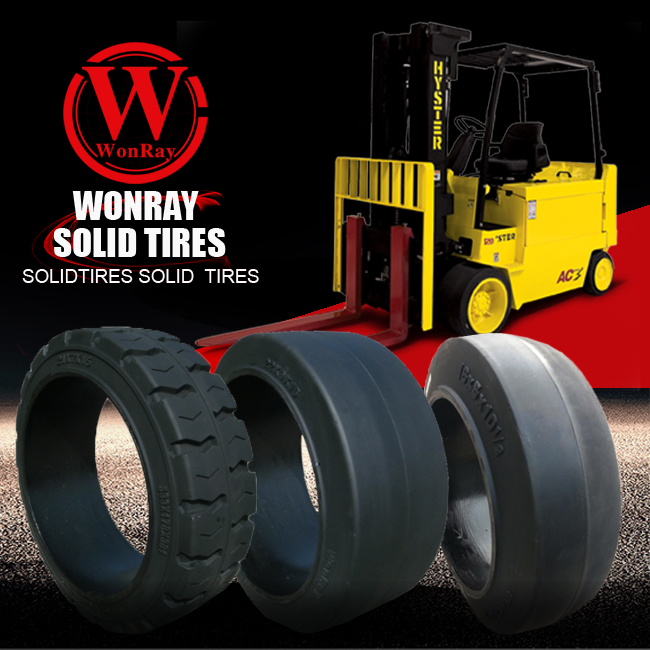
Understanding forklift solid tires
Forklift solid tires are manufactured using solid rubber compounds without air chambers.
Instead of relying on internal pressure, the tire structure itself supports the equipment load.
Main characteristics of solid tires
Solid forklift tires are designed to provide:
● Puncture-proof performance
● High load-bearing stability
● Longer service life
● Lower maintenance requirements
● Better resistance to industrial damage
Because there is no air inside the tire, solid tires eliminate the risk of flats and blowouts.
Understanding pneumatic forklift tires
Pneumatic forklift tires are similar to standard vehicle tires and use compressed air for cushioning and load support.
They are commonly used in environments where ride comfort and shock absorption are important.
Main characteristics of pneumatic tires
Pneumatic tires typically provide:
● Better cushioning on rough terrain
● Improved comfort during outdoor operation
● Greater flexibility on uneven surfaces
● Better shock absorption for certain applications
However, they are also more vulnerable to punctures and pressure-related maintenance issues.
Why many industrial fleets prefer solid tires
For heavy industrial operations, equipment uptime often matters more than ride comfort.
Solid tires provide several operational advantages that are especially valuable in demanding environments.
Elimination of tire puncture problems
Industrial environments often contain:
● Steel fragments
● Scrap metal
● Sharp construction debris
● Broken pallets
● Glass or industrial waste
Pneumatic tires can easily suffer punctures under these conditions.
Solid tires completely eliminate this issue, helping businesses reduce unplanned downtime.
More predictable maintenance schedules
Pneumatic tires require:
● Air pressure checks
● Leak inspections
● Emergency repairs
● More frequent replacements
Solid tires simplify maintenance because they do not rely on air pressure systems.
This allows maintenance teams to focus on other critical equipment systems.
Better performance under continuous heavy loads
Industrial forklifts often transport heavy materials such as:
● Steel products
● Stone and concrete materials
● Industrial machinery
● Lumber and construction supplies
Solid tires maintain stable structural support during these operations, improving forklift balance and operational control.
Why pneumatic tires are still used in some applications
Although solid tires dominate many industrial sectors, pneumatic tires still offer advantages in certain environments.
Outdoor rough-terrain applications
Pneumatic tires provide better shock absorption on:
● Gravel roads
● Muddy surfaces
● Uneven outdoor terrain
● Construction sites with large surface variations
Improved ride comfort
The air-filled structure helps reduce vibration and impact during long-distance outdoor movement.
This can improve operator comfort in certain applications.
Reduced equipment vibration
For sensitive loads or equipment traveling over rough terrain, pneumatic tires may help reduce vibration transfer.
Comparing long-term operating costs
At first glance, pneumatic tires may appear less expensive because of their lower initial purchase price.
However, long-term costs often tell a different story.
Solid tire cost advantages
Solid tires can help reduce:
● Tire replacement frequency
● Downtime losses
● Maintenance labor costs
● Emergency service interruptions
Pneumatic tire hidden costs
Pneumatic tires may increase:
● Tire repair expenses
● Equipment downtime
● Maintenance workload
● Replacement frequency in harsh environments
For businesses operating large industrial fleets, these hidden costs can become substantial over time.
Which industries benefit most from forklift solid tires?
Several industries rely heavily on solid tire systems because of their durability and low maintenance requirements.
Steel and metallurgy
Heat, heavy loads, and metal debris make puncture-proof tires essential.
Ports and container handling
Outdoor cargo handling requires durable tires capable of continuous heavy-duty operation.
Recycling and waste management
Sharp scrap materials create constant puncture risks for pneumatic tires.
Construction material yards
Forklifts transporting concrete, stone, and steel require stronger tire support.
Heavy manufacturing
Industrial production environments benefit from lower maintenance and higher equipment uptime.
How modern solid tire technology continues improving
Modern forklift solid tires are very different from older-generation industrial tires.
Manufacturers are now developing:
● Heat-resistant compounds
● Improved cushioning structures
● Lower rolling resistance designs
● Better vibration control systems
● Longer-lasting tread materials
These innovations help reduce some traditional disadvantages associated with solid tires.
Choosing the right tire for your forklift fleet
The best tire solution depends on actual working conditions rather than general preference.
Businesses should evaluate:
● Operating environment
● Surface conditions
● Load requirements
● Daily operating hours
● Exposure to debris or sharp objects
● Indoor or outdoor usage
For many heavy industrial environments, solid tires provide the best balance between durability, safety, and long-term operating efficiency.
Conclusion
Forklift tire selection plays a major role in determining equipment reliability and operational efficiency. While pneumatic tires still provide advantages in certain outdoor and rough-terrain applications, forklift solid tires have become the preferred choice for many heavy industrial sectors because of their puncture resistance, durability, and lower maintenance requirements.
As industrial operations continue demanding higher productivity and lower downtime, solid tire systems are expected to become even more widely adopted across ports, steel plants, recycling facilities, and heavy manufacturing industries. For businesses focused on long-term equipment performance and cost control, investing in high-quality forklift solid tires is often the more reliable long-term solution.
FAQ
1. What is the biggest advantage of forklift solid tires?
Their puncture-proof structure significantly reduces downtime and maintenance needs.
2. Are pneumatic tires better for outdoor terrain?
Yes, pneumatic tires usually provide better cushioning on rough and uneven surfaces.
3. Why do industrial fleets prefer solid tires?
Because they offer longer service life and better resistance to harsh industrial conditions.
4. Can solid tires handle heavy industrial loads?
Yes, they are specifically designed for stable performance under continuous heavy-load operations.
Post time: 09-05-2026