
With the continuous advancement of industrial automation and logistics efficiency, Press On Band Tires are playing an increasingly critical role in indoor material handling systems. In high-frequency operations, downtime, maintenance costs, and operational stability directly impact overall productivity. As a result, selecting the right tire solution is no longer a minor detail but a key strategic factor. With their durability, stability, and low maintenance requirements, Press On Band Tires have become an ideal choice for warehouses, manufacturing facilities, and distribution centers.
Understanding Press On Band Tires in Depth
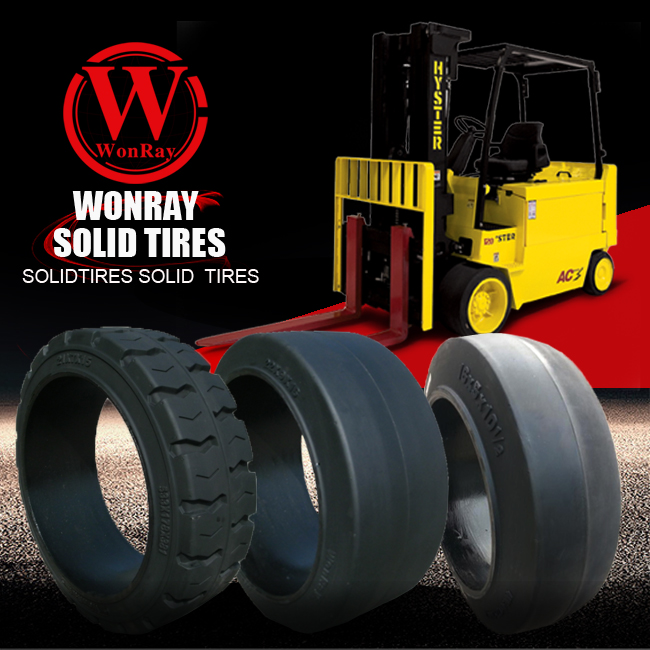
Press On Band Tires are industrial tires constructed by vulcanizing high-strength rubber directly onto a steel band. They are mounted onto wheel hubs using a press-fit method, forming a secure and integrated structure. Unlike pneumatic tires that rely on air pressure, Press On Band Tires are solid and therefore eliminate the risks of air leakage, punctures, and blowouts, maintaining consistent performance even under demanding conditions.
These tires are typically manufactured using specialized rubber compounds to meet different operational needs. For example, softer compounds provide better traction on smooth indoor floors, while harder compounds offer extended service life in high-traffic environments. Through variations in hardness and structural design, Press On Band Tires can be adapted to a wide range of industrial applications.
Key Advantages Driving Industry Adoption
Press On Band Tires are widely used due to their multiple performance advantages, which translate directly into improved operational efficiency and reduced costs.
● Exceptional durability: The solid structure eliminates the risk of flats and provides excellent wear resistance in continuous operations
● Low maintenance: No need for air pressure checks or frequent repairs, significantly reducing maintenance costs
● High load capacity: The rigid construction supports heavy loads while maintaining stability
● Consistent performance: A stable contact surface improves control and operational safety
● Quiet operation: Lower noise levels make them ideal for indoor working environments
These advantages ensure stable and reliable equipment performance, minimizing downtime and improving overall workflow efficiency.
Typical Applications and Industry Value
Press On Band Tires are specifically designed for indoor environments, especially where floors are smooth and operations are frequent.
● Warehousing and logistics centers: Ideal for forklifts operating continuously under demanding conditions
● Manufacturing facilities: Provide precise and stable movement for material handling processes
● Distribution centers: Support high-efficiency operations with minimal interruptions
● Commercial storage areas: Quiet operation is suitable for environments requiring low noise levels
In these scenarios, Press On Band Tires deliver excellent traction and control, ensuring efficient and safe operation.
Comparison: Press On Band Tires vs. Pneumatic Tires
The choice of tire type has a direct impact on equipment performance. Compared with pneumatic tires, Press On Band Tires offer clear advantages in indoor environments.
● Durability: Solid construction provides superior resistance to damage
● Maintenance: Eliminates the need for inflation and frequent repairs
● Stability: Rigid structure ensures better load balance during lifting operations
● Efficiency: Stable performance improves handling smoothness and operational speed
While pneumatic tires may still be preferred for outdoor use due to their shock absorption and terrain adaptability, Press On Band Tires are the more efficient option for controlled indoor environments.
How Press On Band Tires Improve Efficiency
Operational efficiency depends on equipment reliability, handling speed, and reduced downtime. Press On Band Tires contribute significantly to all these aspects.
Their solid construction ensures uninterrupted operation, reducing failures caused by tire-related issues. This reliability allows operators to maintain consistent workflows and meet production targets more effectively. Additionally, the improved stability enhances maneuverability, especially in tight warehouse layouts, enabling faster and more precise handling.
Furthermore, consistent rolling resistance may contribute to improved energy efficiency, helping reduce long-term operating costs in facilities with large equipment fleets.
Installation and Usage Considerations
Although Press On Band Tires offer numerous benefits, proper installation and usage are essential to maximize performance. These tires are typically installed using specialized press equipment to ensure a secure fit. Professional installation is strongly recommended to avoid misalignment or premature wear.
During operation, it is important to avoid overloading and using the tires on rough outdoor surfaces, as this may reduce their lifespan. Regular inspections, although less frequent than with pneumatic tires, are still necessary to detect wear and ensure optimal performance.
Industry Trends and Future Outlook
As smart manufacturing and automated logistics continue to evolve, the demand for stable and low-maintenance solutions is increasing. Press On Band Tires are well-positioned to meet these needs, especially in automated environments where consistency and reliability are essential.
With advancements in materials and manufacturing technologies, future generations of Press On Band Tires are expected to offer improved wear resistance, traction, and environmental performance. Additionally, the adoption of sustainable materials and eco-friendly production processes will become an important trend in the industry.
Conclusion
Press On Band Tires provide an efficient and reliable mobility solution for indoor industrial equipment. Their durability, stability, and low maintenance requirements make them a critical component in modern material handling systems. By integrating these tires into their operations, businesses can reduce downtime, improve efficiency, and achieve more consistent performance in a competitive industrial landscape.
FAQ
- How long do Press On Band Tires typically last?
The lifespan depends on usage frequency, load conditions, and floor quality. In standard warehouse environments, they can last several years and generally outperform pneumatic tires. - Are Press On Band Tires compatible with all forklifts?
Most electric forklifts and warehouse equipment can use Press On Band Tires, but the correct size and load rating must match the specific equipment model. - Will Press On Band Tires damage the floor?
Under normal conditions, they have minimal impact on epoxy or concrete floors. Selecting the appropriate rubber hardness can further reduce wear. - Can Press On Band Tires be replaced manually?
Manual replacement is not recommended, as specialized press equipment is required. Professional installation ensures safety and optimal performance.
Post time: 20-04-2026