
In the fast-paced world of industrial operations, warehouse logistics, and manufacturing, forklifts play a critical role in moving heavy loads safely and efficiently. One of the most crucial components affecting forklift performance is the tires. Durable solid tires for forklifts provide a reliable, low-maintenance solution that ensures consistent performance, reduces downtime, and enhances workplace safety.
Unlike pneumatic tires, solid tires are puncture-resistant and maintain their shape under heavy loads, making them ideal for high-frequency industrial use. Choosing the right durable solid tires can significantly improve operational efficiency and protect both cargo and equipment.
Benefits of Durable Solid Tires for Forklifts
Durable solid forklift tires offer numerous advantages for B2B operations:
● Long-Lasting Durability – Constructed from high-quality rubber or polyurethane, these tires resist cuts, abrasions, and wear, providing a long service life.
● Maintenance-Free Performance – Solid tires eliminate the risk of flats or leaks, reducing the need for frequent repairs and minimizing downtime.
● High Load Capacity – Designed to support heavy forklifts and full loads without deformation, ensuring stable and safe handling.
● Enhanced Stability – Solid tires maintain consistent grip and performance under maximum load, reducing the risk of tipping and accidents.
● Versatile Surface Compatibility – Suitable for concrete, warehouse floors, asphalt, and light industrial outdoor terrain.
● Shock Absorption – High-quality rubber compounds absorb vibrations, protecting both cargo and forklift components.
Applications Across B2B Industries
Durable solid tires are widely adopted in industries where reliability, safety, and efficiency are paramount:
● Warehousing and Logistics – Forklifts equipped with solid tires can handle high volumes of goods with minimal downtime.
● Manufacturing Facilities – Heavy-duty equipment and material transport require stable tires to ensure smooth and safe operations.
● Construction Sites – Puncture-resistant solid tires can withstand debris and uneven terrain, maintaining forklift performance.
● Retail and Distribution Centers – Reliable tires ensure quick and safe movement of merchandise, enhancing productivity.
● Airport and Cargo Handling – Forklifts with durable solid tires maintain performance during high-frequency loading and unloading of baggage or cargo.
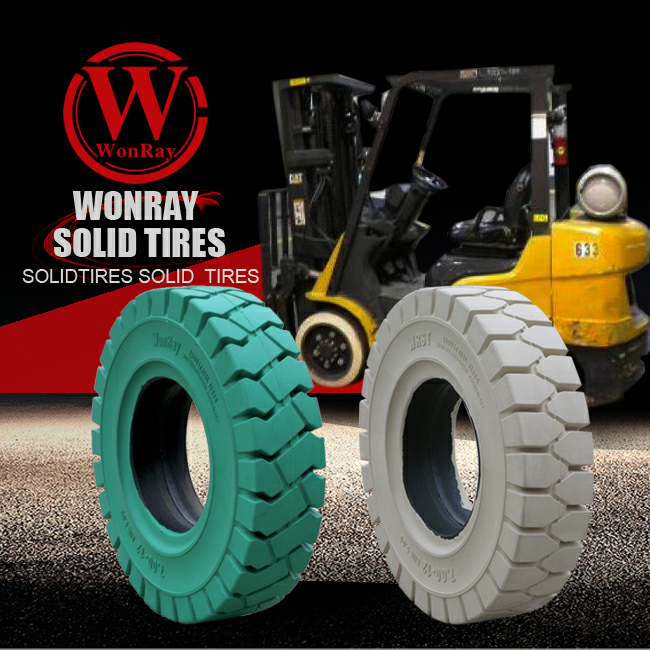
Factors to Consider When Selecting Durable Solid Forklift Tires
To maximize performance and longevity, businesses should carefully evaluate these factors when choosing solid forklift tires:
● Load Capacity – Ensure the tires can support both the forklift and the maximum cargo weight without compromising stability.
● Tire Size and Width – Proper sizing improves maneuverability, load distribution, and floor protection.
● Material Hardness (Durometer) – The rubber or polyurethane should balance durability, grip, and vibration absorption.
● Tread Design – Smooth, ribbed, or patterned treads affect traction, floor wear, and forklift handling.
● Forklift Compatibility – Tires must match the hub and axle specifications to avoid uneven wear and ensure safety.
● Environmental Resistance – Tires should withstand exposure to oils, chemicals, and temperature variations often found in industrial settings.
Evaluating these factors ensures that durable solid tires deliver consistent, safe, and cost-effective forklift performance.
Advantages Over Pneumatic Forklift Tires
Compared to pneumatic tires, durable solid tires provide key benefits:
● Puncture-Proof Reliability – No downtime due to flats or leaks.
● Lower Maintenance Costs – No need to monitor air pressure or repair punctures.
● Consistent Load Handling – Maintain performance under heavy, repeated use.
● Improved Safety – Stable handling reduces tipping risks and accidents.
● Long-Term Cost Efficiency – Although initial costs may be higher, durable solid tires last longer and reduce operational interruptions, providing a better return on investment.
Conclusion
Durable solid tires for forklifts are a vital investment for B2B operations prioritizing efficiency, safety, and reliability. By carefully selecting tires based on load capacity, size, tread design, and material, businesses can optimize forklift performance, minimize downtime, and protect both equipment and cargo. Across warehousing, manufacturing, construction, and logistics sectors, solid forklift tires provide durable, low-maintenance solutions that enhance productivity and operational safety.
FAQ
Q1: Which industries benefit most from durable solid forklift tires?
Warehousing, manufacturing, logistics, construction, and airport cargo handling benefit the most due to heavy load and high-frequency operations.
Q2: How do durable solid tires compare to pneumatic forklift tires?
Durable solid tires are puncture-proof, maintenance-free, and provide stable load handling, while pneumatic tires may deflate and require frequent maintenance.
Q3: Do durable solid forklift tires require maintenance?
No, they are essentially maintenance-free, eliminating the need for air pressure checks or puncture repairs.
Q4: What factors ensure optimal performance of solid forklift tires?
Key considerations include load capacity, tire size, material hardness, tread design, forklift compatibility, and environmental conditions.
Post time: 25-02-2026