
In industrial, logistics, and heavy-duty applications, wheels are more than just components—they are critical to operational efficiency, safety, and longevity. Custom-fit solid tires have become an increasingly popular solution for businesses that require high performance, tailored specifications, and minimal downtime. By offering a precise fit for machinery, trailers, and specialized vehicles, custom solid tires deliver superior stability, load handling, and durability compared to standard tire options.
Custom-fit solid tires are essential in environments where reliability is non-negotiable, including warehouses, airports, factories, and distribution centers. Choosing the right tires ensures smoother operations, reduces maintenance costs, and supports long-term investment strategies.
Advantages of Custom-Fit Solid Tires
Custom-fit solid tires offer several benefits that make them ideal for B2B operations:
● Optimized Load Handling – Designed to fit the exact specifications of your equipment, these tires distribute weight evenly, reducing stress on axles and improving operational safety.
● Enhanced Durability – Made from high-grade rubber compounds, custom solid tires resist wear, cuts, and punctures, ensuring long-term reliability in demanding environments.
● Maintenance-Free Operation – Unlike pneumatic tires, custom solid tires do not require inflation, patching, or monitoring, significantly reducing downtime and maintenance labor.
● Improved Stability and Control – Tailored sizing and proper mounting enhance traction, handling, and maneuverability, which is critical for heavy machinery and high-volume operations.
● Vibration and Shock Absorption – Advanced rubber compositions provide sufficient cushioning to minimize vibrations, protecting both the cargo and the equipment.
● Versatility Across Surfaces – Custom-fit solid tires can be engineered to perform well on diverse surfaces, including concrete, asphalt, warehouse floors, and industrial tarmacs.
Key Applications for B2B Industries
Custom-fit solid tires are widely utilized across multiple industrial and commercial sectors, particularly where precision, safety, and efficiency are paramount:
● Manufacturing Facilities – Heavy machinery and material handling equipment benefit from the consistent load support and durability of custom tires.
● Warehouses and Distribution Centers – Pallet movers, forklifts, and conveyor vehicles equipped with custom-fit tires experience smoother operation and reduced wear.
● Aviation and Airport Services – Baggage trailers and ground support vehicles require durable, puncture-resistant tires that fit specific hub sizes for safe and efficient luggage transport.
● Logistics and Freight Handling – Custom solid tires optimize the performance of specialized trolleys, hand trucks, and trailers, improving turnaround times and minimizing equipment downtime.
● Heavy Equipment and Industrial Vehicles – Construction, mining, and material handling vehicles benefit from tires engineered for exact fit and load requirements, ensuring long-term reliability.
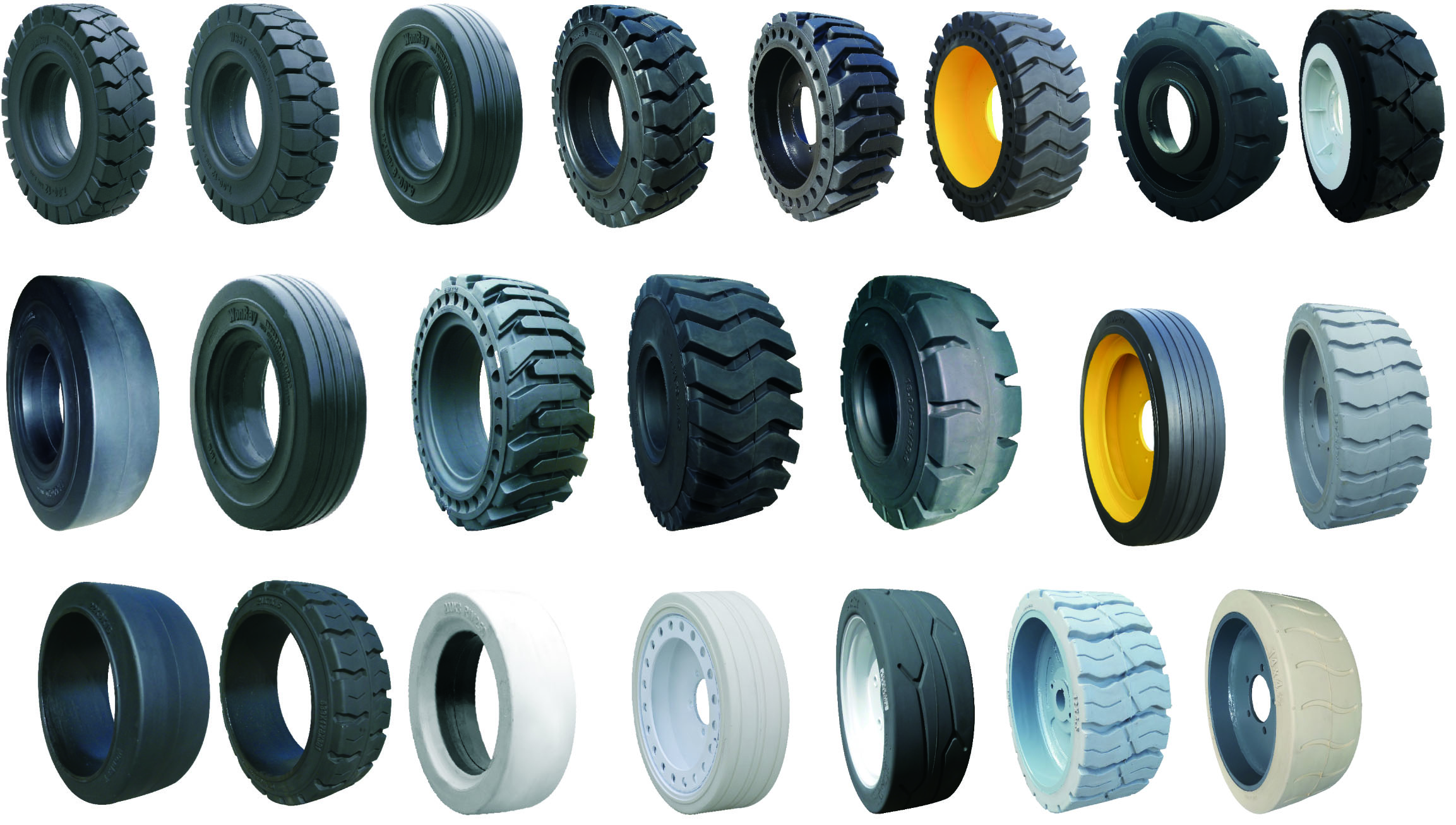
Factors to Consider When Choosing Custom-Fit Solid Tires
Selecting the right custom-fit solid tires requires careful attention to several critical factors:
● Load Capacity – Ensure the tire is designed to support the maximum operational weight of the equipment, including cargo.
● Diameter and Width – Proper sizing ensures optimal stability, maneuverability, and smooth operation across various terrains.
● Tread Design – Depending on the surface, select treads that provide sufficient traction, whether for smooth warehouse floors or rough outdoor industrial surfaces.
● Material Hardness (Durometer) – The correct balance between hardness and shock absorption ensures durability without compromising comfort or safety.
● Mounting and Bearing Compatibility – Custom-fit tires should match the hub and bearing specifications of your equipment to avoid uneven wear and ensure smooth rotation.
● Environmental Resistance – Tires must withstand extreme temperatures, chemical exposure, oils, and other challenging industrial conditions.
By evaluating these factors, businesses can maximize tire performance, safety, and return on investment.
Benefits Over Standard Tires
Custom-fit solid tires offer distinct advantages compared to off-the-shelf solutions:
● Precision Fit – Tailored to exact machinery specifications, eliminating slippage and uneven wear.
● Consistent Performance – Maintains stability and traction under load, regardless of environmental factors or frequent use.
● Reduced Downtime – Maintenance-free design reduces operational interruptions, labor costs, and equipment replacement frequency.
● Long-Term Cost Efficiency – Although initial costs may be higher, the longevity, reliability, and lower maintenance make custom-fit solid tires a more cost-effective choice over time.
● Enhanced Safety – Custom-fit tires minimize the risk of accidents caused by misfit or tire failure, particularly in heavy-load or high-traffic environments.
Conclusion
Custom-fit solid tires are a strategic investment for B2B businesses that require durability, precision, and reliability. By matching tires to specific equipment needs, companies can achieve improved operational efficiency, reduced maintenance costs, and enhanced safety. Whether for forklifts, baggage trailers, hand trucks, or industrial machinery, custom-fit solid tires provide superior performance, longevity, and value compared to standard tire options. Selecting the right specifications, considering load capacity, tread design, material hardness, and hub compatibility, ensures optimal results in heavy-duty and high-frequency operations.
FAQ
Q1: What industries benefit the most from custom-fit solid tires?
Industries including manufacturing, warehousing, aviation, logistics, and heavy equipment operations gain the most due to high load requirements and demanding operating conditions.
Q2: How do custom-fit solid tires compare to standard solid tires in terms of performance?
Custom-fit tires offer a precise fit that improves stability, traction, and wear resistance, ensuring better performance under load compared to generic tires.
Q3: Are custom-fit solid tires maintenance-free?
Yes, they do not require inflation or patching, making them virtually maintenance-free and reducing operational downtime.
Q4: What factors should be considered to maximize tire longevity?
Key factors include load capacity, correct sizing, material hardness, tread design, and compatibility with the vehicle hub and bearings.
Post time: 24-02-2026