
Skid steer loaders are widely used across construction projects, recycling facilities, waste management centers, agricultural operations, and industrial material handling applications because of their compact size, maneuverability, and ability to perform a wide range of tasks. However, even the most powerful skid steer can experience productivity losses when equipped with tires that are not designed for the conditions of the job site. Tire punctures, sidewall damage, and excessive wear can lead to costly downtime, unexpected maintenance expenses, and project delays that directly impact profitability.
As industries continue to seek ways to improve equipment uptime and reduce operating costs, skid steer solid rubber tires have become an increasingly popular solution. Unlike conventional pneumatic tires that rely on compressed air to support the machine, solid rubber tires are manufactured using durable rubber compounds that eliminate the possibility of flats while providing outstanding resistance to cuts, impacts, and abrasive surfaces. For many operators, this combination of durability and reliability makes solid tires a smart long-term investment.
Why Are More Contractors Switching to Solid Rubber Tires?
In many working environments, tire failures are not occasional inconveniences but recurring operational challenges that can significantly affect productivity. Construction debris, scrap metal, broken concrete, sharp rocks, and industrial waste create conditions that can quickly damage traditional air-filled tires.
Some of the primary reasons contractors choose solid rubber tires include:
● The solid construction completely removes the risk of punctures and air leaks, allowing machines to continue operating even in environments where sharp objects are constantly present.
● The durable rubber structure provides excellent resistance to cuts, tears, and sidewall damage, helping tires maintain their integrity throughout demanding work cycles.
● Reduced maintenance requirements mean operators spend less time repairing tires and more time completing productive work.
● The extended service life of solid tires can help lower overall operating costs by reducing the frequency of tire replacements over the lifespan of the equipment.
● Increased machine availability allows businesses to maximize equipment utilization and improve project scheduling efficiency.
For contractors managing multiple machines across different job sites, minimizing unplanned downtime often becomes one of the most important factors when evaluating tire options.
How Do Solid Rubber Tires Perform in Harsh Working Conditions?
One of the biggest advantages of solid rubber tires is their ability to maintain consistent performance under conditions that would rapidly wear or damage pneumatic tires. This makes them particularly valuable for industries where surface conditions are unpredictable and equipment is expected to operate continuously.
Common environments where solid tires excel include:
● Demolition sites where exposed rebar, broken concrete, nails, and construction debris create a high risk of tire punctures and sidewall damage.
● Recycling facilities where skid steer loaders frequently operate around scrap metal, broken glass, and sharp industrial waste materials that can quickly destroy conventional tires.
● Waste transfer stations where heavy equipment is exposed to mixed debris, uneven surfaces, and materials capable of causing repeated tire failures.
● Quarry and mining operations where abrasive rock surfaces place extreme stress on tires and require exceptional durability to withstand daily operations.
● Manufacturing and industrial facilities where machines operate for long periods while carrying heavy loads across hard concrete surfaces.
Because solid rubber tires maintain their structural integrity even when exposed to these challenging environments, operators can focus on productivity rather than constant tire maintenance.
Understanding the Long-Term Cost Benefits
Although the purchase price of solid rubber tires is generally higher than that of pneumatic alternatives, focusing solely on the initial cost can overlook the broader financial advantages they provide over time.
Several factors contribute to long-term savings:
● Eliminating flat tire repairs removes costs associated with emergency service calls, replacement tubes, air pressure maintenance, and repair labor.
● Longer tire lifespan reduces replacement frequency, helping businesses lower their annual tire expenditure while simplifying maintenance planning.
● Consistent machine availability allows projects to remain on schedule, preventing productivity losses caused by unexpected tire failures.
● Reduced maintenance demands enable technicians to focus on other equipment priorities rather than routine tire repairs and pressure monitoring.
● Improved operational efficiency can increase the number of productive working hours generated by each machine throughout the year.
When these factors are considered together, many fleet owners discover that solid tires deliver a lower total cost of ownership despite their higher upfront investment.
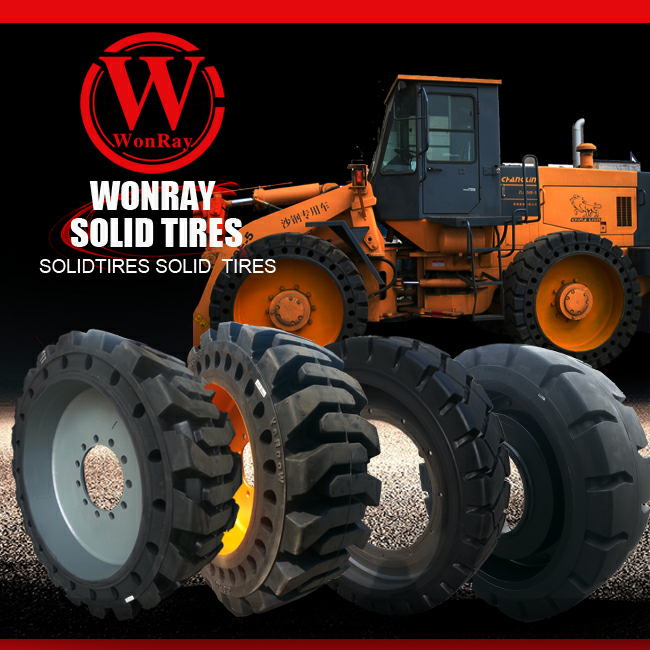
Key Features to Evaluate Before Purchasing
Not all solid rubber tires are designed with the same materials, engineering standards, or performance characteristics. Selecting the right tire requires careful consideration of several important factors.
Rubber Compound Technology
The quality of the rubber compound plays a significant role in determining durability, heat resistance, and wear characteristics. Advanced compounds are engineered to provide a balance between toughness and flexibility while maintaining performance under heavy loads.
Important benefits of premium rubber compounds include:
● Enhanced resistance to abrasion caused by rough surfaces and repetitive operation.
● Improved protection against cracking and chunking under demanding working conditions.
● Better heat management during extended operating periods.
● Longer overall service life compared with lower-quality alternatives.
Load-Carrying Capacity
Skid steer loaders frequently handle dense materials such as gravel, concrete blocks, construction waste, pallets, and industrial components. Tires must be capable of supporting these loads without excessive deformation or premature wear.
When evaluating load capacity, buyers should consider:
● The operating weight of the skid steer loader.
● Typical load sizes encountered during daily operations.
● Attachment weight and application requirements.
● Working surface conditions and machine duty cycles.
Selecting a tire with an appropriate load rating helps ensure reliable performance and extended service life.
Tread Pattern Design
The tread pattern has a direct impact on traction, stability, and wear performance. Different applications may require different tread configurations to achieve optimal results.
Factors influenced by tread design include:
● Traction on loose surfaces such as gravel, dirt, and demolition debris.
● Stability during lifting and material handling operations.
● Wear resistance on concrete and asphalt surfaces.
● Overall tire longevity under specific operating conditions.
Choosing the correct tread design allows operators to maximize both productivity and tire lifespan.
Are Solid Rubber Tires Suitable for Every Skid Steer Application?
While solid tires offer significant advantages, they are not necessarily the ideal choice for every working environment. Understanding where they provide the greatest value helps operators make informed purchasing decisions.
Solid rubber tires are especially beneficial when:
● Tire punctures occur frequently and cause costly downtime.
● Equipment operates on debris-covered or abrasive surfaces.
● Maintenance resources are limited and reliability is a priority.
● Machines work in high-utilization applications where downtime must be minimized.
● Long-term operating cost reduction is more important than minimizing initial purchase price.
In contrast, operators who primarily work on soft ground, agricultural fields, or highly uneven terrain may find that pneumatic tires provide additional ride comfort and flotation. Evaluating actual operating conditions remains essential when selecting the most suitable tire type.
Why Is Demand for Solid Tire Technology Continuing to Grow?
As labor costs rise and project timelines become increasingly demanding, equipment owners are looking for solutions that improve reliability while reducing maintenance requirements. Tire technology has become an important part of this strategy because tire-related downtime can affect overall operational performance.
Recent advancements in solid tire design have contributed to their growing popularity:
● Manufacturers are developing innovative internal structures that improve shock absorption while maintaining durability.
● New rubber formulations provide better wear resistance without sacrificing traction.
● Enhanced engineering techniques allow solid tires to support heavier loads while maintaining structural stability.
● Modern designs improve operator comfort compared with earlier generations of solid tires.
These developments have expanded the range of applications where solid tires can deliver measurable operational benefits.
Conclusion
Skid steer solid rubber tires have evolved into a highly effective solution for businesses that prioritize durability, reliability, and long-term cost efficiency. By eliminating punctures, reducing maintenance requirements, and providing exceptional resistance to harsh working environments, these tires help maximize equipment uptime and support more productive operations.
For contractors, fleet managers, recycling operators, and industrial equipment owners who regularly face challenging job site conditions, solid rubber tires can provide a significant competitive advantage by reducing downtime and improving overall operational efficiency. While the initial investment may be higher than traditional pneumatic tires, the long-term value often makes them a practical and financially beneficial choice.
FAQ
1. What industries benefit the most from skid steer solid rubber tires?
● Industries such as construction, demolition, recycling, mining, waste management, and heavy industrial manufacturing benefit greatly because these environments frequently expose equipment to sharp debris, abrasive surfaces, and demanding operating conditions that can quickly damage pneumatic tires.
2. Do solid rubber tires require any air pressure maintenance?
● Because solid rubber tires contain no air chamber, they do not require inflation, pressure checks, or repairs related to air leaks, making routine maintenance considerably simpler than with conventional pneumatic tires.
3. Can solid rubber tires help reduce fleet operating costs?
● Although the initial purchase cost is typically higher, the elimination of puncture repairs, reduced maintenance requirements, longer service life, and increased equipment uptime often contribute to lower overall operating expenses over the life of the tire.
4. How can buyers choose the right solid rubber tire for their skid steer loader?
● Buyers should evaluate factors such as machine weight, typical load requirements, operating environment, tread design preferences, and expected duty cycles to ensure the selected tire provides the durability, traction, and performance needed for their specific application.
Post time: 06-06-2026