
In industrial transportation and low-speed vehicle operations, solid tires are becoming a preferred solution for companies that require durability, stability, and reduced maintenance. As business fleets face growing pressure to improve efficiency and minimize downtime, understanding how solid tires support operational performance is essential for B2B buyers.
What Are Solid Tires for Cars?
Solid tires are non-pneumatic tires manufactured entirely from rubber, polyurethane, or composite materials. Because they contain no air chamber, they do not puncture, deflate, or explode, making them highly reliable for industrial and commercial applications where safety and long service life are critical.
Key Advantages of Solid Tires for Cars
High Load-Bearing Strength
● Dense, solid structure supports heavy cargo and continuous operations
● Suitable for industrial vehicles, logistics fleets, and port or mining equipment
Zero Puncture Risk and Minimal Maintenance
● Resistant to nails, sharp debris, metal scraps, and broken glass
● No air leaks, pressure monitoring, or tire patching required
Longer Tire Lifespan
● Thick, wear-resistant tread material
● Lasts three to five times longer than pneumatic tires
Enhanced Operational Stability
● Reduced sidewall flex improves braking, turning, and load control
● Ensures smooth handling for low-speed commercial vehicles
Built for Challenging Environments
● Performs reliably in high temperatures, oily floors, uneven terrains, and debris-heavy sites
Where Solid Tires Are Used in “Car-Type” Vehicles
Although traditional passenger cars still rely on pneumatic tires, many automotive-style vehicles in industrial and commercial sectors increasingly use solid tires due to their reliability.
● Factory logistics vehicles
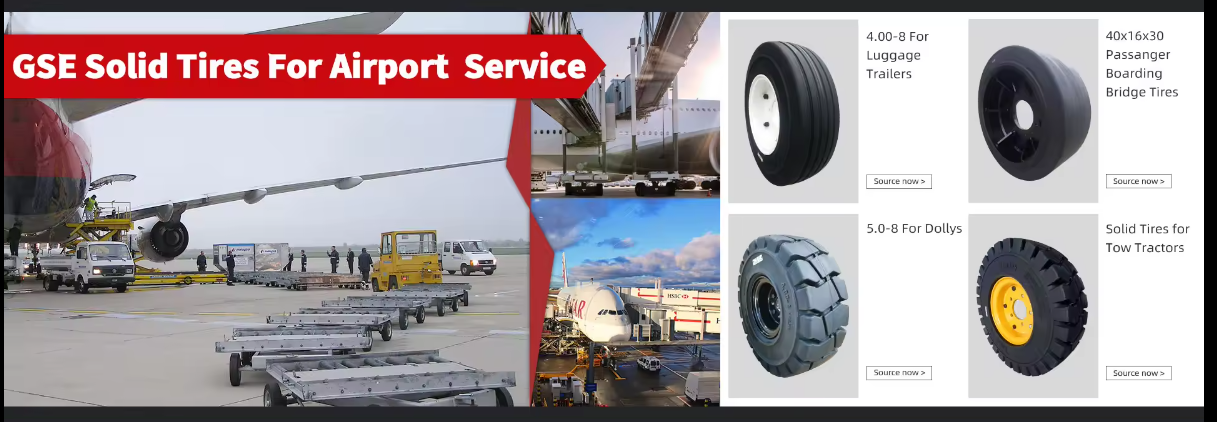
● Airport service cars and towing vehicles
● Warehouse AGVs and unmanned transport robots
● Low-speed electric utility vehicles
● Resort and park sightseeing cars
● Urban sanitation and inspection vehicles
These vehicles prioritize durability, uptime, and safe performance over ride comfort, making solid tires an ideal choice
Major Industrial Applications of Solid Tires
Manufacturing and Production Facilities
● Tow tractors
● Automated transport shuttles
● Material-handling vehicles
Warehousing and Logistics
● Forklifts
● AGVs and AMRs
● High-duty indoor transport equipment
Mining, Construction, and Heavy Industry
● Low-speed mining trucks
● Material-delivery vehicles
● Concrete plant transport units
Ports and Terminals
● Container-moving vehicles
● Heavy stackers
● Ground-support equipment
Commercial and Utility Fleets
● Patrol and security vehicles
● Multi-passenger sightseeing vehicles
● Airport service fleets
● Community utility vehicles
What B2B Buyers Should Evaluate Before Purchasing Solid Tires
Required Load Capacity
● Ensure the tire’s maximum load meets fleet safety requirements
Material Options
● Rubber solid tires for durability and comfort
● Polyurethane for chemical and oil resistance
● Composite materials for extreme applications
Installation Method
● Press-on tires
● Bolt-on designs
● Quick-change mounting systems
The correct method depends on rim structure and maintenance workflow.
Working Environment
● High-temperature floors
● Chemical or oil exposure
● Rough or debris-covered surfaces
Material grade should align with site conditions.
Vehicle Speed
● Solid tires are designed for low-speed applications
● Recommended for speeds below 25 km/h
Business Advantages for Fleet Operators and Industrial Buyers
Maximum Uptime
● No unexpected failures or puncture-related downtime
Reduced Overall Operating Costs
● Fewer replacements
● No inflation or maintenance labor required
Higher Safety Standards
● No blowout risk
● Well-suited for strict industrial environments like warehouses and mines
Predictable Tire Consumption
● Long replacement cycles improve procurement planning
● Ideal for large fleets and continuous-operation facilities
Conclusion
Solid tires for cars play a significant role in industrial, logistics, port, construction, and low-speed commercial transportation. Their durability, zero-puncture performance, and minimal maintenance offer businesses a stable and cost-efficient solution when reliability matters most. While not suitable for high-speed passenger vehicles, solid tires deliver exceptional value for companies seeking long-term operational efficiency and reduced downtime.
FAQ
1. Are solid tires suitable for normal highway cars?
No. Solid tires are not designed for high-speed driving and offer limited shock absorption.
2. How long can solid tires last in industrial use?
They typically last three to five times longer than pneumatic tires, depending on workload and material type.
3. Do solid tires increase energy consumption?
Rolling resistance may be slightly higher, but this is acceptable in industrial low-speed operations.
4. Can solid tires be used in high-temperature or chemical environments?
Yes. With the correct material selection, solid tires perform well in extreme heat, oily floors, and chemically exposed areas.
Post time: 09-12-2025