
In modern industrial environments, maintaining a clean, safe, and efficient workspace is no longer optional—it is a necessity. From warehouses and logistics centers to food processing plants and hospitals, floor cleanliness directly impacts operational efficiency, safety standards, and corporate image. One critical yet often overlooked factor in achieving this is the choice of tires.
Non marking solid tires have become a preferred solution for indoor applications because they offer a distinct advantage over traditional black solid tires: they leave no marks on the floor during operation or braking. This feature, combined with strong durability and performance, makes them an ideal choice for clean and controlled environments.
What Makes Non Marking Solid Tires Different
The key difference between non marking tires and standard black tires lies in their material composition. Traditional tires contain carbon black, which enhances strength but also causes visible black marks on floors. In contrast, non marking tires are produced using specialized compounds that eliminate carbon black while maintaining structural integrity.
These compounds are carefully engineered to deliver:
● Clean operation without leaving streaks or stains
● Balanced durability for industrial use
● Stable traction on smooth indoor surfaces
● Consistent performance under load
Because of this unique formulation, non marking tires are widely recognized as the best option for facilities where floor protection is a top priority.
The Core Advantage: Zero Floor Marking
The most important benefit of non marking solid tires is their ability to operate without damaging or staining indoor surfaces.
During daily operations, forklifts and other material handling equipment frequently accelerate, turn, and brake. Standard tires often leave black skid marks, especially under heavy loads or sudden stops. These marks not only affect the appearance of the facility but also increase cleaning and maintenance costs.
Non marking tires eliminate this issue entirely by:
● Preventing black streaks during braking
● Maintaining clean floors even under heavy traffic
● Protecting light-colored or coated surfaces
● Reducing the need for frequent cleaning
For businesses with strict cleanliness standards, this advantage alone can justify the switch.
Widely Used in Clean-Sensitive Industries
Non marking tires are specifically designed for environments where hygiene, aesthetics, and floor protection are critical.
They are commonly used in:
● Warehouses with epoxy or polished concrete flooring
● Food and beverage production facilities
● Pharmaceutical and medical environments
● Electronics manufacturing plants
● Retail stores and shopping centers
In these industries, maintaining a clean floor is not just about appearance—it is often a regulatory requirement.
Color Characteristics and Identification
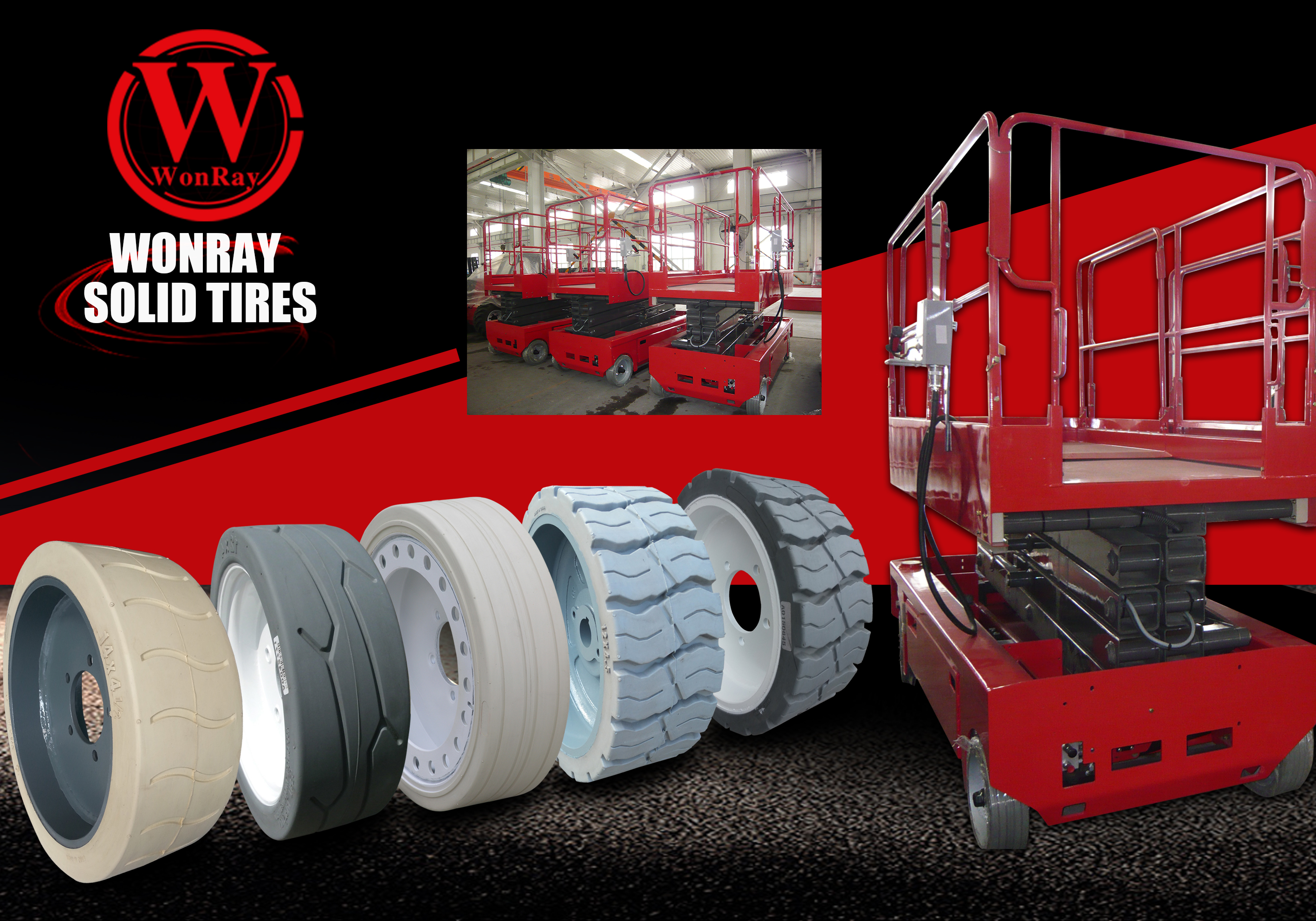
Non marking tires are typically produced in lighter colors, most commonly grey or white. These colors are a direct result of the absence of carbon black in the compound.
Although the exact shade may vary between manufacturers, the lighter color serves two purposes:
● It visually distinguishes non marking tires from standard black tires
● It ensures no dark residue is transferred onto the floor
This makes it easier for facility managers to enforce cleanliness standards and identify suitable equipment.
Performance That Matches Industrial Demands
A common concern is whether non marking tires compromise on performance compared to traditional solid tires. In reality, modern non marking tires are designed to deliver comparable, and in some cases superior, performance.
They provide:
● Reliable traction on smooth indoor surfaces
● Stable handling during turning and lifting operations
● Strong load-bearing capacity for heavy-duty use
● Smooth rolling for precise maneuvering
This ensures that switching to non marking tires does not negatively impact productivity.
Durability and Wear Resistance
While non marking tires focus on cleanliness, they are also built to withstand industrial wear and tear.
Advanced compound technology allows them to offer:
● High resistance to abrasion in high-traffic areas
● Long service life under continuous operation
● Resistance to deformation under heavy loads
● Consistent performance over time
Although they may wear slightly faster than traditional carbon black tires in extremely harsh environments, they are more than sufficient for most indoor applications.
Reducing Maintenance and Operational Costs
Non marking solid tires contribute to cost savings in multiple ways.
● Lower cleaning costs due to absence of floor marks
● Reduced floor maintenance and repair expenses
● Minimal tire maintenance requirements
● Longer equipment uptime due to reliable performance
These benefits help improve overall operational efficiency and reduce total cost of ownership.
Key Factors When Selecting Non Marking Tires
To maximize the benefits of non marking tires, it is important to choose the right specifications based on your application.
Consider the following:
● Floor type (epoxy, concrete, coated surfaces)
● Load capacity requirements
● Equipment type (forklift, pallet truck, etc.)
● Operating environment (temperature, chemicals, humidity)
Selecting the right tire ensures optimal performance and longer service life.
Product Selection Recommendations
For businesses operating in clean indoor environments, investing in high-quality non marking solid tires is a strategic decision. It is important to choose products made from advanced compounds that balance cleanliness, durability, and traction.
Working with experienced suppliers can help identify the most suitable tire solutions based on your specific operational needs, ensuring long-term performance and reliability.
Conclusion
Non marking solid tires offer a powerful combination of cleanliness, performance, and durability. By eliminating floor marks while maintaining strong operational capabilities, they provide a practical solution for industries that demand both efficiency and hygiene.
For companies aiming to maintain spotless facilities, reduce maintenance costs, and improve operational consistency, non marking tires are not just an upgrade—they are an essential component of modern indoor material handling systems.
Post time: 30-03-2026