
17.5-25 Tire is a common tire size used on wheel loaders and some industrial equipment that work in yards, factories, ports, recycling areas, construction material sites, and heavy material handling environments. For buyers, this size is not just a number on the tire sidewall. It represents a fitment requirement that must match the rim, equipment load, ground condition, and daily working pattern. When a 17.5-25 Tire is selected correctly, it can help the machine move steadily, carry materials safely, and reduce avoidable tire-related downtime.
What does 17.5-25 mean in tire selection?
The 17.5-25 marking indicates a tire size commonly associated with loader and OTR applications. Although the number provides an important starting point, it does not tell the full selection story. The same size can appear in different tire structures, tread patterns, load ratings, and rubber compounds.
When buyers confirm a 17.5-25 Tire, they should check:
- Existing tire marking and equipment manual
- Rim size and rim condition
- Machine type and operating weight
- Load frequency and material type
- Working speed and route length
- Ground condition and debris risk
- Whether solid tire performance is required
A correct size without correct structure may still create problems. For example, a tire suitable for cleaner yard travel may not be suitable for scrap handling or slag areas. A tire designed for occasional use may not support a loader working through long shifts.
When does a 17.5-25 Solid Tire make sense?
A 17.5-25 Solid Tire is usually considered when puncture resistance and low maintenance are more important than the cushioning of a pneumatic tire. In many industrial locations, the ground contains sharp objects that can damage air-filled tires. A solid tire helps reduce sudden flats because it has no air chamber.
This option is especially relevant for:
- Recycling yards with metal pieces and glass
- Waste handling facilities with mixed debris
- Steel plants where slag and sharp material may be present
- Industrial storage yards with rough concrete
- Construction material sites with stones and broken surfaces
- Ports where equipment works under long shifts and heavy loads
The goal is not to make the tire impossible to wear. The goal is to make tire performance more predictable in places where pneumatic tires may fail unexpectedly.
Size matching is only the first checkpoint
A buyer may think that replacing a 17.5-25 Tire with another 17.5-25 Tire is enough. In reality, there are several checkpoints before purchase. The rim must be suitable, the machine load must be considered, and the tire structure must match the way the equipment works.
A simple selection checklist includes:
- Confirm the exact current tire size and rim type.
- Check whether the loader uses the tire on front or rear axle.
- Identify the heaviest load the machine handles.
- Review the surface condition along the full route.
- Decide whether puncture resistance, traction, heat resistance, or ride comfort is the priority.
- Confirm whether the tire is used indoors, outdoors, or in mixed conditions.
This checklist helps avoid under-matching the tire to the job. For industrial vehicles, wrong matching often appears later as faster wear, unstable handling, or repeated maintenance.
Comparing pneumatic and solid options for 17.5-25 applications
A pneumatic 17.5-25 Tire can offer cushioning and may be suitable for applications where road comfort, outdoor travel, and shock absorption are important. However, pneumatic tires require air pressure management and may be vulnerable to punctures. In clean or less aggressive environments, they may be practical.
A 17.5-25 Solid Tire is different. It focuses on puncture resistance, load stability, and maintenance reduction. It is more suitable for low-speed, site-based work where the tire faces sharp debris or repeated heavy loading. It may not provide the same cushioning as a pneumatic tire, but it can reduce sudden downtime caused by air loss.
Buyers can compare the two options by asking:
- Is the site clean or filled with debris?
- Does the loader travel long distances or work mainly in one yard?
- Is operator ride comfort or uptime more important?
- Are flats a regular problem?
- Can downtime affect truck loading, production, or yard movement?
The right answer depends on the site, not only the machine.
How tread and rubber compound affect performance
Even within the same 17.5-25 Tire size, tread and rubber compound matter. A tire used on rough ground may need stronger tread blocks and better cut resistance. A tire used on prepared concrete may need stable rolling and controlled wear. A tire used in hot or abrasive areas may need a compound that resists heat build-up and surface damage.
For solid tire applications, the rubber body must also control deformation under load. If the compound is too soft for the job, wear may increase. If the structure is too hard for the route, vibration and impact may affect handling. This is why a size-specific tire discussion should include operating environment, not only dimensions.
WonRay 17.5-25 tire application support
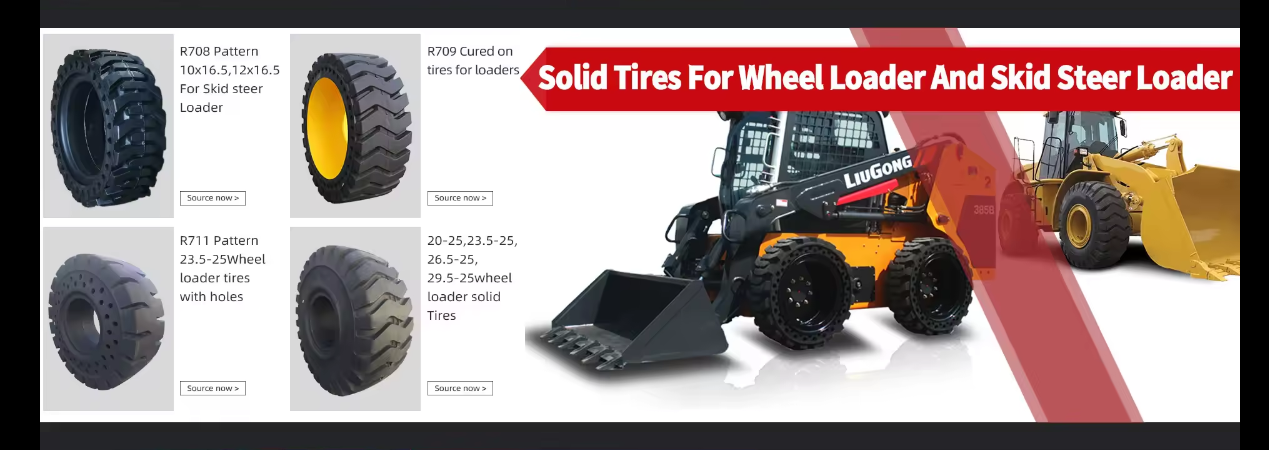
WonRay solid tire applications include 17.5-25 solid tire options along with wheel loader solid tires, industrial solid tires, solid tires for loaders, skid steer solid tires, port vehicle tires, trailer tires, steel mill tires, forklift solid tires, AWP wheels, mold-on tires, and rims. For 17.5-25 Tire selection, the main value comes from matching the tire to the machine and worksite.
A loader in a waste handling area may need cut resistance and puncture protection. A machine in a port yard may need long-shift durability and high load support. A loader in an industrial plant may need stable movement on mixed concrete surfaces. When the tire is selected by size, rim, load, and environment together, it can provide more dependable performance.
Summary
17.5-25 Tire selection should begin with the size marking, but it should not end there. Buyers should confirm rim compatibility, equipment type, load, ground condition, working hours, and tire structure. A 17.5-25 Solid Tire may be the better choice when the site has sharp debris, repeated heavy loading, and frequent puncture risk. Correct matching helps industrial equipment work with fewer unexpected stops and more predictable maintenance.
FAQ
Q1: What equipment uses a 17.5-25 Tire?
A 17.5-25 Tire is commonly used on wheel loaders and some industrial equipment working in yards, ports, factories, recycling areas, and construction material sites.
Q2: What is a 17.5-25 Solid Tire used for?
A 17.5-25 Solid Tire is used where puncture resistance, stable load support, and reduced air-pressure maintenance are important, especially in rough industrial sites.
Q3: Can I replace a pneumatic 17.5-25 Tire with a solid tire?
In many industrial applications, it may be possible, but the buyer must confirm rim compatibility, load capacity, vehicle type, and working environment before replacement.
Q4: How should I choose between different 17.5-25 Tire options?
Compare tire structure, tread design, rubber compound, load requirement, working surface, debris risk, and daily operating hours, not only the size marking.
Post time: 16-07-2026