
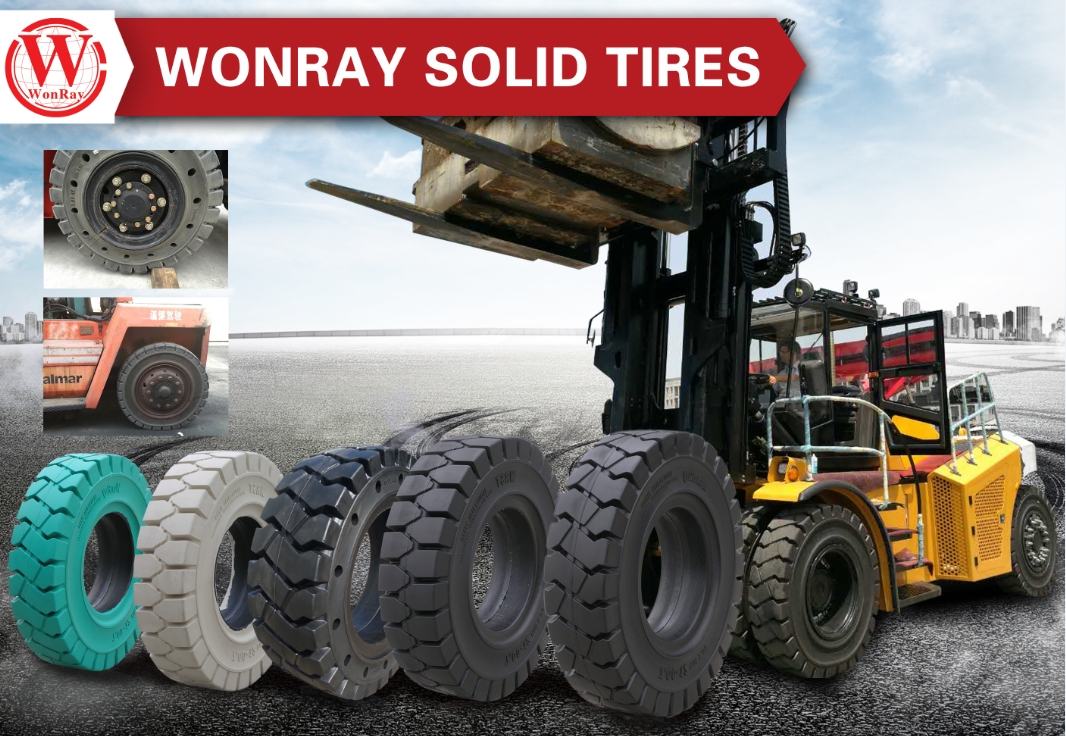
Solid Tires are airless industrial tires made from dense rubber compounds for vehicles that work in factories, warehouses, ports, recycling yards, construction areas and other controlled work sites. They are used on forklifts, industrial trailers, skid steer loaders, wheel loaders, access platforms and material handling vehicles that need reliable movement under load. Because Solid Tires do not rely on air pressure, they help reduce flats, pressure loss and emergency tire repair caused by nails, steel wires, broken pallets, sharp stones or scrap metal. For industrial buyers, this makes Solid Tires a practical choice when predictable operation is more important than high-speed road comfort.
This topic matters because tire failure is rarely an isolated maintenance issue. When one forklift stops in a loading aisle, a truck can wait longer at the dock. When one trailer cannot move, a transfer route may be blocked. When one loader is removed from work, the entire handling schedule can slow down. Google users searching for Solid Tires usually want a clear answer: whether an airless tire can help their vehicles work longer with fewer unplanned interruptions. The answer depends on vehicle type, working surface, load weight and daily operating rhythm.
Why Solid Tires are different from pneumatic tires
The main difference is structure. A pneumatic tire uses air pressure to support the vehicle and absorb impact. A Solid Tire uses rubber structure to carry the load. That airless design changes the way the tire behaves in demanding workplaces. It cannot lose air after a puncture, so the vehicle is less likely to stop suddenly because of one sharp object. It also removes the need for regular inflation checks, which is useful for fleets that run many vehicles every day.
- No air chamber, so there is no sudden deflation from punctures.
- Dense rubber body supports low-speed and high-load movement.
- Reduced pressure maintenance compared with pneumatic tires.
- Suitable for fixed industrial sites where debris and repeated turning are common.
- Available in different compounds, tread patterns and sizes for different vehicles.
Solid Tires are not selected because they are the softest tire option. They are selected because they help industrial vehicles keep moving in places where tire damage can easily interrupt daily work.
Where Solid Tires create the most value
Solid Tires create value in workplaces where vehicles follow repeated routes, carry heavy materials and operate near damaging objects. A warehouse forklift may run over the same floor joints and turn at the same corners hundreds of times. A recycling yard machine may meet metal pieces and hard waste all day. A port trailer may carry cargo for long shifts under high load. In these conditions, the tire must provide more than movement; it must support uptime.
- Warehouses and distribution centers: stable rolling, repeated turning and reduced tire downtime.
- Factories and production plants: dependable material handling between workstations.
- Ports and container yards: heavy-load movement and long operating cycles.
- Recycling and waste handling sites: better puncture resistance around sharp debris.
- Steel mills and foundries: stronger structure for heat, impact and rough floors.
The best application is usually a low-speed or medium-speed industrial site where puncture resistance, load stability and predictable service life are more important than road travel comfort.
How Solid Tires support daily equipment reliability
Daily reliability comes from matching structure to working stress. Solid Tires need a wear-resistant tread for ground contact, a strong rubber body for load support and a stable base area for rim fit. When these elements work together, the tire can handle repeated compression, braking, turning and impact. For forklifts, this means stable lifting and easier control in narrow aisles. For trailers, it means steady rolling under load. For loaders, it means better resistance to cuts and chunks when the surface is rough.
- Check the vehicle type and axle position before selecting the tire.
- Confirm the current tire size and rim size instead of relying only on the equipment model.
- Study the working surface, including concrete, gravel, steel scrap, wet floors or hot areas.
- Estimate load weight, operating hours and turning frequency.
- Choose compound and tread pattern according to indoor, outdoor, clean-floor or rough-ground needs.
A correct Solid Tire helps operators avoid sudden stoppages, but it still needs inspection. Tread wear, cracks, cuts, uneven wear and rim condition should be checked regularly. This allows maintenance teams to replace tires during planned service instead of reacting after the vehicle stops.
Selection guidance
Buyers should avoid choosing Solid Tires only by price. The lowest purchase price can become expensive if the tire wears too quickly, damages the floor, does not fit the rim correctly or cannot handle the load. A tire that matches the site can reduce emergency downtime and make maintenance planning easier. This is especially important for companies operating multiple forklifts, trailers or industrial vehicles in one facility.
- For indoor forklifts, consider stable rolling and non-marking options if clean floors matter.
- For outdoor yards, focus on cut resistance, traction and impact support.
- For port and heavy trailer applications, confirm load capacity and long-shift durability.
- For steel mill or high-temperature sites, consider heat resistance and strong rubber construction.
- For access platforms, confirm wheel dimensions, hub design and movement stability.
WonRay solid tire applications include forklift solid tires, industrial solid tires, trailer tires, skid steer tires, wheel loader tires, port vehicle tires, steel mill tires, scissor lift wheels, boom lift wheels, mold-on tires and rims. The right choice should reflect the vehicle, route and working pressure, not only the size marking on the old tire.
Summary
Solid Tires help industrial vehicles work with fewer daily interruptions by removing air pressure problems and providing strong rubber support for loaded movement. They are most useful in warehouses, factories, ports, recycling yards, steel mills and other sites where punctures, repeated turns and heavy loads are common. To gain the best value, buyers should match the tire to the vehicle, rim, load, working surface and operating schedule. A well-matched Solid Tire supports uptime, safer handling and more predictable maintenance.
FAQ
Q1: What are Solid Tires used for?
Solid Tires are used on forklifts, trailers, loaders, access platforms and industrial vehicles that need puncture-resistant and low-maintenance tire performance.
Q2: Are Solid Tires better than pneumatic tires?
They are better for low-speed, heavy-load and puncture-prone industrial sites. Pneumatic tires may provide more cushioning in some conditions, but they are more vulnerable to air loss.
Q3: Do Solid Tires require maintenance?
They do not require air pressure checks, but they should still be inspected for wear, cracks, cuts, uneven tread and rim fit.
Q4: How should buyers choose Solid Tires?
Buyers should confirm tire size, rim size, vehicle type, load, working surface, operating hours and special needs such as non-marking, heat resistance or cut resistance.
Post time: 09-07-2026