
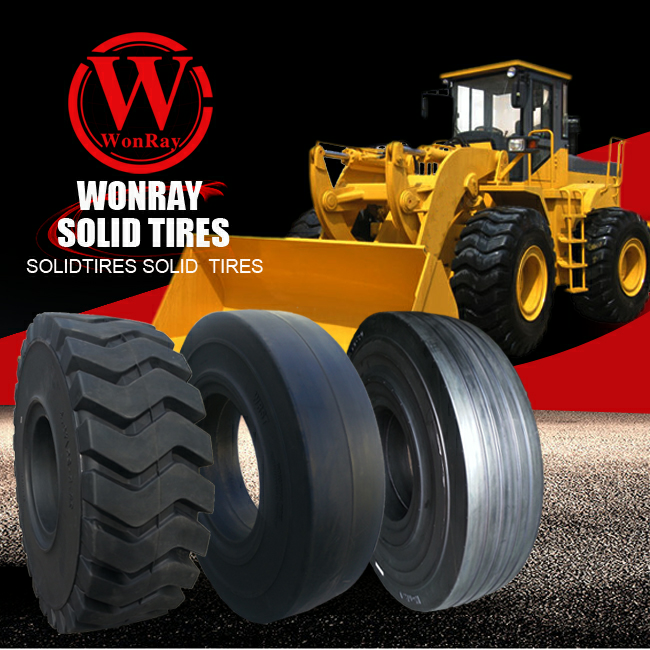
Solid Tires for Wheel Loaders are heavy-duty industrial tires designed for wheel loaders that operate in harsh environments such as recycling yards, steel plants, ports, mines, waste handling facilities, construction material yards, and industrial production sites. Unlike pneumatic tires, solid tires for wheel loaders do not contain air, so they can resist punctures, cuts, and sudden air loss when machines work around metal scraps, stones, broken concrete, sharp waste, and heavy materials. For wheel loaders that must keep working in difficult ground conditions, solid tires can provide strong durability and reliable support.
Wheel loaders are often used for loading, pushing, transporting, stockpiling, and cleaning materials. Because these machines carry heavy loads and frequently work on rough surfaces, tire damage can become a serious operating problem. Solid tires for wheel loaders are especially useful in applications where pneumatic tires fail too often or where downtime is too costly.
Recycling Yards and Scrap Handling
Recycling yards are one of the most suitable environments for solid tires for wheel loaders. These sites often contain sharp metal pieces, wires, broken parts, glass, wood, and mixed waste. Pneumatic tires can be easily punctured, which may stop the loader during busy operations.
In recycling yards, solid tires help with:
- Puncture resistance
- Reduced downtime
- Better durability around scrap materials
- Stable operation under heavy loads
- Lower emergency tire repair frequency
Wheel loaders in recycling yards often move repeatedly between collection areas, sorting zones, and loading trucks. Solid tires for wheel loaders can help keep machines working without frequent tire interruptions.
Steel Plants and Metallurgical Sites
Steel plants are another demanding application for solid tires. The ground may include hot materials, sharp steel edges, metal waste, slag, and rough surfaces. Wheel loaders in these sites may need to carry heavy materials under high working intensity.
Solid tires for wheel loaders are useful in steel plants because they offer:
- Strong resistance to cuts
- Better performance around metal debris
- Stable support for heavy industrial loads
- Reduced risk of sudden tire failure
- Longer service value in harsh operating areas
For metallurgical applications, tire compound and structure are important. The tire should be selected according to load, temperature, ground roughness, and daily working time.
Ports and Cargo Handling Areas
Ports use wheel loaders for bulk material handling, yard cleaning, loading, unloading, and cargo movement. Port ground conditions can be rough, and equipment often operates for long shifts. Tire failure can delay loading schedules and reduce fleet efficiency.
Solid tires for wheel loaders support port operations by:
- Reducing puncture-related downtime
- Handling heavy cargo movement
- Improving equipment availability
- Working on rough concrete or yard surfaces
- Supporting predictable maintenance planning
In busy ports, a wheel loader must remain available when needed. Solid tires can help reduce unexpected interruptions caused by tire damage.
Waste Handling and Transfer Stations
Waste handling facilities are full of sharp, mixed, and unpredictable materials. Wheel loaders may move household waste, industrial waste, construction waste, or compacted material. These conditions can damage ordinary tires quickly.
Solid tires for wheel loaders are useful in waste handling because they can:
- Resist damage from sharp waste
- Support repeated pushing and loading
- Reduce flat tire problems
- Improve safety in dirty working areas
- Lower tire service interruptions
In these applications, the tire is not just a consumable part. It directly affects whether the loader can continue working during daily waste processing.
Mines and Quarry Operations
Mines and quarries create another difficult environment for tires. Wheel loaders may work on stones, gravel, uneven surfaces, and abrasive ground. Pneumatic tires may offer cushioning, but they can still suffer from cuts and impact damage.
Solid tires for wheel loaders may be suitable for certain mining and quarry support tasks where puncture resistance and durability are more important than cushioning.
They can help with:
- Work around sharp rock edges
- Heavy material loading
- Operation on abrasive surfaces
- Reduced downtime in support areas
- Better resistance to tire damage
The correct tire choice depends on ground condition, travel distance, load, speed, and machine size.
Construction Material Yards
Construction material yards handle sand, bricks, blocks, stone, concrete products, steel materials, and mixed building supplies. Wheel loaders often work on hard surfaces with sharp edges and heavy loads.
Solid tires for wheel loaders can support:
- Loading building materials
- Moving pallets and bulk materials
- Operating near broken concrete or stone
- Reducing tire repair needs
- Improving daily reliability
For companies that use wheel loaders every day, fewer tire failures can help maintain smoother material movement and better customer delivery schedules.
How to Select Solid Tires for Wheel Loaders
Choosing the correct solid tires for wheel loaders requires checking both equipment and application details.
Important factors include:
- Loader model
- Tire size
- Rim specification
- Load capacity
- Ground condition
- Working temperature
- Daily operating hours
- Required traction
- Cut resistance
- Heat resistance
A wheel loader used in a steel plant may need a different tire from one used in a construction material yard. Matching tire design to application improves service life and safety.
Conclusion
Solid tires for wheel loaders are most useful in harsh industrial applications where punctures, cuts, sharp debris, heavy loads, and downtime are common problems. They are widely used in recycling yards, steel plants, ports, waste handling sites, mines, quarries, and construction material yards. By choosing suitable solid tires for wheel loaders, companies can improve equipment availability, reduce emergency repairs, and support more stable daily operations in demanding environments.
FAQ
Q1: What are solid tires for wheel loaders used for?
A1: Solid tires for wheel loaders are used in recycling yards, steel plants, ports, mines, waste handling facilities, construction material yards, and other harsh industrial environments.
Q2: Are solid tires better for wheel loaders than pneumatic tires?
A2: Solid tires are better when puncture resistance and durability are more important. Pneumatic tires may still be better for cushioning or long-distance travel.
Q3: Can solid tires for wheel loaders work in recycling yards?
A3: Yes. They are especially suitable for recycling yards because they resist punctures from metal scraps, glass, wires, and sharp waste.
Q4: How do I choose solid tires for wheel loaders?
A4: Check loader model, tire size, rim specification, load capacity, ground condition, working hours, traction needs, and cut resistance requirements.
Post time: 26-06-2026