
Wheel loaders operate under demanding working conditions, and tires are one of the key components that directly interact with the ground. Compared with pneumatic tires, Wheel Loaders Solid Tires use a solid rubber structure that supports the equipment through the tire body itself. During long-term operation, the tire surface and internal structure continuously experience pressure, friction, and repeated movement. Wear is a natural part of tire operation, but different wear patterns may indicate different operating conditions. Understanding how wear develops and what factors influence it can help provide a clearer view of solid tire usage, maintenance requirements, and the relationship between tire design and equipment operation.
Understanding Normal Wear on Wheel Loaders Solid Tires
During normal operation, solid tires gradually change because of continuous contact with the working surface. The tire surface experiences repeated compression, rolling forces, and friction as the wheel loader moves, turns, and carries loads. Normal wear usually develops gradually and evenly across the contact area. Since solid tires do not depend on air pressure, their wear characteristics are mainly related to the rubber structure, load conditions, and movement patterns of the equipment.
The wear process of Wheel Loaders Solid Tires is influenced by several basic factors:
- Operating time: Longer working periods naturally increase the amount of contact and friction experienced by the tire surface.
- Load conditions: Different loads create different pressure distributions between the tire and the ground.
- Movement patterns: Frequent turning, braking, and acceleration can affect how forces are applied to different areas of the tire.
Understanding these basic factors helps distinguish expected wear from conditions that may require further inspection.
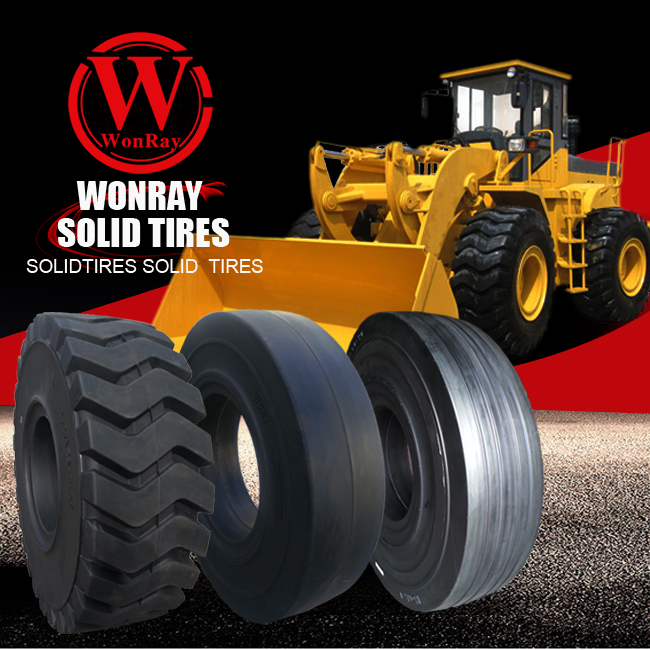
Common Wear Patterns and Their Possible Causes
Different wear patterns can appear depending on how the tire interacts with the equipment and working environment. Observing these patterns can provide information about the conditions affecting the tire.
Uneven wear occurs when different areas of the tire surface wear at different rates. This type of wear may be related to uneven load distribution, alignment conditions, or repeated movement patterns. For wheel loaders, which often perform turning and loading operations, certain areas of the tire may experience different forces compared with others. Over time, these differences can create visible variations in the wear surface.
Wear concentrated in the center or edges of the tire surface may indicate differences in how pressure is transferred during operation. The contact relationship between the tire and the ground can change depending on load, equipment condition, and working surface. The structure of solid tires means that pressure distribution plays an important role in how the rubber surface changes over time.
In some working conditions, solid tires may encounter sharp materials, rough surfaces, or unexpected impacts. These external factors can affect the tire surface and create localized damage.
Such conditions are not always related to the tire itself but may result from the interaction between the equipment, working environment, and operating methods.
How Working Conditions Influence Tire Wear
Wheel loaders are commonly used for operations involving loading, transporting, and repeated movement. These activities create different forces on the tires during daily operation.
For example, frequent turning can increase side forces on the tire, while carrying heavier loads can increase pressure on the contact area. Working surfaces with different levels of hardness and roughness may also change the way the tire interacts with the ground. The same type of Wheel Loaders Solid Tires may show different wear characteristics under different working conditions. Therefore, wear analysis should consider not only the tire itself but also the complete operating situation.
The Relationship Between Tire Design and Wear Characteristics
The design of a solid tire influences how it responds during operation. Factors such as rubber characteristics, tire dimensions, and overall construction affect how forces are transferred through the tire. A solid tire must maintain its shape while repeatedly supporting equipment weight and responding to movement forces. The relationship between material properties and structural design determines how the tire surface changes during long-term use. Understanding this relationship does not mean that wear can be completely avoided. Instead, it provides a better way to understand why different wear patterns appear and how they relate to actual operating conditions.
Inspection Points for Wheel Loaders Solid Tires
Regular inspection can help identify changes in tire condition during use. Instead of focusing only on the amount of wear, checking the overall condition of the tire can provide more useful information.
Important inspection points include:
- Surface condition: Check for unusual cracks, damage, or irregular wear areas.
- Wear distribution: Observe whether the tire wears evenly across different sections.
- Operating response: Pay attention to changes in equipment movement or tire contact behavior.
These observations can help identify whether changes are related to normal operation or external factors.
Conclusion
Wheel Loaders Solid Tires experience continuous changes during operation due to contact pressure, friction, load conditions, and movement patterns. Different wear patterns reflect the interaction between the tire design, equipment operation, and working environment. Understanding common wear characteristics and their possible causes provides a clearer understanding of how solid tires function over time. By analyzing wear conditions from multiple aspects, it becomes easier to understand the relationship between tire use, equipment operation, and maintenance requirements.
Frequently Asked Questions
1. Do Wheel Loaders Solid Tires wear differently from pneumatic tires?
Yes. Solid tires and pneumatic tires have different structures, so their wear processes and influencing factors are not the same.
2. What causes uneven wear on wheel loader solid tires?
Uneven wear may be related to load distribution, movement patterns, equipment conditions, or differences in ground contact.
3. Can working surfaces affect solid tire wear?
Yes. Surface hardness, roughness, and operating conditions can influence how the tire interacts with the ground.
4. How can tire wear conditions be evaluated?
Tire condition can be evaluated by observing surface changes, wear distribution, and changes in operating behavior.
Post time: 14-10-2026