
Forklift tyres play an important role in maintaining stability, handling performance, and operational efficiency in industrial environments. However, uneven wear is a common issue that affects many forklift tyres, including those used on Linde forklifts. When tyre wear becomes inconsistent, it can reduce driving stability, increase vibration, and shorten the service life of the tyre.
Understanding the causes of uneven wear on Linde Forklift Tyres helps operators identify potential problems earlier and take effective measures to maintain reliable performance. Tyre wear is rarely caused by a single factor. Instead, it usually results from a combination of operating conditions, load distribution, tyre structure, and equipment maintenance.
Common Types of Uneven Wear on Linde Forklift Tyres
Uneven wear can appear in different forms depending on the cause and operating environment. Identifying the wear pattern is the first step in understanding the problem.
Some common wear patterns include:
- One-side wear: When one edge of the tyre wears faster than the other, it may indicate uneven load distribution, incorrect wheel alignment, or excessive lateral force during operation.
- Center wear: Excessive wear in the middle area of the tread may occur when the tyre experiences abnormal contact pressure or unsuitable operating conditions.
- Irregular surface wear: Patchy or uneven wear patterns may result from repeated turning, rough surfaces, or mechanical issues affecting tyre contact.
- Accelerated tread wear: Rapid loss of tread material can be related to heavy loads, frequent braking, or continuous operation in demanding environments.
Different wear patterns provide useful information about how the tyre interacts with the forklift and the working surface.
How Operating Conditions Affect Tyre Wear
Forklift tyres operate under challenging conditions, often carrying heavy loads while performing frequent starts, stops, and turns. These repeated movements create continuous stress on the tyre structure.
Heavy-duty applications can increase compression forces between the tyre and the ground. When the forklift frequently operates near its maximum load capacity, the tyre may experience higher deformation, which can accelerate wear over time.
Turning frequency is another important factor. Unlike vehicles that mainly travel in straight lines, forklifts often perform tight turns in limited spaces. These movements create additional side forces that can increase friction between the tyre and the floor, especially during fast or repeated manoeuvres.
Floor conditions also influence wear patterns. Smooth indoor surfaces may create different wear behaviour compared with rough outdoor areas. Uneven floors, debris, oil contamination, or abrasive surfaces can increase stress on specific areas of the tyre.
The Impact of Load Distribution and Forklift Operation
Proper load distribution is essential for maintaining balanced tyre wear. Forklifts carry different loads depending on the application, and uneven weight distribution between the front and rear axles can affect how pressure is applied to each tyre.
Incorrect operation habits can also contribute to premature wear. Sudden acceleration, aggressive braking, and sharp turning increase mechanical stress on the tyre surface. Over time, these repeated stresses may lead to faster deterioration.
Operator experience and driving patterns therefore have a direct influence on tyre condition. Smooth acceleration, controlled turning, and avoiding unnecessary sudden movements can help reduce excessive tyre stress.
How Tyre Structure Influences Wear Performance
The construction of a forklift tyre affects how forces are absorbed and distributed during operation. Different tyre designs provide different levels of resistance against wear, impact, and heat buildup.
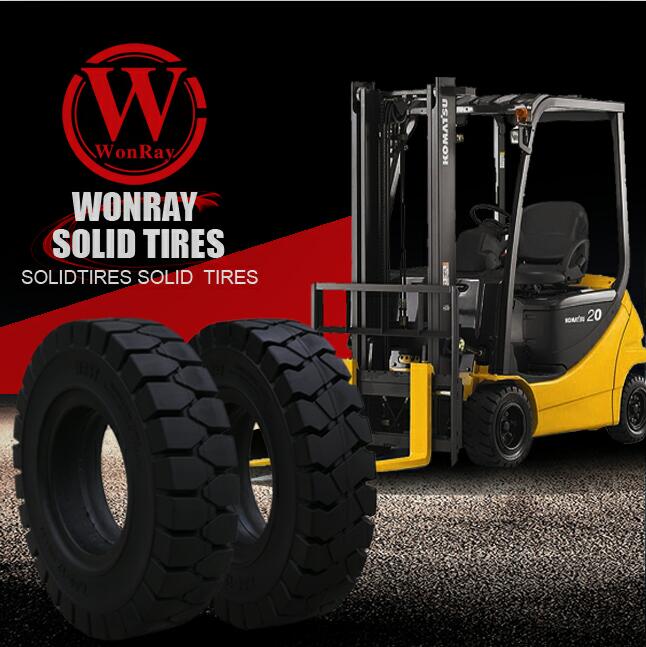
For example, solid forklift tyres are commonly used in applications where durability and resistance to punctures are important. Their solid structure provides stable support under heavy loads, but their performance still depends on rubber compound properties, tread design, and working conditions.
The rubber compound also plays an important role. Factors such as hardness, elasticity, abrasion resistance, and heat resistance influence how the tyre responds to repeated contact with the floor.
For Linde Forklift Tyres, understanding the relationship between tyre construction and operating conditions is essential because wear performance depends on how the complete tyre system handles mechanical stress.
Maintenance Practices to Reduce Uneven Wear
Regular inspection and proper maintenance can help identify wear problems before they become serious. Although forklift tyres are designed for industrial applications, their service life can be affected by equipment condition and daily operation.
Important maintenance considerations include:
- Checking tyre surfaces regularly for abnormal wear patterns, cracks, or damage.
- Monitoring changes in driving stability, vibration, or steering response.
- Ensuring forklift components that affect wheel movement are operating correctly.
- Removing materials from working areas that may damage the tyre surface.
- Avoiding operation beyond recommended load conditions.
Early identification of unusual wear allows operators to address possible causes before tyre performance is significantly affected.
Why Proper Tyre Selection Matters for Long-Term Performance
Uneven wear is not always caused by maintenance issues. Choosing a tyre that matches the working environment is also important. Factors such as load requirements, operating frequency, floor conditions, and temperature exposure all influence tyre performance.
A tyre designed for one application may not provide the same results in another environment. For example, a forklift operating continuously in a warehouse may have different requirements compared with equipment used outdoors on rough surfaces.
For this reason, evaluating tyre performance should consider the complete operating situation rather than focusing only on appearance or size. The interaction between rubber properties, tyre structure, and actual working conditions determines how effectively a tyre performs over time.
Maintaining consistent performance with Linde Forklift Tyres requires attention to both tyre characteristics and operating factors. By understanding the causes of uneven wear, users can better evaluate tyre conditions and reduce unnecessary downtime caused by premature replacement. Proper application, regular inspection, and suitable maintenance practices help support more stable forklift operation.
Conclusion
Uneven wear on Linde Forklift Tyres is usually the result of multiple factors, including load conditions, driving habits, floor environment, tyre structure, and equipment maintenance. Identifying the specific wear pattern and understanding its underlying cause can help improve tyre performance and extend service life.
Rather than focusing on a single factor, a comprehensive approach that considers the tyre, forklift, and working environment together provides a more effective way to manage wear problems and maintain reliable operation.
Frequently Asked Questions
1. Why do Linde Forklift Tyres wear unevenly?
Uneven wear can be caused by excessive loads, frequent turning, improper operation, floor conditions, wheel alignment issues, or unsuitable tyre applications.
2. Can forklift driving habits affect tyre lifespan?
Yes. Sudden acceleration, hard braking, and frequent sharp turns increase stress on the tyre and may accelerate wear.
3. How can uneven tyre wear be reduced?
Regular inspections, proper load handling, controlled driving, suitable tyre selection, and maintaining good equipment conditions can help reduce uneven wear.
4. Does tyre hardness affect wear performance?
Yes. Rubber hardness influences deformation and abrasion resistance, but overall wear performance also depends on tyre construction, compound design, and operating conditions.
Post time: 10-10-2026