
Forklift solid tires are increasingly becoming the preferred solution in demanding material handling environments where puncture resistance, stability, and low downtime are more important than ride comfort. Unlike pneumatic tires filled with air, solid forklift tires are made from dense rubber compounds or multi-layer elastic structures designed to operate without air pressure. This structural difference directly improves reliability in warehouses, ports, steel plants, and recycling facilities where sharp debris and heavy loads are common.
Understanding their value requires a clear view of how they are built, where they are used, and why many industrial fleets are shifting away from traditional air-filled tires.
What Are Forklift Solid Tires in Industrial Applications
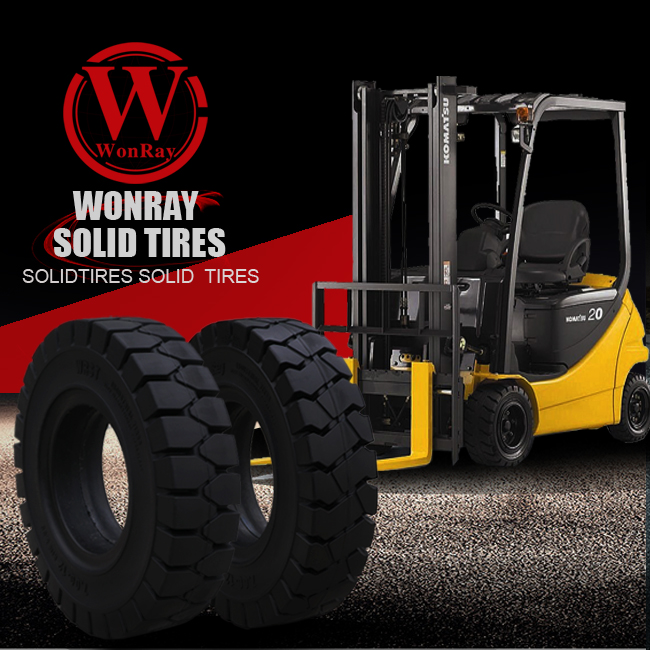
Forklift solid tires are non-inflatable tires engineered to eliminate air-related failures such as punctures, blowouts, and sudden deflation. Most models use a three-layer structure consisting of a wear-resistant outer tread, a shock-absorbing middle layer, and a rigid inner base that firmly bonds to the wheel rim.
This design allows forklifts to operate continuously in harsh environments without unexpected downtime caused by tire damage. In high-intensity logistics operations where forklifts run multiple shifts per day, this reliability becomes a critical productivity factor.
They are widely installed on electric forklifts, diesel forklifts, and heavy-duty handling equipment used in industries where ground conditions are rough or unpredictable.
Why Forklift Solid Tires Are Widely Used in Heavy-Duty Work Environments
The popularity of forklift solid tires comes from their ability to solve real operational problems. One of the most important reasons is complete puncture resistance. In environments such as scrap yards, construction material depots, and metal processing plants, sharp objects frequently damage pneumatic tires. Solid tires eliminate this risk entirely.
Another key reason is load stability. Solid tires deform less under pressure, which helps forklifts maintain balance when lifting heavy loads at height. This is especially important in narrow aisle warehouses where stability directly affects safety.
They also provide consistent performance in multi-shift operations. Unlike air-filled tires that require frequent pressure checks and repairs, solid tires continue working with minimal maintenance interruption, making them ideal for continuous logistics systems.
Key Advantages of Forklift Solid Tires in Real Industrial Use
Forklift solid tires offer several practical advantages that directly impact operational efficiency.
One major advantage is zero air maintenance. Since there is no internal air pressure, operators do not need to worry about leaks, inflation checks, or emergency tire replacements. This significantly reduces downtime and maintenance workload.
Another advantage is strong wear resistance. Solid rubber compounds are designed for continuous friction against concrete floors, loading ramps, and rough surfaces, allowing them to last longer under demanding working cycles.
They also improve operational safety. Because there is no risk of sudden blowout, forklift handling becomes more predictable, which reduces accident risks in busy warehouse environments.
Heat resistance is another important benefit. During long operating hours, friction generates heat, and solid tire structures are designed to handle these conditions more effectively than pneumatic alternatives.
How to Choose the Right Forklift Solid Tires
Selecting the right forklift solid tire requires evaluating several technical and operational factors rather than focusing only on size or price.
Load capacity is the first consideration. Each tire must match or exceed the forklift’s maximum load requirement to ensure safety and prevent premature wear.
Working environment is another key factor. For indoor warehouses with smooth floors, softer compound tires help reduce vibration and improve operator comfort. For outdoor yards or rough surfaces, harder compounds with deeper tread patterns are more suitable.
Compatibility with wheel rims is also essential. Different types such as press-on solid tires and cushion solid tires require specific rim structures, and incorrect matching can lead to installation issues or performance loss.
Operating intensity should also be considered. High-frequency forklift operations in logistics hubs require premium-grade tires designed for long continuous use.
Common Industrial Applications of Forklift Solid Tires
Forklift solid tires are used across a wide range of industries due to their durability and reliability.
In logistics and warehousing centers, they support continuous loading and unloading operations where uptime is essential for supply chain efficiency.
In steel and metal processing factories, they handle sharp debris and heavy materials that would quickly damage pneumatic tires.
In recycling facilities, forklifts operate in unpredictable environments filled with glass, scrap metal, and waste materials, making solid tires a practical necessity.
In ports and container terminals, they support heavy-duty lifting operations under extreme load conditions where stability and strength are critical.
Maintenance Practices to Extend Forklift Solid Tire Life
Although forklift solid tires require less maintenance than pneumatic tires, proper usage still affects their lifespan.
Regular inspection is important to detect uneven wear patterns, which may indicate alignment or load distribution issues. Early correction helps prevent further damage.
Monitoring operating temperature during long shifts is also useful, as excessive heat buildup can accelerate wear in continuous heavy-duty operations.
Proper driving habits significantly extend tire life. Avoiding sharp turns, sudden braking, and overloading helps maintain structural integrity.
Keeping the tire surface clean by removing embedded debris also helps maintain traction and reduces long-term damage.
Common Mistakes When Using Forklift Solid Tires
One common mistake is selecting tires based only on price instead of application needs. Low-cost tires may not perform well in heavy-duty environments.
Another mistake is ignoring rim compatibility. Even high-quality tires will fail to perform correctly if they are not matched to the correct wheel structure.
Overloading is also a frequent issue. Exceeding load limits reduces tire lifespan and increases safety risks.
Finally, choosing the wrong rubber compound for the working environment can lead to poor performance, such as excessive vibration indoors or rapid wear outdoors.
FAQs
1. Are forklift solid tires better than pneumatic tires?
Forklift solid tires are better for high-risk or high-intensity environments because they eliminate puncture-related downtime and improve operational stability, while pneumatic tires may offer better cushioning on uneven ground.
2. How long do forklift solid tires last?
Their lifespan depends on working conditions and usage intensity, but in industrial environments they generally last longer than pneumatic tires, especially in continuous operations.
3. Can forklift solid tires be used outdoors?
Yes, they are widely used outdoors in ports, construction sites, and recycling yards, but the rubber compound should be selected based on surface conditions.
4. What is the main disadvantage of forklift solid tires?
The main drawback is reduced shock absorption compared to air-filled tires, which can result in a slightly harsher ride for operators on uneven surfaces.
Forklift solid tires are a long-term investment for industries that prioritize uptime, safety, and operational efficiency. When properly selected and matched to working conditions, they significantly improve the reliability and productivity of material handling operations.
Post time: 16-06-2026