
Searching for a Toyota Forklift Tire sounds like a brand-specific request, but the brand name does not identify one tire. Toyota material-handling equipment includes different capacities, wheelbases, power systems, chassis layouts, and tire arrangements. One truck may use resilient solid tires on pneumatic-style rims, another may use cushion or press-on construction, and an indoor electric model may require non-marking wheels.
The practical first step is therefore to identify the exact truck, not the logo on the counterweight. Model designation, serial range, existing tire marking, rim or wheel type, and wheel position provide the information that actually controls fit. Treating “Toyota forklift tire” as one universal specification can lead to a tire that matches the brand search but not the truck.
Separate Construction Type Before Comparing Sizes
Before looking at tread or compound, determine whether the machine uses pneumatic tires, resilient solid pneumatic tires, press-on band tires, polyurethane wheels, or another dedicated wheel system. These products can all appear on material-handling equipment, but they do not share the same mounting method.
A resilient solid tire is normally fitted to an appropriate pneumatic-style rim and uses a solid rubber body rather than an air chamber. A press-on tire uses rubber bonded to a steel band that is pressed onto a matching wheel center. A PU wheel may include a core and bearing arrangement rather than a conventional rim. If the construction is misidentified, a matching nominal diameter does not make the product compatible.
Wheel Position Changes the Required Load Data
Counterbalance forklifts do not load every tire equally. The drive axle can carry a large share of the working load, especially when the forks are supporting material, while the steering axle operates under a different load condition. Manufacturers therefore often publish separate load values for driving and steering positions.
When replacing a Toyota Forklift Tire, record whether the tire is on the drive or steer axle and use the relevant load condition. A tire with adequate capacity in one position may not have the same published allowance in another. Speed must also be considered because solid-tire load tables frequently reduce allowable load as operating speed increases.
Indoor and Outdoor Toyota Forklifts Need Different Priorities
A forklift working on polished warehouse concrete experiences repeated turning scrub, starts, and braking but relatively little sharp debris. An outdoor yard truck may cross broken pavement, gravel, dock transitions, metal fragments, and wet areas. Even if the truck capacity is similar, the tire problem is different.
Indoor service may prioritize stable contact, predictable wear, low rolling resistance, and floor cleanliness. Outdoor or mixed service may require stronger tread engagement, cut resistance, and a construction that tolerates debris. Instead of choosing a tire from the brand name, describe the truck’s real route. That information often explains more about the correct tread and compound than the logo on the machine.
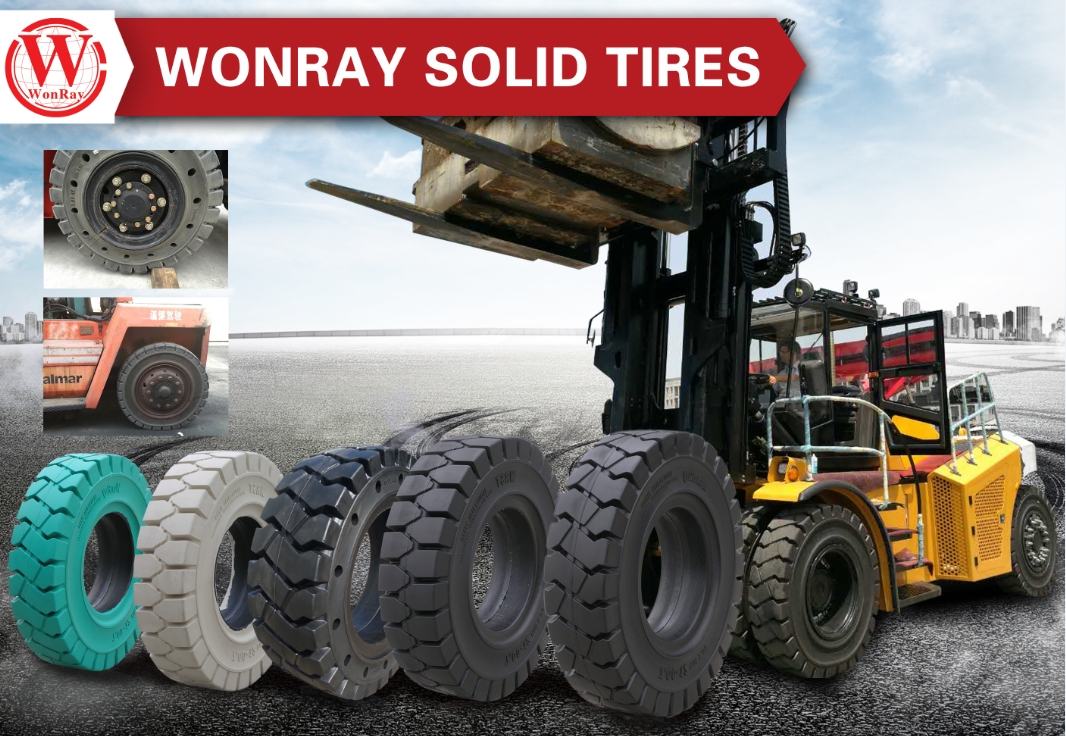
Non-Marking Is a Compound Requirement, Not a Complete Fitment
Many electric forklifts work in facilities where visible black floor marks are unacceptable. In that situation, maintenance teams may request a non-marking Toyota Forklift Tire. The non-marking requirement is valid, but it does not identify the wheel structure by itself.
A non-marking tire can still be a resilient solid tire, a press-on band tire, or another wheel construction. The base tire must first fit the truck and wheel correctly. Only then should the compound requirement be added. This order prevents a common mistake: selecting a clean-floor tire that looks suitable but uses the wrong mounting system or finished dimensions.
Use the Old Tire as a Diagnostic Record
Before discarding the old tire, inspect how it failed. Even wear usually suggests normal consumption. Shoulder wear can indicate frequent tight turning. One-sided wear may justify checking alignment, steering components, or wheel condition. Chunking can be associated with debris, impact, heat, or repeated high-stress turning.
The diagnosis is especially useful when a fleet reports that the “same Toyota tire” never lasts as long on one truck as on another. The difference may be route, driver pattern, axle position, load cycle, floor condition, or wheel condition rather than the nominal tire size. Photographing the old tire and recording operating hours creates better evidence for the next selection.
Rim and Wheel Condition Can Defeat a Correct Tire Choice
A correct tire installed on a damaged wheel can still fail early. Check the rim for distortion, corrosion, cracks, damaged retaining surfaces, or evidence of tire movement. For press-on wheels, check the wheel-center surface and dimensions. For complete PU wheels, inspect bearings, axle fit, and spacers.
Older forklifts may have been repaired with substitute wheels in the past. This means model information should be compared with the actual wheel, not used as a substitute for inspection. The most reliable replacement record combines truck identity with physical wheel dimensions and photographs.
Build a Model-Specific Tire Record for the Fleet
Once a replacement has been confirmed on a specific truck, record the configuration for future service. The record should include model and serial range, tire construction, front and rear sizes, rim or wheel details, axle position, tread or compound, and photographs. If the fleet contains several Toyota models, keep these records separate even when the trucks look similar from a distance.
A model-specific record reduces repeated measurement work and helps prevent a tire intended for one truck from being installed on another. It also makes stocking decisions more accurate because maintenance teams can see which sizes and wheel systems are genuinely shared across the fleet. Standardization should follow verified fitment, not visual similarity.
WonRay Toyota Forklift Tire Matching
For matching, provide the Toyota truck model, serial information if available, current tire marking, wheel position, rim or wheel dimensions, tire construction, working load, maximum speed, floor type, and whether non-marking performance is required. Clear photos of the sidewall and wheel are useful when the existing assembly is uncertain. This allows the replacement to be selected from the actual configuration rather than the brand name alone.
Conclusion
A Toyota Forklift Tire is not one standardized product. The correct choice depends on the specific truck model, wheel system, axle position, load, speed, floor, and compound requirement.
The most efficient approach is to identify the construction first, verify the wheel second, and then select tread and compound around the real operating environment. Brand name helps narrow the equipment family, but the physical machine and current wheel determine the replacement.
FAQ
Can one tire size fit every Toyota forklift?
No. Toyota forklifts use different tire sizes, constructions, rims, and wheel systems across models and capacities.
How do I know whether the truck uses solid pneumatic or press-on tires?
Check the current tire and wheel construction. Solid pneumatic tires fit compatible rims, while press-on tires use a steel band fitted to a wheel center.
Can Toyota forklifts use non-marking tires?
Many industrial applications can use non-marking options when the correct size and wheel structure are available, but the actual model and wheel must be confirmed.
What should be sent for a replacement match?
Send the truck model, tire marking, wheel position, wheel dimensions, operating conditions, and clear photos of the existing tire and wheel.
Post time: 23-09-2026